The cinematic opening tableau and the technically astute musical finalé wonderfully bookend Miles., a biopic about the architect of the bestselling jazz album of all time, 1959’s Kind of Blue. However, between these two theatrically assured moments, the play settles into a rigidly chronological account of Miles Davis’ life; what should be an incisive exploration of the jazz revolution instead suffers from a cataloguing of names, dates and locations, delivered in such a whirlwind that the audience experiences an accelerated historical account.
Arriving at Southwark Playhouse after a successful run at the Edinburgh Festival Fringe, the play opens with Benjamin Akintuyosi as Davis in his debut role, sprawled atop an unwieldy grand piano that dominates the space. The instrument serves as a clever device, housing many of the props whilst remaining the most imposing centrepiece. His crisp black suit seems to emulsify into the piano’s polished obsidian surface, rendering the distinction between his amorphous corporeality and the instrument impossible to discern. From the outset, music is presented as inseparable from him; it defines him, sustains him and is the very thing that gradually rots him.
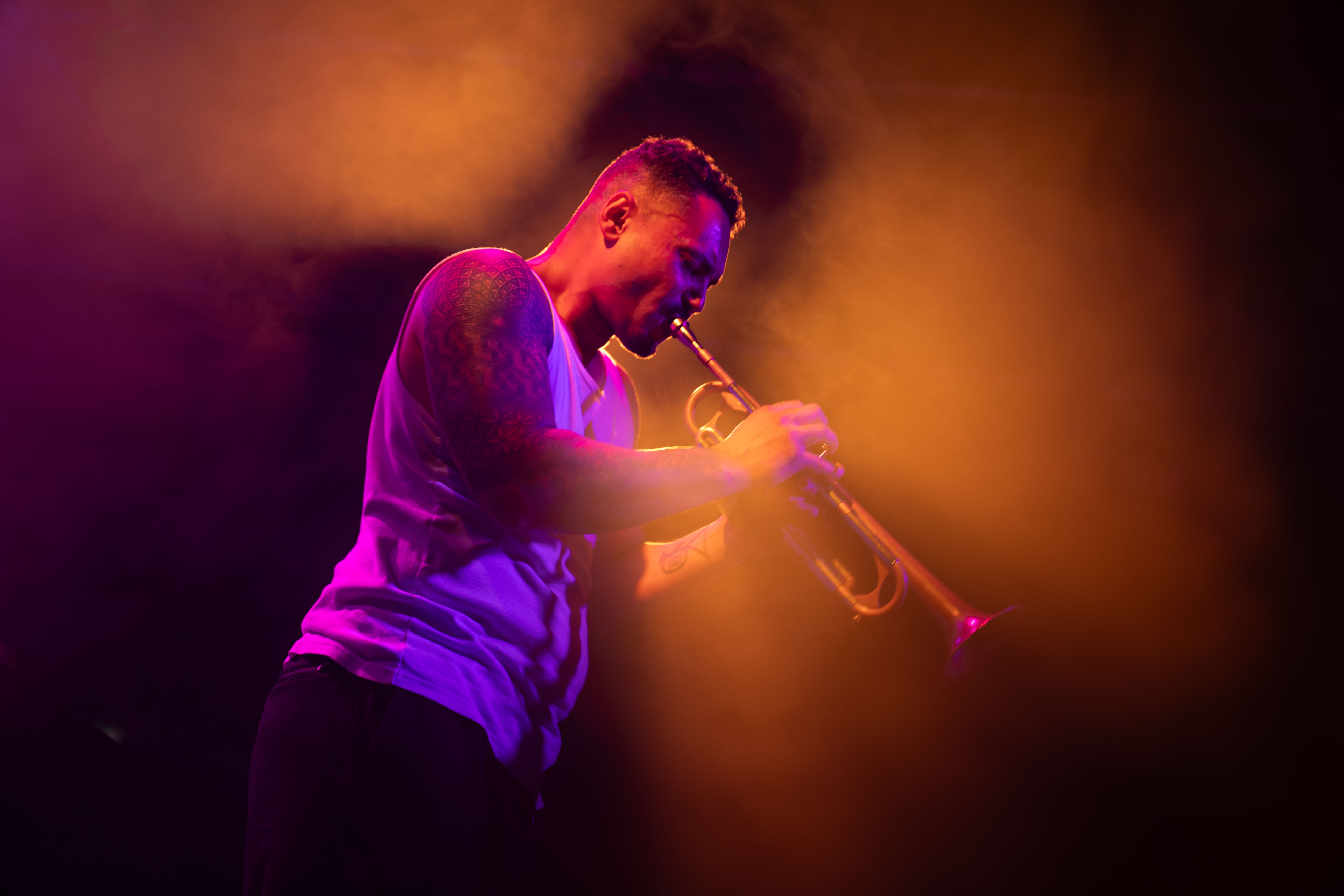
The majority of the play takes place in the present, in a recording studio at Columbia Records, where Jay Phelps, playing himself as a jazz trumpeter, obsessively plays Kind of Blue on a tape recorder in an attempt to break through his writer’s block and record his upcoming album.
In a quasi‑imaginative realm conjured by Phelps’ creative crisis, Davis is transported to 2026 to inspire Phelps by guiding him through the trials and tribulations of making Kind of Blue. Yet Phelps feels like an obsolete vehicle for exposition; his unsubtle, leading questions trigger mechanical, over‑scripted flashbacks recounting Davis’ musical education and relationships with fellow musicians like John Coltrane, Cannonball Adderley and Paul Chambers, before the action snaps back to Phelps’ uninspiring artistic paralysis. The storytelling structure becomes predictable: one step into the past, one step back into the present, which renders Phelps a difficult figure to invest in — a shame, as the precision of director Oliver Kaderbhai is usually tighter.
That being said, Phelps makes up for it with his mesmerising talent on the trumpet. His mournful renderings of Kind of Blue are so crisp and controlled that the audience feels transported to the smoky, sticky nightclubs of 1950s New York; in a single searing note he captures the entire spectrum of loss and joy. Hearing such a seminal album performed live throughout the play is what saves it. Whatever the structural flaws, the immediacy of the music is undeniably thrilling.
By failing to interrogate Davis’ more problematic traits — his abuse of women and heroin addiction — the play slips into a familiar rags‑to‑riches narrative. A disturbing scene in which he shoots up in front of his baby aestheticises addiction rather than showing its destructiveness, and humorous portrayals of his encounters with women gloss over the systemic abuse of his wives and partners. The result risks glamourising his troubling legacy.
Standout moments include the projection of Juliette Gréco onto Davis’ white vest (special mention to Alex Lewer’s impressive lighting design), as well as Akintuyosi’s supple tap dancing to Phelps’ buttery trumpet lines. Suave, sharply dressed with a glinting gold bracelet, 1950s haircut and iconic gravelly voice, it is hard not to be enamoured by Akintuyosi’s portrayal of Miles Davis.
Although the 90 minutes are erratically paced and in need of tighter storytelling, the production does end on a musical high. Phelps closes the show by finding his inspiration, performing a live breakbeat‑jungle set and layering jazzy trumpet riffs over the top, successfully bringing jazz into the present and finishing on a lively, celebratory note.
Review by Florence Marling
Featured Image: Jay Phelps, Credit: Colin J Smith
Miles., is showing at the Southwark Playhouse until March 7th 2026. Miles. – Southwark Playhouse Borough
Written, Directed and Produced by Oliver Kaderbhai
Additional Production by: Delerium, Lauren Reed Productions & New Wolf Productions
Lighting Design by Alex Lewer
Video Design by Colin J Smith
Set Design by Ellie Wintour
Sound Design by Will Tonia
Florence’s latest interview piece can be accessed on Abundantart-Reviews