Hello

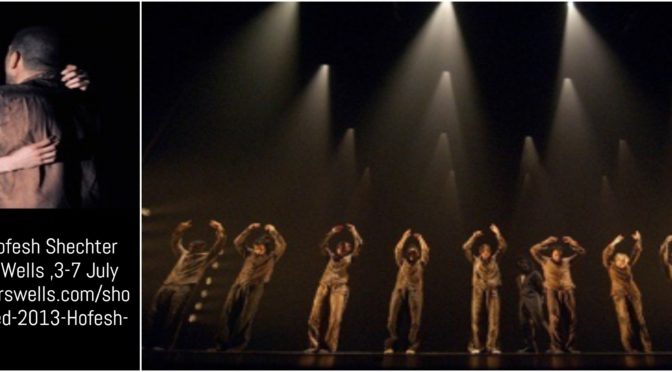
Hofesh Shechter’s Sun performed by Hofesh Shechter Company Sadler’s Wells,30 Oct-3Nov 2013

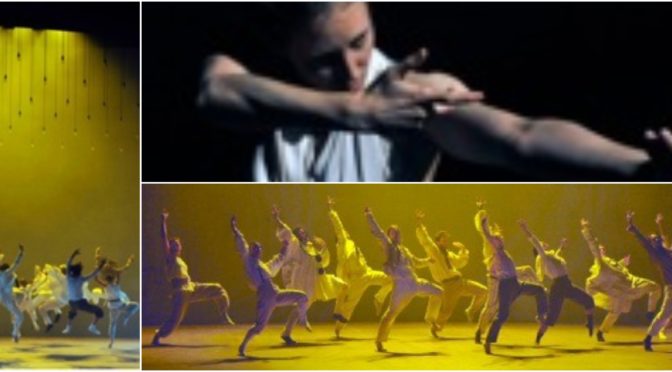
Sun is the latest production from Hofesh Shechter’s oeuvre. Sun lives up to his reputation as one of the most fecund thinker choreographers in UK.

He is an artiste who probably has a million visions in his mind with the ability to bring them to life. Sun is no exception. Starting with a tongue in cheek reassurance in Shechter’s voice promising a happy ending with the audience safely ensconced, the show progresses from calm serenity to unexpected scenes of gut wrenching violence and chaos.

With the  dash of humour at the beginning, the audience warms up as the music breaks in with Shechter’s trademark lighting flooding the stage. A scene of picture postcard calm – with a herd of cardboard cutout sheep is rudely shattered by a cardboard cutout wolf with malevolent intentions. An ear splitting scream from a camouflaged dancer sitting with the audience in the front row further unsettles the audience. The music changes with extremely loud thumping heavy rock beats. The sheep scatter and Shechter’s  band of dancers change their tranquil dance moves to his custom jerky body movements projecting fear and loathing. There is uncontrolled chaos on stage and scenes of incredible violence. There is shooting and stabbing. The dancers mimic picking up rifles and point to the audience or they get stabbed themselves falling flat on their faces.Tranquility is torn up. The dancers who are enjoying their folksy dance moves, are shaken stabbed and torn by the rule of the businessman, again in a cardboard cutout keeping strict control over them. The dancers bunch up in a group repeating the same movement trying to tell that they are happy in their way of life, together in their routined existence.  A conscious attempt to protect and support each other. Complete blackout at times with a stark opposite of full bright lights and then all settling down getting calmer. The sheep slide in so does the wolf and then the businessman, scream from the dancer in the audience provoking another set of turmoil.

In Sun Shechter’s mind turns to the chaos and uncertainties of everyday life that lurks behind a sunny facade. Its not as soul shaking and awe inspiring in conception as the Political Mother, his last work. But it’s still Shechter with his raw energy and mind boggling stage concepts saying something existential about us modern beings.

                                                                                                Protima Chatterjee
Russell Maliphant’s Still Current

Still Current showcases solos, duets and trios choreographed by Russell Maliphant. Maliphant has earned international fame from working with renowned dance companies and artists and has bagged a series of awards including an Olivier Award for ‘PUSH’ with Sylvie Guillem. A Sadler’s Wells associate artist, Maliphant brings to his audience a smart and slick presentation accompanied by exquisite and clever lighting and projection by Michael Hulls and animation by Jan Urbanowski.

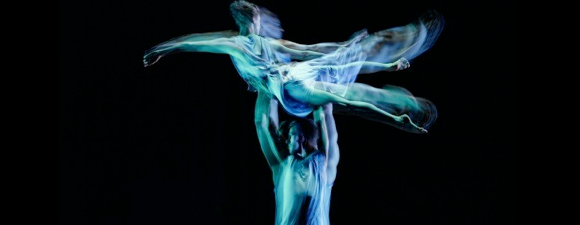
Five innovative pieces set out to wow the audience at Arts Depot in North London. Every piece has a demarcated zone rendered by ingenious use of spot lights which zoom in and out to make the space bigger or smaller in the choreographies. This lighted zone would also glide around the stage or switch in and out of different zones. It would sometimes keep the dancers confined within its bounds or would swish them along the stage virtually like a magic carpet. Movements in each piece are vibrant, modern and exhibits perfect technique. Tremendous energy from the dancers draw in the audience. Focussing on the floor patterns that change shape and design and add a new dimension with almost every change in the music note, shifts the mind into a trance like state. Whether in or out of sync, there is a consistent but unpredictable music and light play creating a magic sub layer to Still Current. Music composers Armand Amar, Andy Cowton, Mukul and Erik Satie have brought in their best to give the performance a boost.

Agile dancers moving sharp under the light, create blurred imagery in the mind’s eye making the experience ethereal. It would either seem that the dancers are still and an atomic movement is whizzing around them to produce a blurry, hazy image. Or you would say to yourself, ‘hang on a minute!’….it’s fast movement that’s blurring the vision between one point to the other in the transitional phase of an arm or a limb, creating a montage of images.

To Maliphant  who has always been interested in sculpture, light is an important tool as he uses light to sculpt the dancers bodies. He has a set lighting pattern and then tries movements that fit in the frame to yield extraordinary results. The lighting and projection designer has worked extensively with Maliphant and their collaborations have won them international acclaim and numerous awards. It is evident from Still Current, that in the course of their long collaborative journey, the pair have developed an instinctive understanding of each other’s creative minds.

The opening piece ‘Traces’ is based on the Brazilian martial art of capoeira. It is performed  by the trio of male dancers – Maliphant, Thomasin Gulgec and Dickson Mbi. The piece features the use of long sticks which comes across as a sign of authority and power and a source for acrobatics on stage – But as the piece progresses more layers  are added on. Movements blur when the sticks are swished around with force. With this first piece Maliphant establishes the theme, which deepens as the evening moves forward.

All the four dancers of the evening including Maliphant himself added different levels and forms of physical nuances. Dickson Mbi comes from a background of popping and boogaloo and later trained at the London Contemporary Dance School, Thomasin Gulgec and Carys Staton are both trained at Swindon Dance and Rambert School. Gulgec has worked with renowned choreographers in varied dance styles such as Akram Khan and Sidi Larbi Cherkaoui. Staton has performed works by Mark Baldwin and Kerry Nicholls.

Maliphant’s focus has been on choreography for the last 10 years and he had discontinued performance during this period. On Sylvie Guillem’s request, Maliphant choreographed a piece for the two of them which brought him back to stage. The result was ‘PUSH’ followed by an Olivier award for this outstanding piece. He continues to perform and in Still/Current he shares his role with Adam Kirkham from the Balletboyz. Techniques from these different dance backgrounds merge in Maliphant’s work to produce dynamic results.

In Still Current Maliphant’s ideas about light and movement come together with his ensembles virtuoso performance skills. The effect is an enchanting melange of movement and light.

                                                                                                                            Protima Chatterjee

Carlos Acosta’s Classical selection

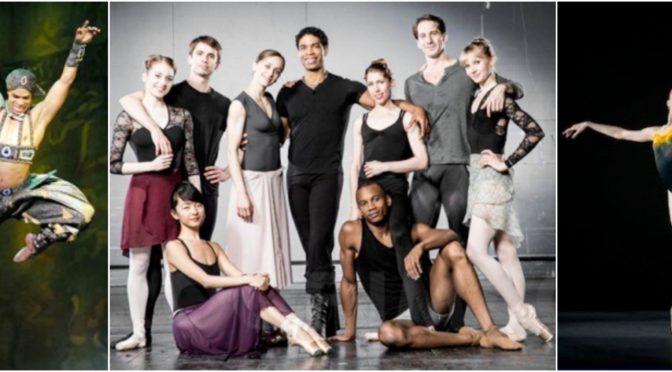
Carlos Acosta does not believe in a summer break. Its his 40th birthday and to mark the occasion he has hired his gifted colleagues from the Royal ballet to present classical show pieces at the coliseum. Its also in one sense Acosta’s homage to his favourite choreographers. And with five of the thirteen selections being  Kenneth Macmillan’s choreographies Acosta’s key inspiration is very clear.

The evening opens with a a very understated Winter Dreams based on a Chekhov story. Carlos Acosta dances with Marianela Nunez evoking a subdued and ultimately tragic romance.

Melissa Hamilton is beautifully serene in Fokine’s dying swan. Her grace and elegance evokes both the beauty and the pathos of the dying swan

However the evening really comes to life with Manon. The electric Leanne Benjamin who unbelievably is 49 years old, sets the stage on fire with her enthusiasm as the star crossed lover of French nobleman Des Grieux.

Scheherazade remained a huge  disappointment. With its garish outfits and desperate moves it was somehow out of place in the evening’s selection

The second half opens with a brooding Mayerling. Gloomy with a foreboding sense of impending tragedy its again a class act from Acosta and Leanne Benjamin.

Tryst with Eric Underwood and Melissa Hamilton is exquisite. Its almost deliciously slow and finely balanced perfectly reflecting the music by James Macmillan

For me the high points of the evening is Requiem and Memoria. Two very unlike works  from Acosta. His take on Faure’s Requiem is  melancholic and soulful and touches the heart. Memoria like the electronic music by murcof is abstract and post modern.

Overall it was a satisfying evening ending with a long standing ovation by a besotted audience

Rudolf Nureyev Tribute at the London Coliseum

English National Ballet is presenting a triple bill as homage to legendary dancer Rudolf Nureyev at the London Coliseum from July 25-27.  Abundantart covered the show on the 25th July.

The evening opened with documentary footage of the celebrated dancer – his signature crouch and electrifying movements across the stage and moved on to the three works in whose making Nureyev was closely associated. The featured ballets were Petrushka, Wayfarer and Act III of Raymonda.

The first one was Petrushka with a stunning recreation of the famous butter fair scene in 1830s St. Petersburg. It’s a bustling fair scene, with snow on the ground, gypsies and street dancers, drunk revellers, food hawkers and a solitary policeman jostling with the towns people when the crowd’s attention is drawn to an animated puppet show. The puppets are life sized and appear life like in their attributes. The three puppets-Petrushka, the moor and the ballerina are locked in a love triangle. Petrushka is hopelessly romantic and falls for the Ballerina. The Ballerina however is in love with the Moor and doesn’t reciprocate. With this tragic unrequited love, Petrushka still pursues his love and gets into a fight with the Moor and is slain in front of the fair crowd. The master puppeteer returns to pick up the lifeless Petrushka –a mere floppy rag doll now. As he makes way back to his stall he is horrified to see Petrushka’s spirit alive rising from the roof his stall. Fabian Reimair as Petrushka

With music from Gustav Mahler and choreography by Maurice Bejar the Song of the Wayfarer is tailor made for the male dancer. Two dancers strut along on a bare stage with a touch of pathos and nostalgia. It reminds us of the loneliness of the great dancer and his yearning for his lost home, but in the end has to accept his destiny.

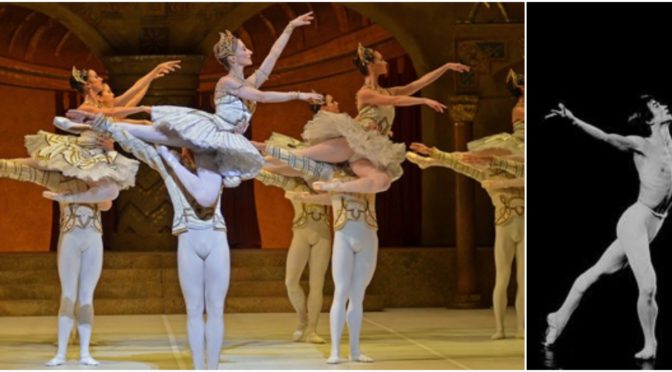
The opulent wedding scenes from Raymonda Act III showed his greatness as a classical choreographer. This was an apt homage to Nureyev as he is credit to reviving this production almost single handedly in 1964 purely from memory of his early years at the Kirov Ballet. It was spectacular performance on a lavish set revealing a vast pool of talent through the ranks of artists at the English Ballet. Vadim Muntagirov drew excited cheers from audience with his impeccable performance in the wayfarer and as Jean De Brienne in Raymonda. Daria Klimentova as Raymonda was exquisitely elegant. The four soloist ballerinas were outstanding showing a great depth of talent.

The evening was a fitting tribute to someone who with his enormous drawing power attracted whole new audiences to watch classical ballet at theatres. The packed audience at the London Coliseum had a fair share of the younger generation which should be good news for the English National Ballet and classical ballet in general

The Showstoppers At the Udderbelly Festival, Southbank Centre Sunday 14 July 2013

‘The Showstoppers’ is an unique attempt at an Improvised Musical show. It begins life as a workshop at the Actor’s Centre in London, when Dylan Emery, Adam Meggido and Ken Campbell took a group of actors with little or no experience and within a week attempted to get them to perform an hour long extempore musical in front of a packed house.

I attended the last show of this year at the Udderbelly festival at Southbank Centre. As I was waiting outside the giant purple cow to enter the tent, I met a lady who was coming for the second time in the last two week to see the sh

ow. I was intrigued- a tourist such as her herself, with  limited time in hand, would invest to see this show twice. Well why? She mentioned each show is completely different, and she wants to see the show as many times. That was a revelation-custom made shows which turn out differently at each performance.  Well, now I was all the more looking forward for the show.

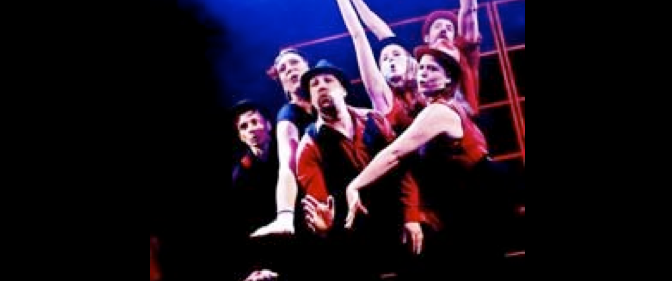
‘The Showstopper’ is an attempt to create an interactive musical based on suggestions from the audience. Dylan Emery- The  writer is on the phone with  his producer who wants the next musical ready in the next one hour . He asks the audience for help with theme, musical styles and a title. He took everything the audience threw at him, including suggestions for the title- ‘ Adam and Steve’. The show then turns out to be the most hilarious, innovative musical with flavours ranging from opera music to cabaret!

Adam and Steve in love bathing in the waterfall was one of the most hilarious scene – splashing water at each other and enjoying each other’s company, till the devils show the road to hell, where both  get the taste of wine and women .

For the audience the next 70 minutes was a rollercoaster experience. All the more satisfying with the knowledge that it was created at the spur of the moment without a set script? The dialogue, the action, the story and the characters were all the moving parts that were put together by the players, interactively with the audience.

The cast is an innovative bunch of talented performers. However, stand out performances of the evening were Julie Clare (The God), Adam Meggido (The Devil) , Andrew Pugsley (Steve)  and Philip Pellew (Adam). The music director on the keyboard, Duncan Walsh Atkins , percussionist Alex Atty  and supported by Chris Ash blended the music in the theatre in such a way, it felt like they knew what was coming up next , and added the right kind of tune for every dramatic moment.

The show is done professionally and collaboratively – sometimes having duets and group dances , in such synchronisation that it was hard to believe that everything was impromptu. It was, as the lady, I referred in the beginning mentioned  ‘Nothing was common from what I have seen last time – not even a single song’.

What a bunch of talent! Unimaginable .You can only see them to believe it. I am ready for a second, third and may be many more future versions. This should rank very much as a must watch show.

                                                                                                            Sharmi Roy

                                                     Sharmi is a catalyst to people ‘s transformation and growth,                                                                                         if she was not in learning and development she would have been a dancer.

Hofesh Shechter Company Political Mother: The Choreographer’s Cut 3-7 July, Sadler’s Wells, part of Sadler’s Sampled.

Hofesh Shechter’s Political Mother, the Choreographer’s Cut is raw energy – an electric, vibrant, soul shaking collage of music and dance with a feel of a rock gig. It completely transforms a dance house like Sadler’s Wells to a rock concert venue where the music will keep you on your feet, than sit and calmly watch. Instead of reflecting intellectually the audience will want to shake and thump their feet to the beating drums and match the energy of the performers on stage. This sets Schetcher’s Political Mother in a completely different genre of dance works.

The show opens big with 24 musicians on stage, set in split levels. On the ground there is a long row of percussionists. Above this there is a row of strings. Even higher there are drums of different sizes, guitars and a rock singer blaring out loud through his microphone, an indistinctive sound. The total picture is a  grandiose setting  of sheer size, aura, and volume. The music with it’s imposing arrangement and choreography on stage is the winning trump of the show. It does half the job of drawing the audience in to an Odyssey of sound, light and visuals.

The remaining half is Shechter’s astonishing choreography that has already placed him as  one of the most overwhelming choreographers in UK today. He started with a bang  in 2004 when he created the sextet Cult commissioned by the Place Prize. It did not take him long to draw international attention to his very signature style which is a choreographic play of physical movement and captivating score, most of which is created by himself. This, Shechter says is inspired by the technique of film editing which can miraculously involve the audience in what they are watching rather than reflecting from a distance. Shechter loves cinema and it is this trick of editing that he uses in his presentation. Shechter has used 16 dancers who storm the stage  with their ferocious animal energy. They appear to be raving mad when they attack with their movements. The dance completely complements the huge sound. It creates an effect of being in a closed space with accelerated vibration, soon to explode and throw you out in the space where after the boom there is calm and a tranquil high! This is the feel at the end of the show when you leave the house – you come out all charged up, but feeling smooth on the high!

The ambience has got much to do with the superb lighting design by Le Curran. He has done an astounding job in bringing out the mood of the presentation with his clever play of half lit and sometimes an almost dark stage.  Suddenly springs to  life and energy  by flooding in a bright wash – quietly boosting the heavy drums when they kick in!

The show flows through a collage of music and dance stringed with the mysteries of the human behaviour, the instincts that guide us through the cycle of life. One predominant instinct being the ferocious urge to fight back and extricate ourselves when captive, whether in a physical prison or within the norms of modern living!

Political Mother – The Choreographer’s Cut, a staggering achievement after a tremendous effort from the entire cast almost on a war footing. Led by Shechter, they steered their path through highs and lows and anointed the flag of modern dance in the Shechter style!

                                                                                        Protima Chatterjee

Swan Lake Presented by Raymond Gubbay and the Royal Albert Hall Wednesday 12 June -Sunday 23 June 2013

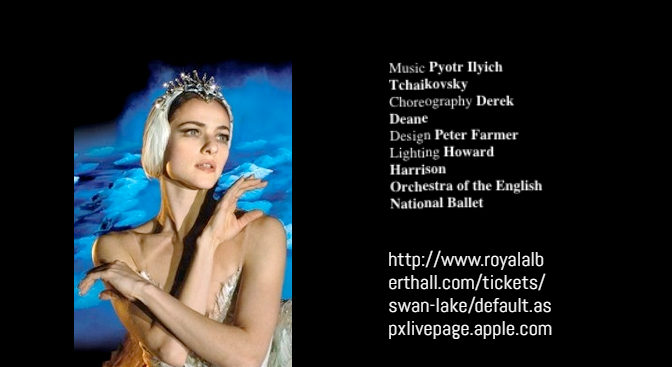
A huge flock of pearl white swans gliding into a lake on a glistening moonlit night- a breathtaking scene that has captivated millions of spectators around the globe every time Swan Lake has been staged over the last 135 years. This opening scene of  Act 2, looks more imposing in the English National Ballet’s production at the Royal Albert Hall – the round stage, open at all sides adds a different dimension to the lake motif. This is where Derek Deane’s superb choreography departs from traditional Swan Lake productions. The round space enables the cast to face each section of the audience and provides visual depth.

Tamara Rojo, also the artistic director of the company, is the swan princess on the opening night. She brings in one of her best performances. Her otherwise petite structure is magnified by the allure of her postures. She is graceful and pure as Odette, the swan princess and dark and dazzling as Odile, the black swan. She is a diva who portrays the two characters with ease and sophistication. The vibrance of her presence pulls her out of the group of swans as she flies past lifted in air by her prince or engages in elegant ‘fouettes’ circling the space with perfect precision.

Matthew Golding- a guest artist from the Dutch National Ballet debuts with the company in this production as prince Siegfried.  He is an impressive, handsome dancer whose body speaks technique. His agile flights in the air and brisk movement make up for his shortcomings of facial expression. The emotions that Rojo evoke complement the strength of technique by her counterpart to present some remarkable moments of pas de deux.

Villanous, socerer Rothbart, played by James Streeter wears huge bird like wings which he waves across the floor and runs round at each entry and before leaving the stage storming past casting an evil spell. His dappled winged costume adds to the spectacle.

The dancers of the English National Ballet have done a splendid job. Selected from dancers across different parts of the world, their performance is of the highest standard. Apart from putting together this impressive international ensemble the English National Ballet is also working tirelessly extending opportunities to young aspiring dancers generating new interests in the world of classical ballet.

Swan Lake – in the round is a production not to be missed. Audience will be dazzled by the opulence, glitter, and magnitude of the spectacle. It’s classical Swan Lake presented with a Derek Dean touch – diferent from a conventional ballet performance.

                                                                                        Protima Chatterjee

Clod Ensemble – Zero- 4-5 June 2013, Sadler’s Wells

Zero is a new production by Clod Ensemble- the company whose work is a path breaking amalgam of physical theatre, dance and live music. Zero adds another jewel to its crown. A Sadler’s Wells commission,  it is directed and choreographed by Suzy Willson, set to music by Paul Clark. Wilson and Clark  are also the co-artistic directors of the company. Zero, is a five act show that dwells on the core of human passions of jealousy, desire and ambition depicted through the dynamics of nature and weather in particular.

Zero has a cast of 10 dancers, who draw their expertise from varied performing arts backgrounds. This adds multiple layers, enhancing the richness of the production. Different shades, shapes and forms merge into one in the space when they move together- in alignment or disperse in the choreography. The 7 musicians ease you into a  dream soundscape with their blues tunes, The music sets the mood of the show, going hand in hand with the choreography yet lending a lighter touch setting the perfect balance and pace to the experience as a whole.

A projection screen comes to life between each act and leads you into the next. It serves as an introduction to the force of nature that  leads to the  subsequent acts. An audio comes into play at these junctures. They are clips from old news material or acts from plays. Tracks overlap to present an audio collage taking the mood of confusion a few notches higher -. There are voice overs, custom made for the show, pre recorded from a script which feeds in to the cycle of thoughts on which the choregraphy is based.

Act one begins with geometric patterns of movements that break in haphazard asymmetry. There is the play of power and politics. There is rift and division leading to turmoil. Everything falls apart; the net result of human life is ‘Zero’. Act two brings in romanticism, a human passion similar to rain wind and mist from the nature perspective. There is flirting, desire, new relationships ending in quick breakups. Men and women resort to animal instincts. There is no trust or faith in each other. All that remains is an undying need to quench the thirst of desire. Movements for this section are based on pelvic thrusts and hip sways in the most graceful form, with finish and perfection. The choreography is brilliantly in sync with the underlying theme.

Act three begins more like a brewing kettle, bubbling with a shaking lid ready to be kicked off by the gathering steam. It exposes a boiling pot of stormy relationships where some chauvinist men take the upper hand and women sting back. Act four rolls in as a calmer and sets pace for the final act. Families break, values shatter, rivalries grow between siblings, disagreements between parents and young adults lead to frustration and confusion. The windy rainy day moves into stormy darkness, living becomes a challenge,  a struggle  to co-exist.

Zero is a tumultuous production that brings the audience to face the unsavoury facets of life. It effortlessly erases boundaries between the arts while posing existential questions which we are often reluctant to face up to. It’s a work that keeps our souls alive and makes us desire life beyond the hardships, a clear sky and a calm ocean in the end.

                                                                                    Protima Chatterjee

6000 miles away Sylvie Guillem 20-25 May, Sadler’s Wells

Sylvie Guillem, a true dance goddess on stage! Her allure, grace and versatility leave her audience numb – eyes forget to blink, its the sheer awe of watching Guillem dance. In her artistic journey spanning for about 3 decades, she has worked with renowned choreographers, performed with innumerable companies and collaborated with dancers and film makers. Guillem returns to Sadler’s Wells with her ‘6000 miles away’ which premiered in 2011, featuring three pieces – Bye, Rearray and 27’52”.

‘Bye’ the closing piece of the evening, is a solo by Guillem, choreographed by Mat Eks.  It is based on Beethoven’s last piano sonata. Apart from being an outstanding piece of choreography and performance, it is a testimony of technological brilliance. It’s the high point where the energies of the two spheres – artistic creativity and technology, brush against each other resulting in a work of high art.

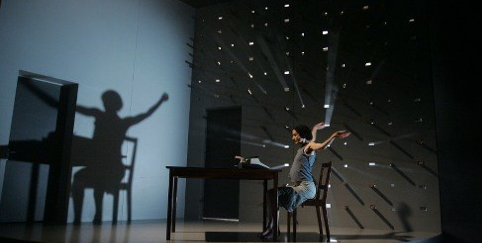
There is a white rectangular projection screen about 7 feet tall on which a zoomed in eye is trying to look out of a keyhole. As it zooms out we see Guillem…this is where ‘Bye’ begins. The projection screen appears to be a white boxlike space from where Guillem is gazing at the outside world – a little eager to step out. Along with curiosity there is fear of the unknown. She makes the first few hesitant but measured moves. She starts by trying to climb out from the top. We see Guillem’s head out from behind the top of the screen while the rest of her body remains within the screen (a pre filmed section). Here lies the mastery of coordination and timing. Its this play of reel and real that takes the piece to a surreal plane. This is followed by parts of Guillem’s body flickering out of the screen until she manages to completely squeeze out – her first full physical appearance on stage for this piece.

The rest of the piece leads to this lonesome sole exploring around her newly discovered space. She crosses paths with the projection screen which is trying to pull her back in. She resists with her inner strength personified by intense movements. Sometimes with a heavy gust of energy or a subtle tricky move she manages to keep herself out. Towards the end of the piece there starts appearing on the projection screen few others who look out to her. To us its blank gaze, but holds a message for Guillem. She has explored, now its time to return. She gets back in and what we now see is a pre filmed concluding part on the projection screen. She gradually merges with the crowd and is lost in her own space. We assume that the person who was with us for that brief moment has found the answers to her questions.

The piece produces an outflow of emotions that form a third layer, perhaps, in the human body under the flesh and the network of veins carrying the crimson blood. Had emotion been only a natural instinctive state of the mind then each muscle of Guillem’s body would not speak. Its the strength of Ek’s choreography that stirs that layer of emotion to project the idea of the piece. Guillem is a gifted dancer with a perfect body. Through her body, simple moves transform to magnificent forms, bringing an edge to her dance.

‘Rearray’ by William Forsythe is about strong technique that is flawlessly executed by Guillem and her partner Massimo Murru in the piece. An austere set up projecting a serious focus on movement. There is no strict narrative that the piece follows. It possibly suggests rearranging sets of movements to produce a fine piece of art.

‘27’52”’ the opening piece of the evening is performed by Aurelie Cayla and Lukas Timulak who bring with them a different dimension of movements. Set to an electronic score which is unrecognizably based on themes by Gustav Mahler, this piece is a contrast to the mood of the remaining evening. Choreographed by Jiri Kylian, ‘27’52”’ is a good filler but could not hold its might to ‘Bye’, as by the end of the show it fades away from the audience’s memory.

‘6000 miles away’ is based on Guillem’s belief that distance cannot end the admiration you might have for someone. It is not important for you to be physically near, to like someone. Most importantly, she named this production as an offering of respect to the victims of the Tsunami in Japan that happened as she was rehearsing with Forsythe in London. 6000 miles away is an extraordinary homage and a remarkable presentation which permanently places Guillem in the hearts of her audience.

                                                                                        Protima Chatterjee