Hello

Review: ‘Whistling As The Night Calls’: Martin O’Brien and zack mennell’s provocative exploration of the spectral space between life and death- at Deptford VSSL Studio until 1st December

‘Martin O’Brien and zack mennell reunite for their exhibition, Whistling As The Night Calls, hosted by Future Ritual at the VSSL Studio in Deptford. This marks a significant evolution in their impressive decade of collaboration, as it’s their first wholly photographic work. It revisits moments from O’Brien’s past live performances and captures them anew through still images with mennell behind the lens.

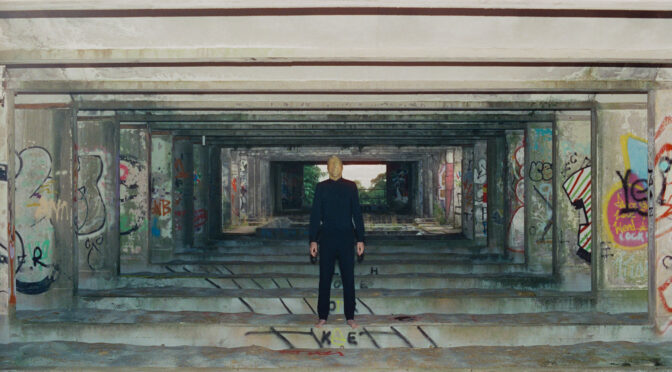
Martin O’Brien, a pivotal figure in disability art who lives with cystic fibrosis, continues his exploration of mortality and existence, identifying as a “zombie” who defies his life expectancy. The images, though a shift from live performance, resonate with his enduring themes of life, death, and the spectral space in between. In one corner of the gallery, he is seen cradled in a church, wearing only a leather head harness; nearby, another image shows him in a field, dressed in black, reaching and crying out through another harness which forceps his mouth open, toward an unseen force. Together, they capture a haunting and unsettling duality evoked through his vulnerability and resilience.

In this series, the chosen locations become essential characters, more than mere backdrops to O’Brien’s performances. Set against the haunting brutalist ruin of the former seminary at Cardross in Scotland and the desolate, shingled shores of Dungeness, O’Brien embodies a figure between life and death. The artists aptly likened the experience as “performing for ghosts.” This sensitivity to sit-specific work has roots in mennell’s earlier work, such as Tide Changers: (para)site, which explored the Deptford Foreshore. In that piece mennell highlighted the river’s encroachment on their body as a metaphor for parasitism, allowing the setting itself to embody the physical and psychological impact of the environment on the self.

For me, the standout image captures O’Brien lying on a pebble beach, his form blurred by streaks of red light that bleed across his neck and chest, emphasising his body’s vulnerability. This effect, combined with the stark stillness of the surrounding scene, invokes a spectral quality, as if something beyond the living and visible world permeates the frame and into the gallery. This effect is taken further within the skeletal frame of an abandoned building, where O’Brien sprawls his body in a series of nine shots in different locations within the photographs. With each shot, viewers are drawn to new vantage points within the expansive space, creating an unsettling sense that something remains hidden, just beyond reach. mennell’s choice to shoot on analogue film—consistent with their previous exhibitions—imbues O’Brien’s figure with a haunting vacancy with its stark lighting contrast, as if his body itself resists being fully grasped by our eyes.

In his past productions Martin O’Brien has reflected on ‘art as a place – maybe the only place – where you can regain agency over your body.’[1] Together, the artists create a series that lingers in the mind, inviting audiences to confront mortality, to share in this space between life and death, and to connect with what lies beyond the visible.

Review by Olivia Kiakides


Reference: [1] The Guardian- ‘‘I was born with death as my sidekick’: the ‘zombie’ with cystic fibrosis who turns pain into art’ (2023)

Featured Image credit: zack mennell

VSSL Studio, Deptford, SE8 4AL
Now running, until 1 December 2024
Open Thursdays by appointment & Fridays to Sundays, 12pm-6pm

Read our latest exhibition Review: Critical Edge Collective’s ‘From the Ground Up’: Investigating knowledge in the post truth era through collaborative art – at Lewisham Arthouse, October 2024 – Abundant Art


Review and Exclusive Interview: Romain Rachline Borgeaud’s ‘Stories’ – The Tap Dance Sensation: Dark noir drama breathes new life into old genres, at Peacock Theatre until 2 November

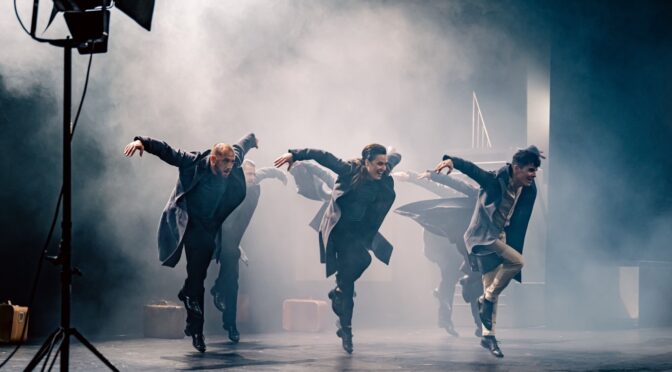
What three words could be used to describe Stories – The Tap Dance Sensation? Smoke, silhouettes and suspense come to mind, with the lasting impression of the show being one of the many dramatic, back-lit moments where the 10-piece cast, identical grey coats flying with each move, are silhouetted dramatically against a smoky haze. With a continuous sequence of perfectly executed dance numbers (accompanied by, one must admit, slightly less sensational music), the dance itself rises above the plot and music, sometimes quite literally, in this bold new show.

Stories is structured around a perpetual cat-and-mouse chase between Icarus, the successful yet vulnerable newbie in showbizz, and his controlling director, who surreptitiously begins to appear off-set in Icarus’s personal life too, stalking street corners and casinos in an attempt to hunt him down and control his every move.

The show begins with a number whose vocals repetitively intone: ‘Each day we get the job, we get the job done,’ to a backdrop of piles of papers in an editorial office. From this modest beginning and a relentless 9-5 existence, Icarus suitably rises to reach his dream of becoming a successful actor. But, in a tragic turn of events, his fame seemingly turns against him, and he loses almost everything, all whilst in debt to the very man who has turned his life upside down.

The plot is dramatic – it’s not subtle or nuanced, but neither is it meant to be, as it pays homage to musical theatre and relies unashamedly on melodrama, essentially functioning as a framework for the dance and emotions to shine through, as some of its confusing details are lost on the audience. Despite the slightly distracting lyrics of the music, expressed in the incongruously slow form of spoken word, the dance is contagiously high in energy and the cast seem to be brim with endless enthusiasm.

In some of the sequences, more traditional moments of tap-dancing pay tribute to the historical precedents of the genre, with the traditionally recognizable toe-tapping rhythm providing the pace for the looming drama to unfold. Predominantly, however, the show explores tap alongside urban jazz and synthesises dance genres, spoken word and percussion to shake up the audience’s expectations and assumptions about tap dance. Romain Rachline Borgeaud, the writer, composer, director, choreographer and producer of the show (clearly adept at wearing multiple creative hats) has described his process as follows, explaining that everything starts with the story:

“Writing a scenario, a piece of music or movement requires me to be in very different states of mind, but when I work I always see creation as a whole. When I write music, I think about movement and when I get into the dance studio, I often make immediate changes on the score.”

Romain began life as a tap-dancer as a kid after falling in love with Gene Kelly’s style. After love affairs with Jazz and ballet, the latter of which he considered making his career, Romain says that:

“Life led me back to musical theatre and tap dance.”

Testing tap’s capacity for expressing heavier emotions was part of Romain’s mission for the show, with Stories formulated with the intention, Romain says:

“Of bringing tap dance to a more modern, heavy place.’ Romain continues: ‘Tap dance is often used as a light, happy way to dance, but I think it also makes a lot of sense when it tells extreme, dark emotions, anger and despair.”

Romain set up the RB Dance Company in 2018 to fill a gap in the dance scene in France and give contemporary tap a new platform. Explaining that he intended to bridge generations and translate tap into a contemporary language, he says that:

“It was important for me to pay tribute to traditional musical theatre, but on the other hand, I want to bring that tradition to younger generations in a way that makes sense to them. One of my goals is to get kids to realize that tap dance is great and that it does not belong to the past. This allows generations to come together and appreciate the show from very different perspectives.”

Written by Lucy Evans 


Stories: The Tap Dance Sensation is at Peacock Theatre from 30th October until 2nd November 2024.

Featured Image: ©Aline Gérard

Tickets and information: Stories – The Tap Dance Sensation – Peacock Theatre

Read our latest Review: Critical Edge Collective’s ‘From the Ground Up’: Investigating knowledge in the post truth era through collaborative art – at Lewisham Arthouse, October 2024 – Abundant Art


Review: Critical Edge Collective’s ‘From the Ground Up’: Investigating knowledge in the post truth era through collaborative art – at Lewisham Arthouse, October 2024

The breakdown of information systems in today’s world has created an abstract and hazy reality. The daily struggle of filtering a relentless cascade of mostly irrelevant content has overwhelmed the brain’s ability to critically evaluate or categorise truth effectively. This once intentional, conscious process has become automated, leading to passive individual consumption, perpetuated by excitement of novel information overriding the more important analysis and categorisation of such information. Even then, our individual perspectives are limited through personalised algorithms that represent only a tiny fraction of our collective reality. These algorithms are already driven by capitalistic motives that bolster individualism and selling idealised personal experience, distracting from systemic issues and sustaining the status quo through curated, shallow engagement with information. What can one do to better equip themselves to survive in a hyperreality with such an agenda? Engagement with art reminds us that truth is not static, inviting us to adopt alternative perspectives, and revealing that individual truth and knowledge are parts of a larger, diverse tapestry that makes up our collective understanding of the world.

The former library of Lewisham Arthouse provides the setting of Critical Edge Collective’s latest investigation into how collaborative art can achieve the aforementioned. “From The Ground Up” is a group exhibition, whose curatorial statement urges the “re-evaluation of established knowledge systems” and “prioritises trust, inquiry, and collaboration” in hopes of subverting such knowledge systems and creating a “metaphorical library”. These intentions correspond well to the building’s history as a place for constructing ones own perspective through both well established and hidden knowledge, while evolving the more restrained nature of words in a library into multifaceted art that is open to a broader range of interpretations. The show features works by nine artists from the collective – Nele Bergmans, Matty Emery, Jane Hughes, S. R. Latham, Te Palandian, Nasus Y Ram, Joy Stokes, Eleanor Street, and Carmen Van Huisstede. The works are created in response to the exhibited “research boxes”, made by the same artists and some additional collective members.

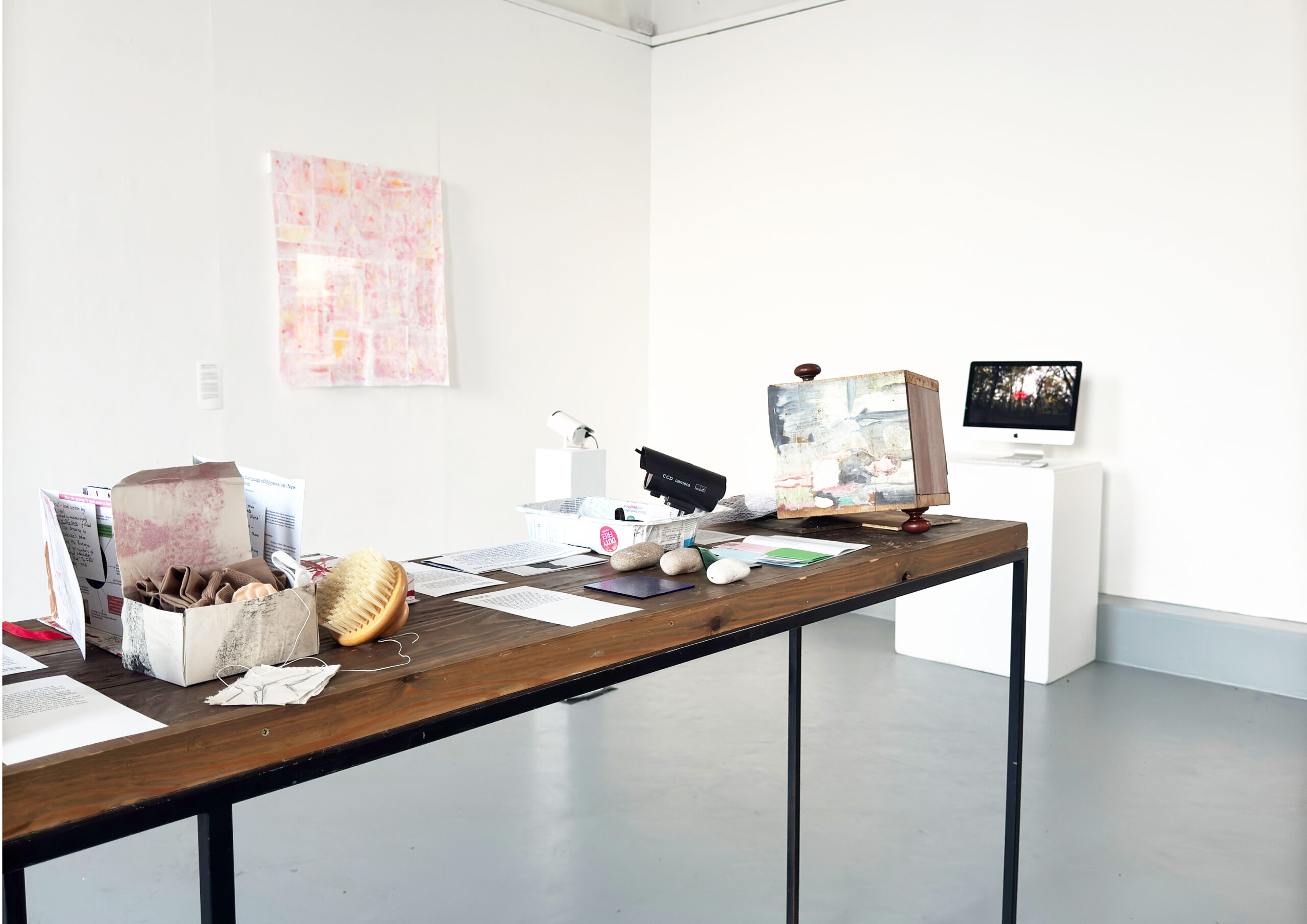
The resulting experience is incredibly dense and personalised, achieved through clever curation. The research boxes are placed on an alter-like platform in the centre of the room, accompanied by detailed descriptions of their contents as well as some context about the artist who made them.

Viewers are encouraged to look through the boxes and read the thoughtful descriptions of each one in order to find connections to the final works, and get an overall impression of the show’s collaborative process. As a result the show manages to incorporate each work into the overarching concept by way of its process if not by its content.

“From the Ground Up” is in congruence with the ethos of the collective’s previous two shows that focussed on a search for new communication techniques in hopes of subverting mainstream narratives. Notably, their show at Copeland Gallery in Peckham, “And you would have to believe it”, which highlighted how ambiguous art can make us more open to nuance, questioning, and critical thinking in the face of these narratives. Both the research boxes and polished works in “From the Ground Up” show each artists ability to employ this same openness in their creative research, investigating their chosen interests by bringing lesser known information to the surface, and nurturing new understanding through how that information is creatively processed.

Matthew Emery’s critique of modern capitalism and its manipulation of the working class is embodied in his research box, constructed from torn-down billboard paper that mirrors the cycle of misinformation and pacifying advertisements used to distract the public from capitalism’s inherent flaws. Inside the box are printed YouTube links to interviews with influential thinkers like Noam Chomsky and Franco Berardi, alongside works by artist Peter Kennard, who explores the tactics used by the UK and USA to maintain global dominance. Matty’s research box, as well as his wider body of work, advocates for personal inquiry into the failures of western capitalism as a means to counter the division and competition imposed on the working class when demands for change are left unheard by elite powers. The breakdown of information systems that inspired the initiative for the show was caused most directly by western capitalism, so the themes in Matty’s work that inspire action against it highlight the solution the show provides for these breakdowns in a reciprocal way.

Exploring the meaning of materiality, Nele Bergman’s research box includes glass and stone displayed in a microcosm that relates to her larger installations and sculptures. The beautifully arranged organic materials in much of Nele’s work, together resemble the interactions of truths, falsehoods, and missing information in knowledge systems. These materials interact and the contexts of each material, which act as metaphors, change depending on interpretation. Nele’s piece for the show, “Moab, Utah and Jordan” places uranium glass, loaded with metaphors that relate to destruction, in the centre of fragmented stained glass, mounted on a piece of plywood and covered with Perspex. The piece is undoubtedly inspired by Te Palandjian’s research box, full of physical geological samples from her trips to Moab, Utah, along with other desertscapes of Spain and Jordan. As explained in the caption for “Moab, Utah and Jordan”, uranium deposits were found in Moab, Utah, by the US in 1940. With uranium glass being a combination of a potentially destructive element and a common material such as sand, Nele’s arrangement provokes thought about how beautiful landscapes can be exploited by those with power and used for destructive acts. However, with uranium also holding potential for renewable energy and medical applications amongst other positive attributes, Nele’s piece could also reflect the value in exploring natural landscapes for resources undeniably helpful to humanity. Of course, there are many materials that possess both negative and positive contexts, and this ambiguity is a reminder that any perspective and knowledge gained from an artwork is totally dependent on the audiences willingness to integrate their own into the viewing experience.

Another notable work, Eleanor Street’s “tl;dr”, reflects on the distortion of information by consequence of the illusory freedom in digital publication. By presenting dynamic digital material through static forms, Eleanor highlights these increasingly obvious distortions which stem from the same personal and corporate agendas embedded in established knowledge systems. “tl;dr” also suggests how a fragmented media landscape infiltrates these knowledge systems by re-examining the past through a present lens that prioritises individual perspective, uncovering previously ignored negative experiences tied to the construction and maintenance of these systems. Despite this positive effect, the media landscape remains plagued by self-interest, leaving apparent societal and personal truths more convoluted than ever.

“From the Ground Up” collectively gives hope for how our increasingly personalised interactions with information can foster new ways of understanding if collaboration and inquiry are prioritised over self interest and manipulation for personal gain. While it would be impractical to explain the work and research of every artist involved in this show, it is clear that every member of the Collective seems to be aligned with this priority, and committed to using multivalent, individually expressive art that makes people constantly re-evaluate their perspective in today’s overstimulating world. Looking forward, it will be exciting to see how the collective’s future projects evolve.


Review by Chris Wieland

Featured Image: Installation image of ‘research boxes’ placed on an alter-like platform, with content description connected to the final works and the artists’ collaborative process.

For more information please visit Critical Edge Collective

Read our latest review here Review: ‘Waves’ of Displacement: Huang Po-Chih’s evocative exploration of labour and identity, at Hayward Gallery until 5 January – Abundant Art

Review: ‘Waves’ of Displacement: Huang Po-Chih’s evocative exploration of labour and identity, at Hayward Gallery until 5 January

Taiwanese artist Huang Po-Chih’s first solo exhibition at The Hayward Gallery, Waves, delivers a compelling exploration of globalised trade. Rooted in his mother’s experience as a garment labourer in Taoyuan, his multidisciplinary work powerfully draws together individual narratives with broader experiences of workers across China, Hong Kong and South Korea. By giving voice to systematically marginalised communities, his oeuvre productively dissects the complexities of the Southeast Asian textile industry, exposing the exploitation of labourers inherent in capitalist-driven trading structures.

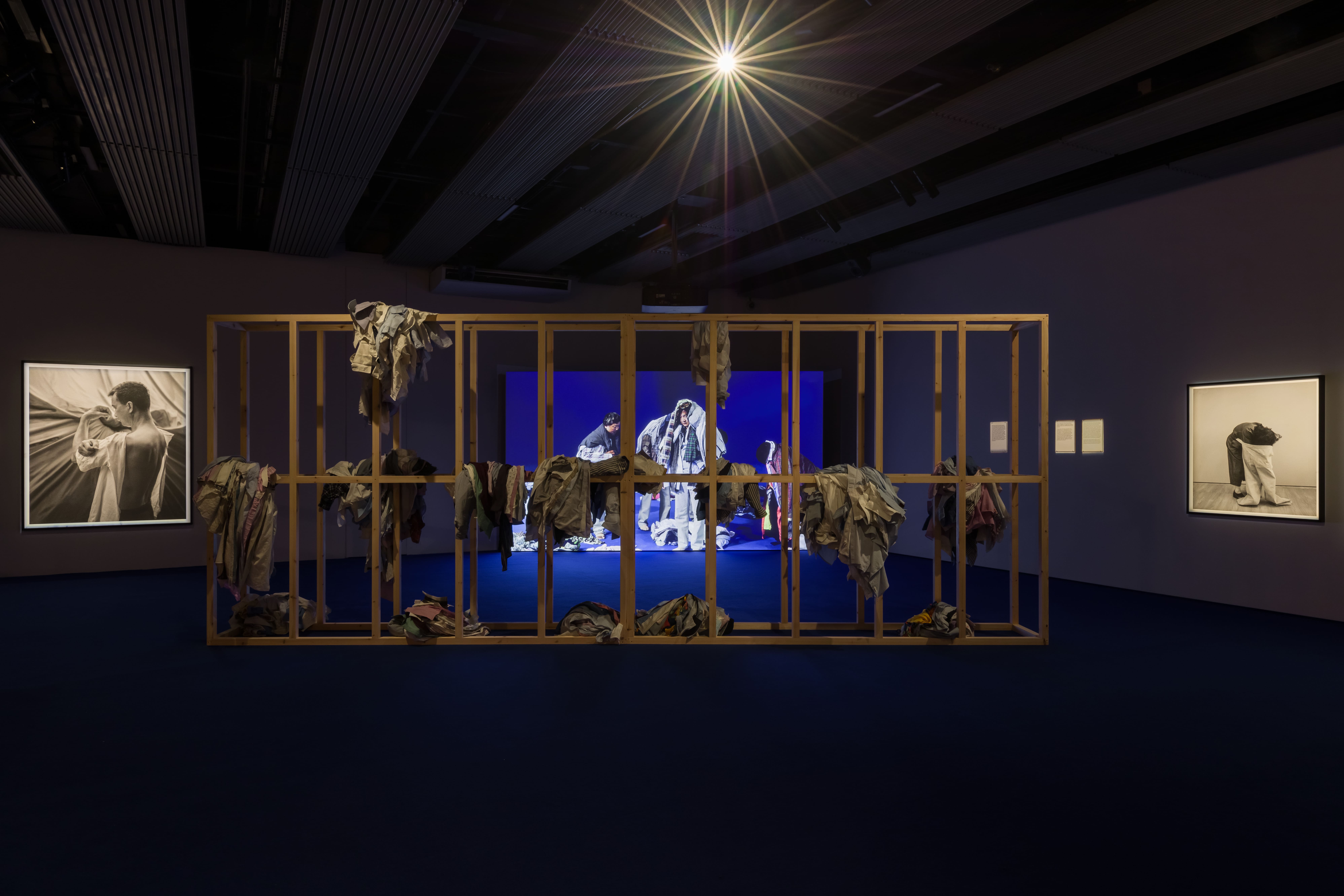
As you enter the space, a striking series of black and white photographs of Huang’s mother, Ho, and Mrs. Kim, a textile worker from Seoul, confronts you. With their faces obscured, these portraits simultaneously capture anonymity and intimacy, embodying the experiences of countless workers through their concealed identity. Yet, amidst this ubiquity, a raw, familiar connection emerges, illuminated by gentle folds of skin, stray locks of hair, and age spots on weathered hands. Huang’s camera captures details that speak to the individual narratives of Huang’s mother and Mrs. Kim, underling their stories within the collective experience of exploitation.

These images also exude informality and playfulness as the women contort their bodies into elephant-like poses. At first glance, these gestures appear casual, but a sinister political undertone swiftly emerges. The elephant, a symbol of economic growth in Taiwan, starkly reminds us that such prosperity is built on the exploitation of textile workers. Huang masterfully strikes a balance between playful expression and pertinent, yet not overstated, political commentary. This is evident when Mrs. Kim comically entangles herself in wide-leg trousers to mimic an elephant. The result is an effective interplay of equanimity and critique, where Huang challenges unethical capitalist practices in the fast fashion industry without overwhelming the viewer with didacticism.

Huang’s latest video piece, Seven People Crossing the Sea – Racing Pigeon (2024), dramatises Ho Ying’s harrowing journey as an undocumented migrant from mainland China to Hong Kong, culminating in his labour at the Pang Jai textile market. The piece opens with seven performers shrouded in layers of clothing, cutting each other free as if shedding skin. This repetitive task, coupled with their aimless movements, evokes an existential despair, portraying them as automatons trapped in an endless cycle of labour. The silence, punctuated only by rustling of fabric and sharp snips of scissors, is both unsettling and suffocating. The film’s shifting focus heightens its dreamlike quality, suggesting a relentless struggle with their never-ending work.

A powerful transition features a performer representing Ho Ying, dragging an enormous sheet stitched from blue and white garments. His body contorts under its weight, a poignant metaphor for the immense pressures he faces as a migrant. The fabric, soaked and rippling with water, mirrors his perilous sea journey to Hong Kong and reminds the viewer of the exhibition’s title, Waves. In a striking moment, Ho Ying is submerged, eyes closed, surrounded by sodden garments—a harrowing image that encapsulates both the dangers of migration and the exploitation awaiting him in the textile industry.

Despite the challenging subject matter, Huang infuses the exhibition with humanity, inviting viewers to connect with the personal narrative presented. By amplifying the voices of workers often erased in the discourse, his sensitive pieces portray them not as victims but as autonomous individuals with agency, political awareness, and distinct identities. The show is accessible, employing a subtle approach that refrains from direct confrontation with global fast fashion brands. Instead, it challenges the viewer to confront their complicity in the inequalities and exploitative labour practices prevalent in the textile industry of the Global South.

Huang Po-Chih’s exhibition Waves is free and on at The Hayward Gallery 15th Oct 2024 – 5th January 2025

Featured Image: Installation View of Huang Po Chih’s Waves-2024. Photo: Mark Blower, Courtesy: the artist and Hayward Gallery

Review by Florence Marling

Read our latest in exhibitions here Review: Maharaja Ranjit Singh and the Great Sikh Kingdom at the Wallace Collection, until 20 October – Abundant Art

Review: Maharaja Ranjit Singh and the Great Sikh Kingdom at the Wallace Collection, until 20 October

The Wallace collection’s current major exhibition, ‘Ranjit Singh: Sikh, Warrior, King’ is lovingly curated. It covers the rise to power of Maharaja Ranjit Singh and then the decline of his Sikh kingdom after his demise in 1839.

The prelude to the rise of Sikh power is covered through the story of the great saint “Guru Nanak” of the Bhakti movement to the inspirational last Guru Govind Singh who creates “hawks out of sparrows”. The last Guru creates a casteless martial cult of Khalsa out of ordinary peasant folk in a region ravaged by invasions. Bands of armed fearless Sikh soldiers organised in Misls roam the north western Indian countryside harassing Mughals as well as the marauding Afghan militias. With time the Sikh confederacies become fractious with internecine warfare weakening them. This provides the background of the rise of Ranjit Singh- A courageous solider, inspirational commander and an even more astute diplomat and leader of men.

Ranjit Singh unites the various Sikh clans, refuses to be drawn into the Anglo- Maratha wars and creates a modern army. He hires European officers discharged or deserting from the French army after Napoleon’s defeat and organises his Misls on European lines with European firepower. He is blessed to have tactical geniuses like the formidable General Hari Singh Nalwa and fearless commanders like Phula Singh Nihang. His army conquers Kashmir and pushes back the Afghans beyond the Khyber and expands the Sikh kingdom to cover pretty much most of present day Pakistan, Indian Kashmir, and Indian Punjab. It was a remarkable feat for a man in an uncertain war ravaged time especially with great powers like the British, the Marathas and the Afghans around him.

The exhibition curated by Davinder Toor manages to transport the visitors to that space and time that gave rise to this magnificent Sikh kingdom. The prelude is covered through miniature paintings. There are three miniatures tracing the arc of history from Guru Arjan  who was martyred to Guru Govind Singh, a trajectory of Sikhism from a peaceful reformation movement to a militant tradition that would one  day defy  and defeat great powers. The story of Ranjit Singh’s rise is also shown through miniatures. The most telling is the one showing the meeting between fugitive Maratha leader Jaswant Rao Holkar and the Maharaja in 1804. Assessing his strengths and strategic objectives carefully, he refuses to be drawn into the Maratha British conflict.

The exhibition then moves on to showcase several remarkable artefacts. Among them the Maharaja’s immaculately carved sword forged from Damascus steel – a testament to India’s metallurgical heritage, his gold plated throne, matchlock rifles and his beautifully illustrated cuirass. Of these,  the cuirass with its elegant calligraphy of quotations from the Guru Granth Sahib and Guru Nanak’s portrait in the middle is the most striking. Another unique exhibit is the war shield of the legendary General Hari Singh Nalwa known in military history for his campaigns against the Afghans and in Kashmir.

The original document and the receipt showing the acquisition of the Kohinoor diamond by Lord Dalhousie from the infant prince  Duleep Singh evokes a variety of emotions.

The war displays included the turban helmet made with watered steel, iron, gold and brass. The helmet has a peak in the middle to accommodate the Sikh top knot. Another menacing war item on display is the dark blue Turban fortress or the turban worn by the Nihang ( crocodile) order of the Sikhs. It features a totemic steel centrepiece called ‘Gajgah’ (grappler of elephants’) and razor-sharp steel daggers, quoits and tiger-claws.

The dark blue cloth spouting from the peak represent the ‘Farla’ (Khalsa’s battle standard), signifying the wearer’s rank as that of an ‘Akali’ (Immortal).

Apart from the gold plated throne and the possession of the Kohinoor the exhibition has other items like emerald jewelled girdle of the Maharaja. Some jewellery of the Rani Jind Kaur and a sketched portrait are on display. These point to fabulous riches accumulated by the Sikh kingdom at the peak of their powers.

The exhibition brings to life a shining era of Sikh History – of a people forged in the crucible of Indian history who rose to seize power and change its course. They were instrumental in the fight back of Indian culture against complete annihilation under the onslaught of repeated land invasions.

For me, the exhibition also rekindles childhood memories of growing up in India and watching the Guru Nanak birthday processions where Sikhs in traditional attire with unsheathed swords marched across the town chanting “Sat Sri Akal”. Kudos to Wallace collection and Davinder Noor for their authentic retelling of an important chapter of Indian history.

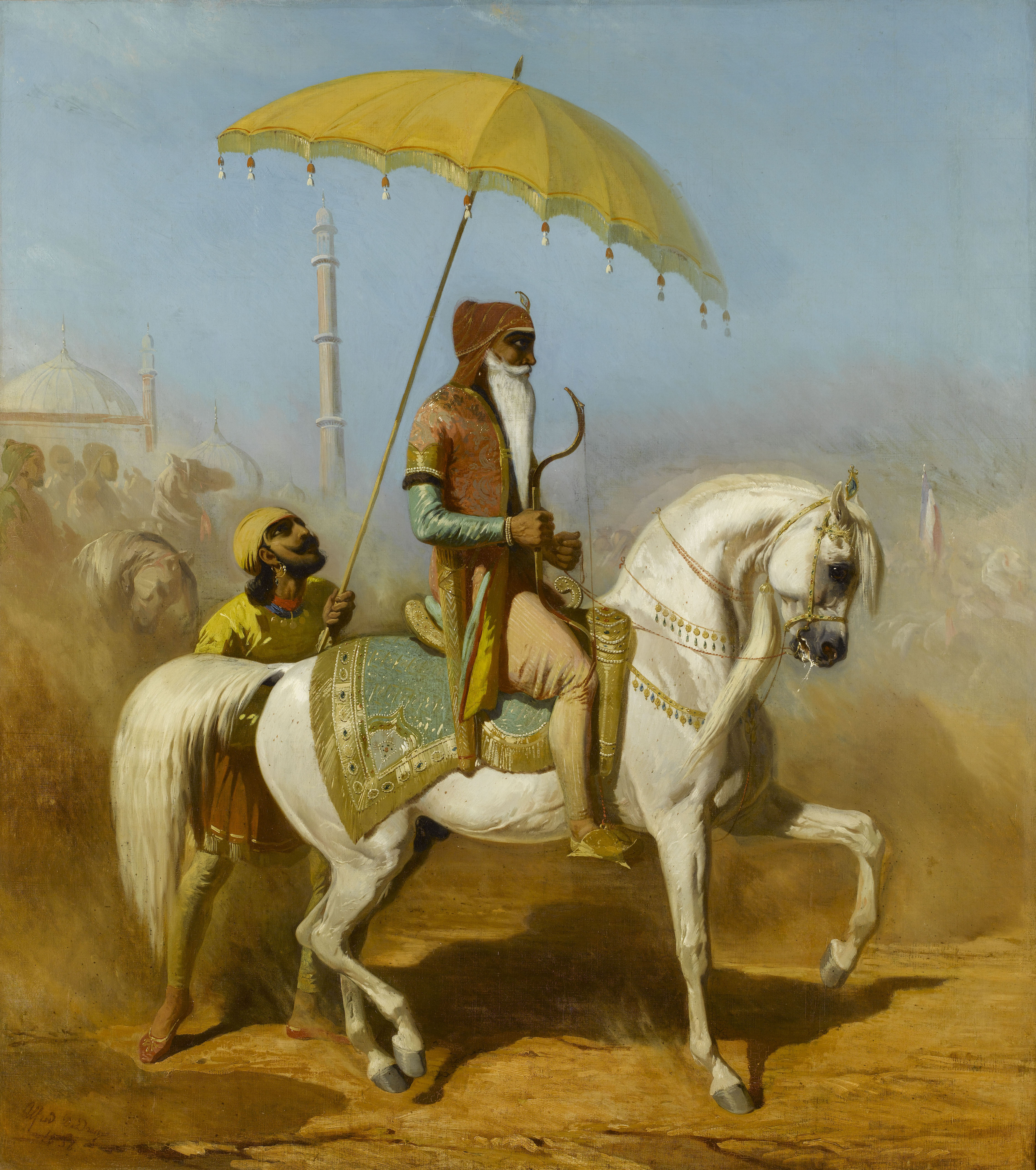
Featured Image: Alfred Dedreux, Randjiit Sing Baadour, Roi de Lahore’ (Ranjit Singh the Brave, King of Lahore) commissioned by General Ventura, Paris, c. 1837, © RMN-Grand Palais (musée du Louvre)- Stéphane Maréchalle

Review by Koushik Chatterjee

Ranjit Singh: Sikh, Warrior, King, 10 April – 20 October 2024

Visit The Wallace Collection – The Wallace Collection

Read Koushik’s latest review Qawwali Flamenco: a deeply emotional experience-Barbican (abundantart.net)


Review: ‘Fragile Beauty’: Timeless Moments from the Sir Elton John and David Furnish Photography Collection at V&A – until 5th January 2025

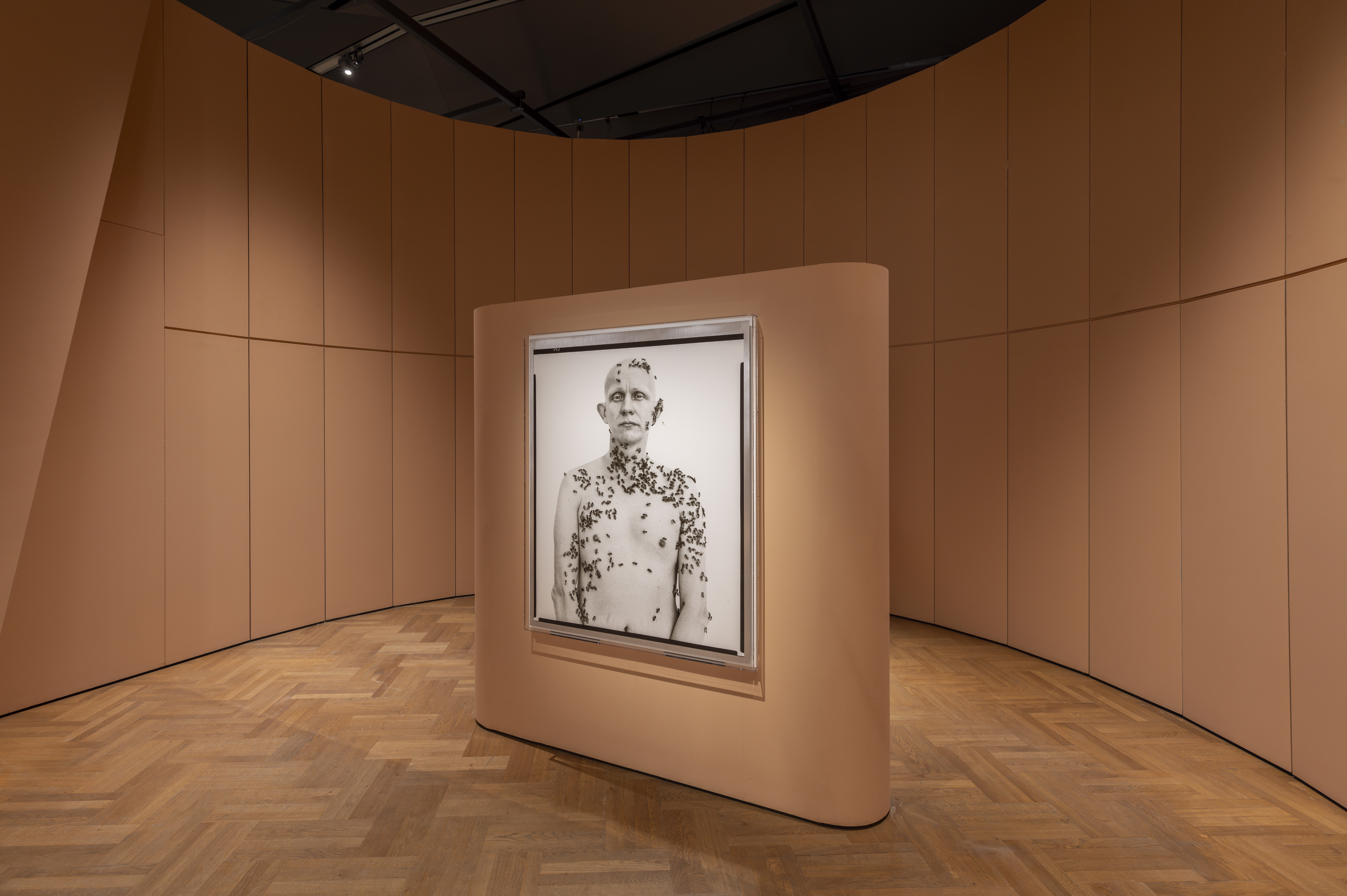
Turn the corner to Fragile Beauty and a curved, soft pink wall greets you. A single, striking black and white image hangs prominently, its starkness a counterpoint. The image is Richard Avedon’s Ronald Fischer, Bee Keeper, 1981, depicting a shirtless man, face-on, covered in a swarm of bees. This portal is your first clue that Fragile Beauty: Photographs from the Sir Elton John and David Furnish Collection is more than an exhibition; it’s an invitation into a personal space, existing somewhere between pain and pleasure.

Within the galleries, the frames holding the 300 strong photography collection are a charming mismatch, ranging from ornate gold to simple black wood. This visual disharmony reinforces the idea that this isn’t just a curated collection – it’s a window into Elton John and David Furnish’s personal taste, a glimpse of the art they admire and choose to surround themselves with in their home.

Moving through the exhibition, each room offers a unique thematic exploration of photography. One moment you’re immersed in the world of ‘Fashion’, surrounded by iconic shots of models adorned in haute couture. Next, you’re face-to-face with legendary figures in ‘Stars of Screen, Stage and Studio’, captivated by portraits of Bob Dylan, Marilyn Monroe and Elvis Presley. 

The exhibition’s true strength lies in its unexpected juxtapositions between spaces. From the sensuality of ‘Desire’ to the grit of ‘Reportage’, Fragile Beauty showcases the vast possibilities of photography. In ‘Reportage’ photojournalism takes centre stage, documenting pivotal moments in history. Viewers are confronted by the chilling image of Robert F. Kennedy’s assassination and Ai Weiwei’s impactful photographs of protestors. Even recent pivotal events like Harvey Weinstein’s trial and the Capitol riots find their place in this visual narrative, serving as a reminder of photography’s power to capture and record history.

Adding to the exhibition’s unique ambience is its unconventional design. The walls have large cut-out sections that add a sense of fragility. This visual metaphor speaks to the exhibition’s title – the beauty of photography lies in its ability to capture a moment in time, forever preserving something that is inherently fleeting.

Rounding off the exhibition, a section titled ‘Collecting Now’ highlights recent acquisitions to Sir Elton John and David Furnish’s collection, offering a glimpse into their ongoing journey as avid art enthusiasts. This space, much like the rest of the exhibition, is a testament to the couple’s deep appreciation for musical, cultural and creative heritage. 


Featured: Installation image of ‘Fragile Beauty’ at V&A South Kensington © Victoria and Albert Museum, London

Review by Amy Melling

Read Amy’s latest Review: Bahamian Artist Tavares Strachan’s ‘There Is Light Somewhere’ Highlights Unsung Cultural Pioneers (abundantart.net)

‘Fragile Beauty: Photographs from the Sir Elton John and David Furnish Collection’ is showing at V&A South Kensington until 5th January 2025. More information and tickets can be found here.

Film Review: Cédric Kahn’s ‘The Goldman Case’: A Riveting Exploration of Justice – In UK and Irish Cinemas 20 September

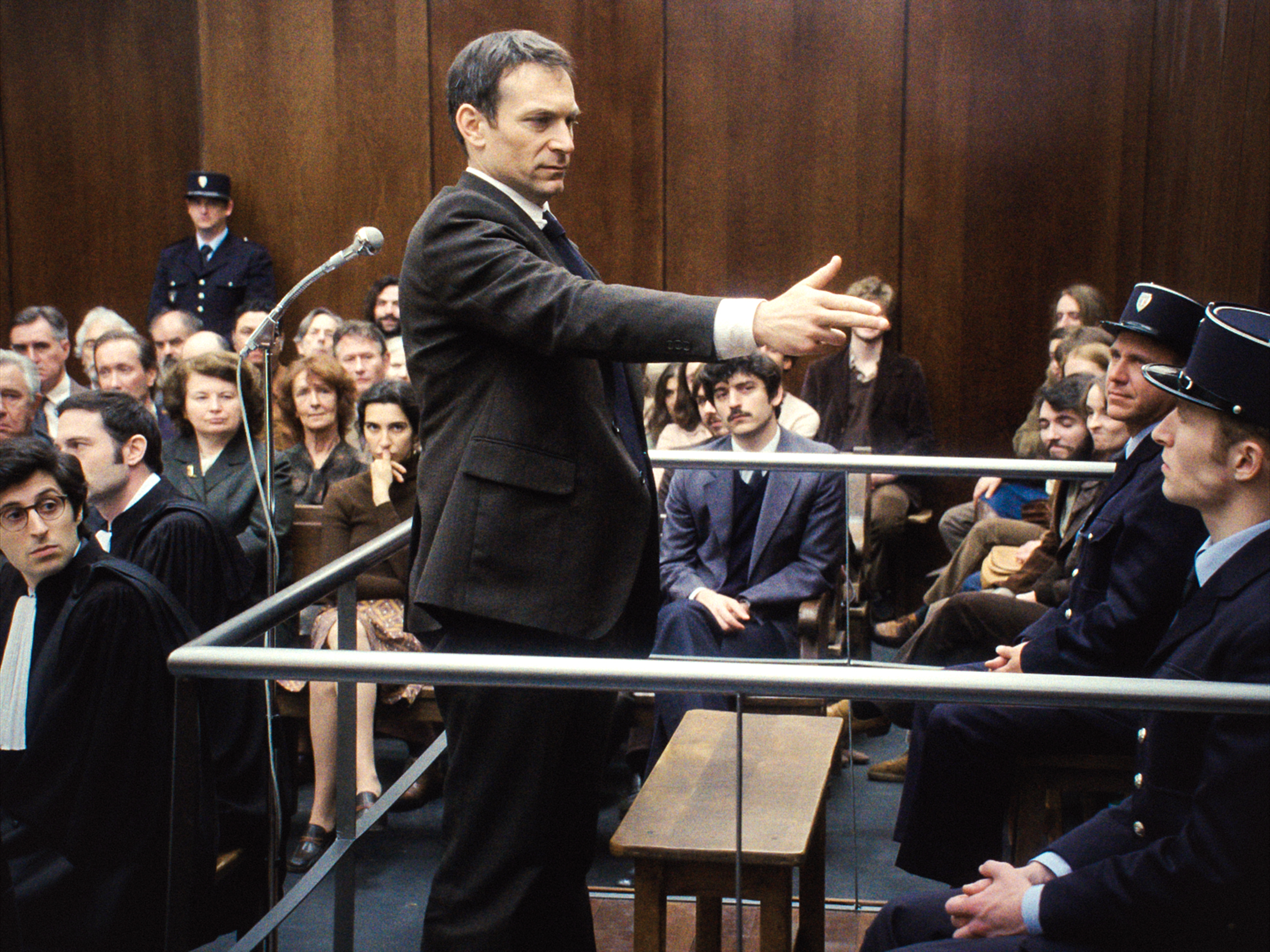
THE GOLDMAN CASE starts silent, a full-on immersion into the context of the trial of Pierre Goldman, a left-wing intellectual, thief and revolutionary accused of multiple robberies and two murders in the imperialist and capitalist France of the 70s. We know Goldman before we see him – two letters read out loud, one to his friend, other to his lawyer, in which his personality shows and strikes us, and fills us watchers of questions.

This is the only moment of the film that happens outside the court. There are no flashbacks, no music to lead the audience on, just one place and moment – the second trial of Pierre Goldman after being convicted six years before – which we follow from beginning to end in this riveting film about the complexity of justice. Cédric Kahn, the writer (among Nathalie Herzberg, television and film screenwriter) and director mentions that ‘The audience’s presence helps bring across the notion that a trial is also an arena where a battle is being held: it is a cross between spectacle and a search for truth.’ ‘An arena where a battle is being held’ – there’re no better words to describe what we are about to witness.

Kahn got infatuated by the story years before transforming it into a movie. He talks about the process and his rejection of a biopic. THE GOLDMAN CASE is made up of a mix of interviews, newspaper articles and books that make the film as faithful as possible while also taking some liberties, a long process that shows and attracts us, fast-paced and intriguing, into this world we’re not sure we’re welcome to enter.

The style and cinematography are true to the time while also being contemporary. The colours and aesthetic transport the audience to the age the film is based on. THE GOLDMAN CASE is as well a story we can still relate to – a story about racism, classism, complexities of justice and how media shapes narratives: contemporary themes that sadly still shape our society fifty years later.

That Pierre Goldman is innocent or not doesn’t matter as much as the politics in France at the time and how the narrative was shaped, both by himself and by the press, before getting to where they are at the moment. Arieh Worthalter, the main actor, does an incredible job in showing us this duality, as we question him and his personality – just like the court questioned Goldman –and begin to love him – just like France did as the case unfolded.

As clearly stated on the film, this was ‘The case of the century – even if the century is far from ending’. And so it feels. With Cédric Kahn on the steering wheel and the amazing cast, THE GOLDMAN CASE is an emotional and compelling story well worth of its nominations and César award for best actor.

Review by Eva Mateos Rodriguez

Read Eva’s latest Film Review: Monia Chokri’s ‘The Nature of Love’ is an honest insight into adult affairs – in UK and Irish cinemas – Abundant Art


The Goldman Case is released in UK & Irish cinemas 20th September 2024 Certificate 12A & Running Time 115 Minutes Tickets: TheGoldmanCase.co.uk

WRITTEN AND DIRECTED BY CÉDRIC KAHN

STARRING:

ARIEH WORTHALTER – César Winner – Best Actor, The Goldman Case

ARTHUR HARARI –Academy Award, BAFTA and César Winner – Best Screenplay, Anatomy of a Fall

Review: Bahamian Artist Tavares Strachan’s ‘There Is Light Somewhere’ brings stories of unsung cultural pioneers to the forefront

Inside Tavares Strachan: There Is Light Somewhere, daylight is replaced by a hushed, almost reverent darkness. Spotlights pierce the gloom, highlighting individual works with dramatic intensity. A low, rhythmic chanting echoes through the vast space, creating a sense of mystery and anticipation. This immersive introduction sets the stage for the captivating mid-career survey of Bahamian artist Tavares Strachan.

Strachan’s work is a vibrant tapestry woven from diverse media – sculpture, collage, neon installations and multimedia experiences. The unifying thread is a commitment to celebrating the invisible – unsung explorers and cultural pioneers whose stories have been lost, marginalised, or deliberately erased by history’s biased gaze.

As you wander through the exhibit, monumental sculptures command attention – huge stone heads, bright acrylic boxes, skeletal neon drawings. Their bold forms and unexpected materials stimulate and challenge the viewer.

A highlight of the exhibition is installed within the upper galleries. Here, viewers enter a transformed space, their senses immediately bombarded with a unique blend of stimuli. The floor crunches underfoot, a gritty texture created by a thick layer of iron oxide. In the centre stands a towering structure made of straw, its organic form offering a stark contrast to the industrial surroundings. A pungent aroma fills the air – a mix of hay and minerals, both earthy and unexpected. As you approach the hay structure, a recording of Gil Scott-Heron‘s Whitey on the Moon crackles in the background. The lighting also plays a crucial role in orchestrating this multi-sensory experience. Fading in and out, it creates a sense of revelation. One moment, the space is enveloped in darkness, the only guide being the faint scent of hay. Next, a shaft of light illuminates the sheet music hanging from the ceiling like constellations. The faded notes display stories of forgotten musical legacies. Both jarring and thought-provoking, the scene prompts the viewer to question who gets to write our historical narratives.

The impact of the exhibition lingers long after leaving. Strachan’s artistry leaves you questioning the histories you take for granted, prompting you to seek out the voices that have been silenced. With each thought-provoking installation, he shines a light on the overlooked corners of history, reminding us that even in the darkest space, there’s always a spark worth finding.

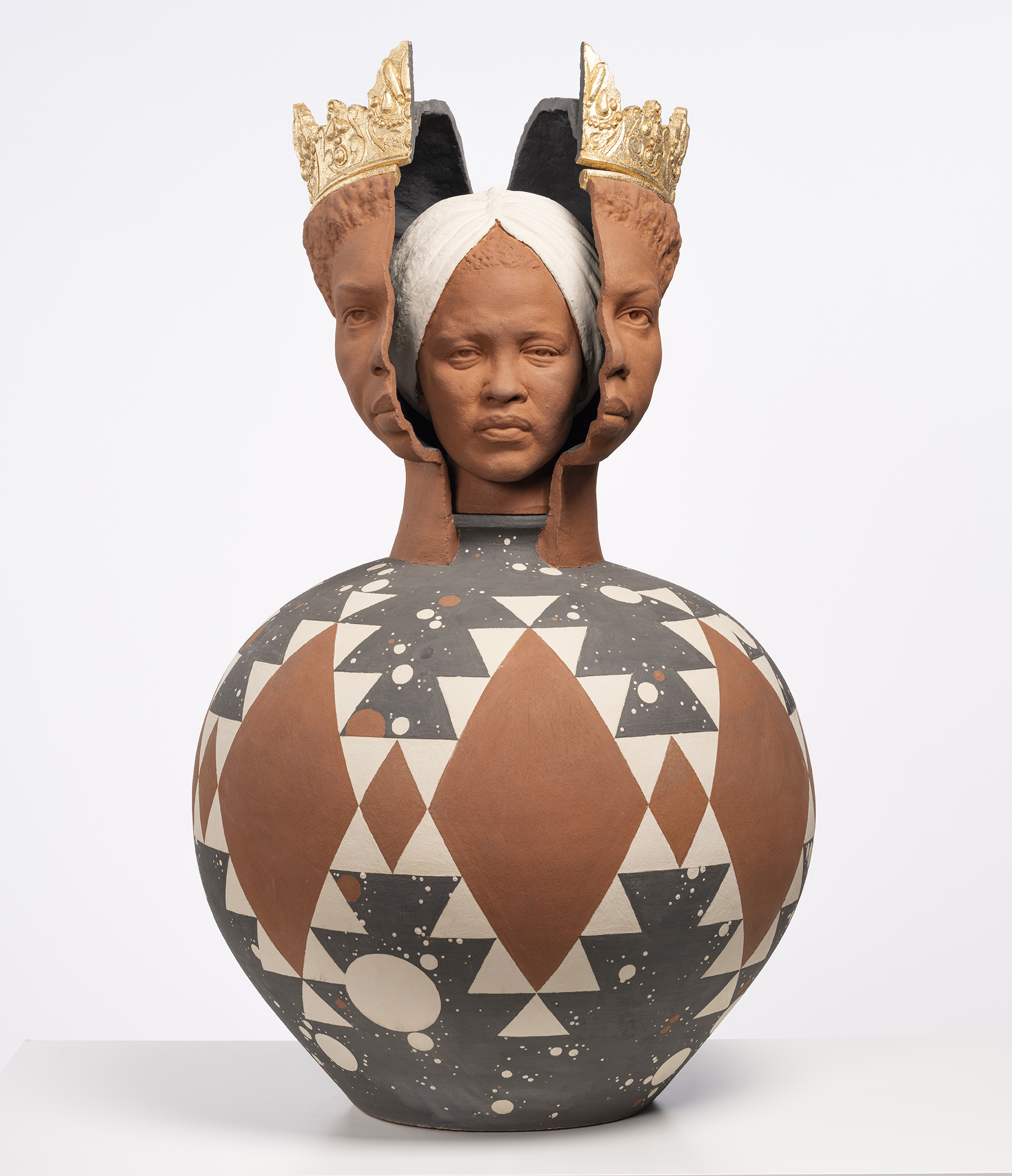
Featured Image –  Inner Elder (Nina Simone as Queen of Sheba), 2023 Ceramic. Courtesy of the Artist and Marian Goodman Gallery.

Review by Amy Melling

Read Amy’s latest Review: East London Shakespeare Festival’s ‘Much Ado About Nothing’ – An evening of laughter, romance and deception under the stars – until 4 Aug – Abundant Art


‘Tavares Strachan: There Is Light Somewhere’ was showing at Hayward Gallery until 1st September 2024. 

Coming soon at Hayward Gallery Haegue Yang: Leap Year – 9 Oct 2024 – 5 Jan 2025 For more information visit Southbank Centre

Arranged into five thematic zones, Leap Year will illuminate Yang’s multifaceted and inventive practice from the early 2000s to today, bringing together installation, sculpture, collage, text, video, wallpaper and sound across her most notable series.

The Weyard Sisters – A sequel to Macbeth offering voice and agency to its overlooked female characters – Premiered at Riverside Studios this August

‘The Weyard Sisters’ is presented as a female-orientated sequel to ‘Macbeth’, conceived by Helen Alexander, who serves as both the writer and director. The play seeks to re-examine Shakespeare’s narrative through the lens of the overlooked female characters, offering them a voice and agency often denied in the original.

Given the central role of women like the witches and Lady Macbeth in influencing the pivotal decisions of the male characters, it’s clear why a reimagining that centres around these figures is pursued. Alexander’s work aims to delve deeper into the psyche of the witches, the ‘Weyard Sisters’, and explore the necessity of women compensating for the failings of men, especially in times of crisis.

The play envisions an alternate aftermath of the battle where Malcolm and Macduff overthrow Macbeth, portraying Malcolm, played by Jonathan Campbell, as a bitter and disorganised ruler, unfit and unprepared for kingship. His portrayal is agitated and often clueless about the true state of affairs within his own realm, failing to acknowledge the labour and contributions of the women who manage crucial tasks, including the burial of Lady Macbeth. In this narrative, the ‘Weyard Sisters’, played by Julia Munro, Pippa Caddick and Jan Shepherd, who prophecy the rise and fall of Macbeth, are now hunted by Malcolm and Macduff as scapegoats for the kingdom’s woes, symbolising the relentless pursuit of justice for prophecies that brought ruin.

The production’s unique intentions and conceptual ambition are commendable, though the storytelling doesn’t quite reach the same level. The plot somewhat obscures a clear thematic message, which could guide the narrative towards a more discernible climax or resolution. The element of multi-rolling, actors taking on multiple characters in the play is fascinating but complex. Enhancing the clarity of its execution would help the audience better track the evolving roles and identities on stage.

‘The Weyard Sisters’ exhibit flashes of originality and creativity, particularly in its costume design, by Dana Pinto. The production feature an intriguing blend of contemporary and traditional Scottish attire, with characters donning leather jackets, plaid kilts, studded belts, and mesh vests. This fusion of modern fashion with historical elements reflect the play’s thematic exploration of timeless issues through a Jacobean lens, symbolising the collision of past and present ideologies.

Whilst the play incorporate elements of comedy, these moments of levity sometimes feel out of sync with the darker, more serious undertones of the narrative. Though at times the humour undermine the gravitas of its powerful feminist critique or statement, yet it succeeds in providing its intended entertainment.

Particular performances stand out; Claire Morrissey’s role as the mother to England’s crown prince is convincing and intriguing. Her collected demeanour exaggerate the immature and hot-headed attitude of the current king Malcolm, demonstrating the irrational nature of a patriarchy in which blood and sex determine a nation’s future. In addition, performers Munrow, Caddick and Shepherd drive the play with their humorous and engaging performance, skilfully adapting to each character they portray.

With impressive acting, intriguing production design and a compelling concept, ‘The Weyard Sisters’ is an ambitious endeavour that aspires to give voice and depth to the female characters of ‘Macbeth’.

Featured Image: Jan Shepherd as Portia – Photography by Livia Hartmann

Review by Teodora Wollny

Read Teodora’s latest Review: Magician Jamie Allan’s ‘Amaze’ reminds childhood excitement and magic is lifelong – Marylebone Theatre, until 24 Aug – Abundant Art


The Weyard Sisters premiered at the Riverside Studios on 13th August 2024.

For upcoming events at the Riverside Studios visit www.riversidestudios.co.uk

Review: Magician Jamie Allan’s ‘Amaze’ reminds childhood excitement and magic is lifelong – Marylebone Theatre, until 24 Aug

After the successful U.S. run of his new show ‘Amaze’, critically acclaimed magician Jamie Allan makes his highly anticipated return to the UK.

‘Amaze’ delivers an evening of exciting and heart-warming entertainment! Centred around the childhood aspirations of magician Jamie Allan, he takes viewers on a journey, from his very first Fisher Price magic set to the trick that catalysed his career. It provides an interactive and engaging experience, in which audience members are included within. Allan recognises that magicians and their craft is complete with their audience along the journey.

Allan strays from pyrotechnic and acrobatic shock factor work and sticks to old-school tricks, with a few selected tech twists! His work truly thrills and amazes, leaving viewers chatting and theorising from the curtain close. Thoughtfully crafted from set to storyline, this performance reminds audiences of the real magic found in life through chance and fulfilment of lifelong dreams.

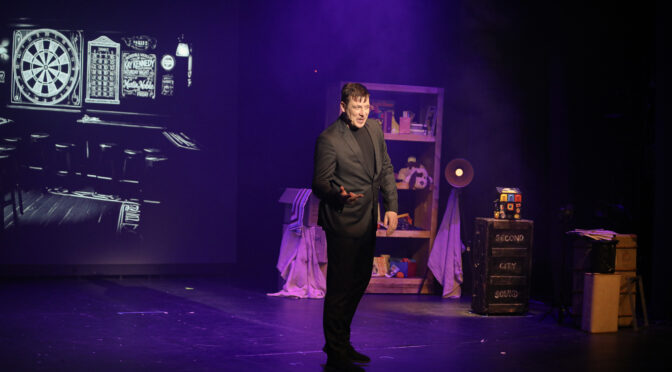
Within an intimate venue, Allan shares his private inspirations: surrounded by selected objects that contributed to who he has become. The set seems alike to an attic, with boxes and old toys.  As the show progresses, the items disappear into storage, symbolic of the end of childhood and beginning of adulthood.

The show plays as a conversation between the audience and performer, as Allan narrates his personal story and where his magic tricks originate from, before demonstrating them live. He illustrates his style, displaying examples of techniques he learnt from poker books, as well as pieces inherited from mentors.

‘Amaze’ skilfully evades the common stop and start trick show, and instead paints an autobiographical image of who Jamie Allan is and why, he is who he is. A clear message is conveyed to viewers, who are shown the power of chance in defining human, being and life. The audience is reminded that the excitement and magic of being a child does not have to end, and that magic- in its own way- is truly lifelong.

Review by Teodora Wollny

Read Teodora’s latest Review


Featured Image – Jamie Allan in Amaze (c) Ingenious Design UK

Running at: Marylebone Theatre, London NW1 6XT
Thursday 25 July – Saturday 24 August
Performances at 4pm & 7pm
Running Time: 2 hours including interval
www.marylebonetheatre.com 0207 723 7984

Amaze is co-created by Jamie Allan and Tommy Bond. It is directed by Jonathan Goodwin and produced by Corey Ross with executive producer Steve Sterling. The show’s creative consultant is Harry De Cruz. Clare Nordbruch is senior creative designer, Natalia Love is company stage manager, and Joe Wenborne is The Believer.