Hello

Review: East London Shakespeare Festival’s ‘Much Ado About Nothing’ – An evening of laughter, romance and deception under the stars – until 4 Aug

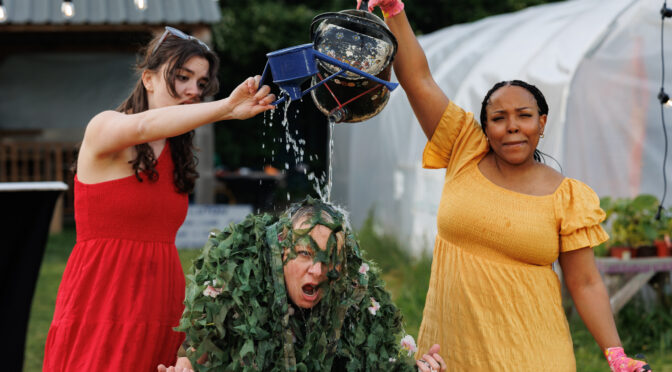
Deck chairs, lemon trees and romantic backdrops – ELSF brings the Mediterranean to North London as the audience are whisked away to sun-drenched Messina, a Sicilian paradise. This new take on Much Ado strikes the perfect balance between Shakespeare’s original story and accessibility for contemporary audiences. The dialogue remains in its original Elizabethan form, delivered with a playful twist. 

Ursula Early delivers a fiery Beatrice, the heartbroken heroine seeking solace at her family’s villa. Her cutting wit is laced with a vulnerability that endears her to the audience. Just as the holiday is beginning, she runs into her obnoxious ex, Benedick, played by Kieran Garland, who is on leave from the army. After a series of unfortunate meetings it is clear the couple are still in love, although neither of them want to admit it. Garland perfectly captures Benedick’s arrogance and charm, making their on-again, off-again dynamic all the more delightful. Meanwhile, Beatrice’s cousin Hero (Londiwe Mthembu) is also falling for one of the troop, Benedick’s friend Claudio (Isambard Rawbone). As the story unfolds, we witness romance, anger, deception and a little sabotage.

Director Rosie Ward embraces the open-air setting. The performance unfolds around you, drawing the audience into the heart of the action. In one stand-out scene, Leonato’s (Hero’s father and Duke of Messina) extravagant masked ball becomes a vibrant party, complete with sing-a-longs and playful choreography. This fun-filled performance is perfect for children, with many in the audience having attended the mask workshop prior, donning their colourful creations. The audience are transformed from observers to party revellers.

The manicured gardens of Lauderdale House, a picturesque tudor house, are the perfect setting for this production. Made even more magical as the sun sets and the stage is lit up with fairy lights. The audience are encouraged to bring picnics, which can be enjoyed throughout the performance. 

The atmosphere is one of pure joy, with laughter erupting from the audience throughout – most notably at Beatrice’s cutting witticisms and when one of the cast members starts eating an audience member’s crisps. Children and adults alike are entertained by slapstick characters and the play’s inherent silliness. ELSF’s trademark high-energy numbers are sure to get your toes tapping. The pop-hits soundtrack is perfectly delivered by Lauren Hendricks and the rest of the cast. 

ELSF’s Much Ado About Nothing is a vibrant tapestry of Shakespearean wit, modern music and summer fun. It’s a must-see for anyone who wants to experience the Bard’s timeless tale reimagined under the stars, leaving you with a heart full of joy.

East London Shakespeare Festival will be performing around London until 4th August. For more information and tickets, please see their website

Featured Image: Scene from Much Ado About Nothing (c) Yioda Nicholaou


Review by Amy Melling 

Read Amy’s latest Review: When Forms Come Alive “a rapturous exploration of sculpture” – Hayward Gallery, until 6 May – Abundant Art

Film Review: Monia Chokri’s ‘The Nature of Love’ is an honest insight into adult affairs – in UK and Irish cinemas

‘True love, according to Vladimir Jankélévitch, is irrational. We love because we love. Love is the sole source of love. It strikes us like an illness.’

The chaos of the first scene of NATURE OF LOVE  immediately immerses the audience. We are shoved into the brains of our main characters – fast, busy, complicated – only to end up in the first five minutes in a completely different place. That is, the complicity of that first moment of silence or calm with someone you like. A lovely entrance into what we are about to see.

Sophie is a 40 year-old in a committed relationship. She loves her partner but, after ten years of marriage, the passion is gone. So when she meets Sylvain, an attractive man taking care of the renovations of her and her husband’s new chalet in the countryside, something ignites within her. What starts as an exciting sexual affair suddenly turns into more.

As a big fight breaks out between Sylvain and Sophie that suddenly break the magic, leaving Sophie alone and desperate, full of a guilt that she doesn’t know what to do with, and Sophie questions herself and her marriage, other questions start appearing. Can something so physical be love? Can it last? And, is it worth losing all you’ve built before?

The Nature of Love works us up wonderfully into the natural talk of love or attraction. Sophie and her husband are intellectuals, philosophers, and their life is guided by that. It is full of conversations that would be uncomfortable for others. Sylvain, on the other hand, isn’t very well informed and believes mostly what he is told.

‘Schopenhauer asserts that in love, all is physical. What we see as noble sentiments of the heart, are actually the expression of our sexual instincts. It’s simply our body talking.’, Sophie recites halfway through the film as she gives a lecture. And this might be a good way to describe the plot of The Nature of Love.

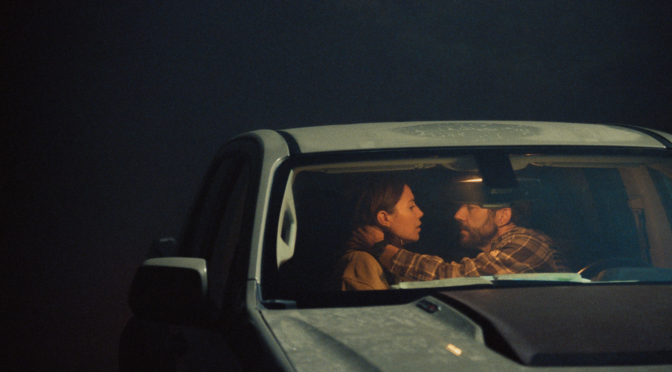
The film, just like at the beginning, continues being dynamic until the end. There’re constant interruptions and talking over each other which make it all fast paced and entertaining. This is also highlighted by the cinematography, sudden zooms or movements of the camera to accompany the tension or fun of the scenes. This is clearly seen, for example, in the subtle hiding by the car’s mirror of the new couple’s eyes as they kiss for the first time, and later on when Sylvain meets Sophie’s husband in the exact same place.

Monia Chokri is a Canadian actress, director and screenwriter. The Nature of Love has given her multiple nominations, including two in Cannes 2023, and a César Award in the category of Best Foreign Film this year. Chokri’s approach is clever and gives us an honest insight into adult affairs and their normalization in society. Magalie Lépine-Blondeau (Sophie) and Pierre-Yves Cardinal (Sylvain) drive the film and carry it in their hands from beginning to end. Incredible performances from the actors make the narrative real and relatable, and perhaps an eye-opener for those sharing similar lived experiences.


Written and directed by Monia Chokri
Actors: Magalie Lépine-BlondeauPierre-Yves CardinalFrancis-William RhéaumeMonia ChokriSteve Laplante

For screening  details and more information visit Vertigo – The Nature of Love (vertigoreleasing.com)


Review by Eva Mateos Rodriguez

Read Eva’s latest Review: Sheep Soup’s ‘House Of Life’ transcends language and time to become an energy, a collectiveness, a self-discovery – Soho Theatre, until 6 July and EdFringe in August – Abundant Art

Review: Sheep Soup’s ‘House Of Life’ transcends language and time to become an energy, a collectiveness, a self-discovery – Soho Theatre, until 6 July and EdFringe in August

House of Life is a captivating cabaret show that transcends conventional theatre boundaries. Led by the RaveRend, a wonderful host and performer, we start what they will call in a few moments the ‘journey to happiness’ merely by arriving to our seats in this dim-lit relaxed space that will be our home for the next hour.

Step one: arrive.

A music stand, interesting looking young man, instruments and mostly lots of glitter (that will inevitably get stuck in our clothes throughout the performance) wait for us as we settle in. Then the charismatic RaveRend appears. And oh, what a person – none of us were ready for it.

Sheep Soup is a company that started whilst training at the Television Workshop, a BAFTA award-winning training ground. Sheep Soup’s signature is a mix of uplifting original music with universal characters and stories we can also feel related to, all born through collaboration and interdisciplinarity. Ben Welch, the RaveRend, is one of the Artistic Directors of the company.

In House of life, the RaveRend and his colleague Trev take us in just an hour through an incredible musical journey. As the show description states in the Soho Theatre website, it’s one-part sermon, one-part purge, three-parts party. And that statement doesn’t fail to fit the expectations. Each step of this bizarre yet heartfelt journey is filled with moments of emotional connection and of fun. A universal experience accessible for everyone seeking to enter into the world they’ve created – an esoteric, vibrant place where will we transcend into happiness.

But not everything is as happy as it seems. As the show progresses and the audience’s involvement becomes more clear, the responsibility is slowly given to us – the fourth wall broken into pieces – and we’re the ones that get to lead the journey and decide for ourselves how it will terminate; how we will ascend – active participants in the unfolding narrative.

House of life is one of those shows that you take with yourself and never forget – one of those you keep talking about way after it’s done. ‘I am ready. I am strong. I am feeling myself like I never have before’ will resonate in your mind even after years, the catchy melody stuck forever inside your head. Because HOUSE OF LIFE transcends language and time to become an energy, a collectiveness, a self-discovery. And it’ll stay like that until the end.

Final step: Purge.

House of life is not your typical theatre performance. A must-see, the show is a celebration of life whose universal appeal can’t be overstated Whether you’re a seasoned theatre buff or a newbie, with friends or by yourself – House of life has something for you. It will engage and move you until it becomes a part of you and you become a part of it.

Review by Eva Mateos Rodriguez

Read Eva’ latest Review: Fun and lots of truth fill ‘The Rest of Our Lives’ – Battersea Arts Centre, until 22 June – Abundant Art


Created and performed by by Ben Welch (The RaveRend) and Lawrence Cole (Trev) 

Produced by Sheep Soup in association with Soho Theatre

Shortlisted: Untapped Award 2023

Soho Theatre Upstairs
Tuesday 18 June – Saturday 6 July 2024
7pm | 3pm matinees (Saturdays)

Tickets and information: House of Life – Soho Theatre

The show will be transferring to Edinburgh Fringe as part of Soho Theatre’s Edinburgh Fringe programme.

Ed Fringe dates
Underbelly Cowgate (Belly Dancer)
66 Cowgate, Edinburgh, EH1 1JX
3 – 25 August 2024 (not 12) | £12.50 (£11.50)
Previews: 1 and 2 August | £8.50 (£7.50)
3 – 25 August | £11.50 – £13.50
Box Office: 0131 510 0395 | www.underbellyedinburgh.co.uk


Review: Fun and lots of truth fill ‘The Rest of Our Lives’ – Battersea Arts Centre, until 22 June

Created and Performed by Jo Fong and George Orange

We are given raffle tickets by the performers as we enter, with a quiet ‘Good luck’ along with a warm greeting. We are immersed in an instant, transformed into participators of the show we are about to witness. This is The Rest of Our Lives.

The stalls almost surround the stage. There’s a table, two chairs, and a LED screen where we can read different sentences waiting for us. That, and the two protagonists of the story – Jo Fong; a Creative Associate of the Wales Millennium Centre, whose practice focuses on the intention of the creation of community; and George Orange; artist, circus director, performer, facilitator and creative leader who carries hundreds of performances on his back, both in the United Kingdom and internationally.

In this set up that we are welcomed to, Jo talks to us, to the audience, searching for our laughs and responses with softness but commitment. She tries to slowly weave us into what we’re about to see, which is – what exactly?

The Rest of Our Lives is a fun and silly show fuelled by a middle-age crisis. Jo used to be a dancer and George a clown. In this joyful decline, they both search for human connection as they dance, sing and perform, but mostly as they make the audience laugh.

As the performance develops, the LED screen palpitates. In it, the questions that Jo and George won’t dare say out loud are written, from beginning to end, like an introduction to the next chapters of the show. Jo and George wonder how life’s going to be from now on. ‘What’s the point?’, ‘Am I bothered?’, ‘Is there hope?’, ‘Where is this going?’, ‘Am I ready?’ are some of the queries we read. A hopeful insight into adulthood, and the growing old rather than growing up of our bodies through time.

As the show progresses and the space grows more chaotic, the audience is drawn in to find their own meaning of what’s going on, and what the performance is about. Is it that to have fun, sometimes you have to struggle first? Or that the world only has the importance that you want to give it? Or maybe that we’re never alone, we humans, in this chaotic world?

What makes this show outstanding, though, is how the fourth wall is broken at all times. Jo and George warm up the audience slowly by connecting with us in numerous ways. They give us table tennis paddles and gradually throw balls so we are forced to play around them as they dance, they give out an intimate connection date as a raffle’s first prize. Until they end up letting the audience take over the show – that’s once we’re all down on the stage floor, mingling with them, and dancing the night away to Beyonce.

The performances are warm and inviting in this disruptive yet hopeful show. A much-needed breath of fresh air – fun and lots of truth fill The Rest of Our Lives. We can only hope the rest of our lives are filled with that as well.

Featured Image: Jo Fong and George Orange © Sara Teresa


Review by Eva Mateos Rodriguez

Eva  is an eclectic artist specialising in acting, writing and song writing. She has been part of several performances, responses and exhibitions, and is now a student of MA Creative Writing at Birkbeck University.

Read Eva’s latest Review: Wedding Band – A love/hate story in black & white “explores themes not talked about enough, not even in the 21st century.” – Lyric Hammersmith Theatre, until 29 June – Abundant Art


Tickets and information:  The Rest of Our Lives | Battersea Arts Centre (bac.org.uk)

BSL interpreted performances: 13 and 15 June. Integrated BSL interpretation by Katie Fenwick.

The Rest of Our Lives was commissioned by the Rural Touring Dance Initiative and has been supported by Groundwork Pro, Fieldwork, Dance House Cardiff, China Plate, Yorkshire Dance, Wales Millennium Centre, Place Theatre, Chapter Arts, Council of Wales, British Council and Wales Arts International. 

Review: Wedding Band – A love/hate story in black & white “explores themes not talked about enough, not even in the 21st century.” – Lyric Hammersmith Theatre, until 29 June

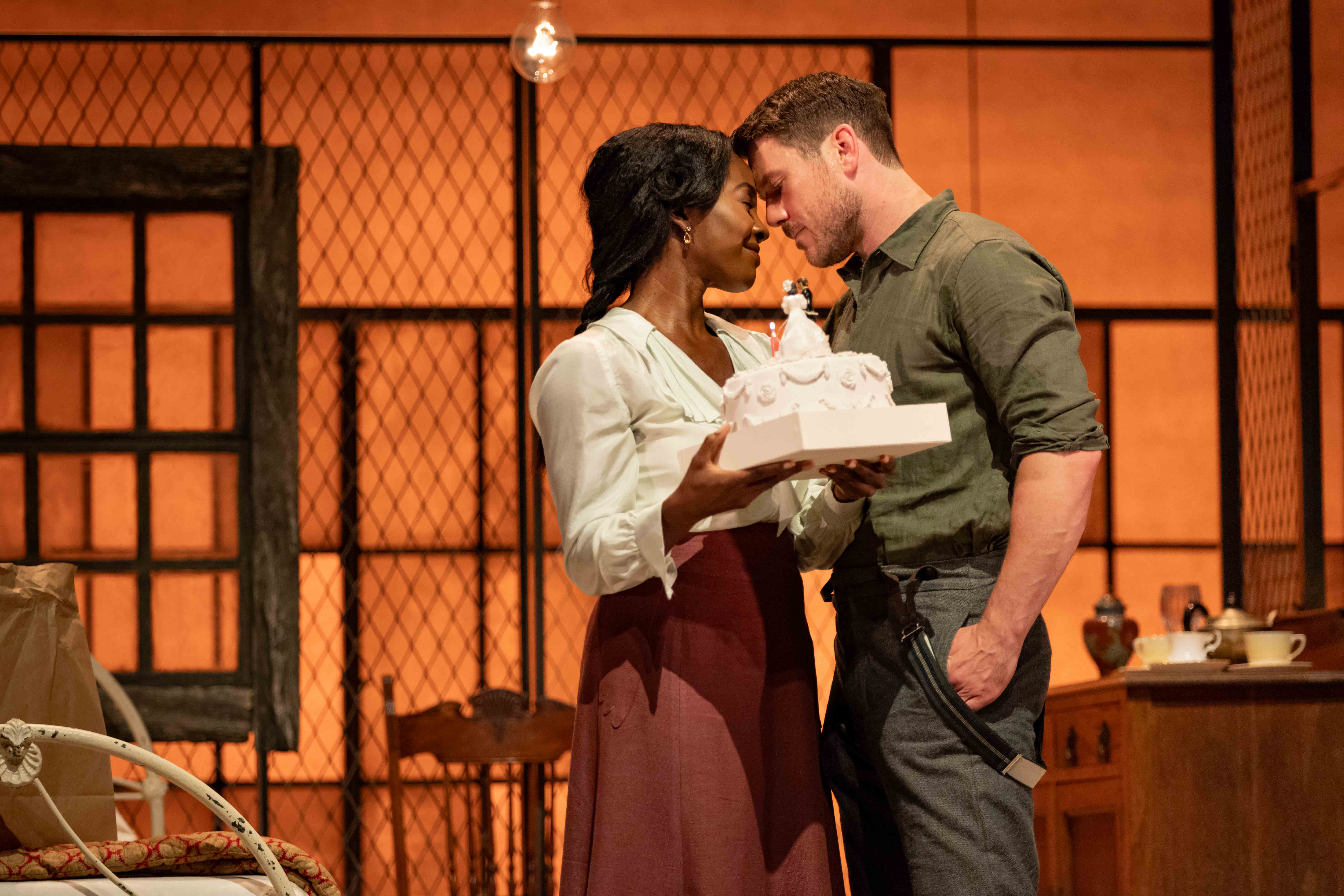
Wedding Band starts like a fever dream. A striking set where wire fences are the main character silently waits as the audience sits down. The light is dim, and it stays that way as we are introduced to the characters, slowly filling the space with their walking, their breathing, their sombreness. A room is set up in the middle – we quickly learn that it’s Julia’s room, our main character’s room, a place where intimacy will be created and violated as the play progresses.

Wedding Band was written by playwriter Alice Childress in 1966. Childress was born in 1916 in South Carolina, a founding member of the American Negro Theatre. She was the first African-American woman to see her own play professionally produced in New York. In this revival of Wedding Band, Monique Touko takes her shot at directing an African-American classic, its first time as a major production in the United Kingdom, with great responsibility and courage.

The story follows Julia, a black woman from South Carolina, and is based in 1918, an era defined by the rise of segregation laws and racism in the United States of America. Julia has just moved to a new area and is surrounded by welcoming arms until the words slip out of her mouth that she has had a partner for ten years who she is not married to, and that, that partner is a white man. As he, Herman, comes to visit and is stricken by a burst of sickness that Julia is afraid might kill him, her neighbours and colleagues, as well as Herman’s family, deal with the news and are forced to question their own standards and ideas.

The themes in Wedding Band are not talked about enough, not even in the 21st century. Alice Childress made a great job describing how life was like for black people those first decades after the first world war – a ground-breaking story, with a black woman as its heart – and Monique Touko takes over wonderfully to make that experience accessible for the wide-eyed UK audience with the humour and passion of this production.

There is a feeling of collectiveness that moves from the stage to the audience the whole 2 hours and 40 minutes the show lasts for. Gasps, laughter and crying are heard all throughout it, accompanying the performers until they become a part of the show. The audience is clearly immersed, engaged to their core to what is happening on stage. But that’s not all – Wedding  Band at times feels more like a movie than a theatre – a movie that goes by in an instant and leaves you blown away. A movie about power, about love/hate, and about the rage we hold inside.

Wedding Band: A love/hate story in black and white is a powerful show full of powerful performances, a must-watch.

Featured image: Deborah Ayorinde and David Walmsley in Wedding Band – Lyric Hammersmith Theatre (c) Mark Senior.

Box office: 020 8741 6850 www.lyric.co.uk


Review by Eva Mateos Rodriguez

Eva  is an eclectic artist specialising in acting, writing and song writing. She has been part of several performances, responses and exhibitions, and is now a student of MA Creative Writing at Birkbeck University.

Read Eva’s latest Review – Katy Baird’s ‘GET OFF’ will make you squirm, cringe, and laugh out loud like never before – Battersea Arts Centre, now on until 25 May – Abundant Art


Wedding Band: A Love/Hate Story in Black and White: A Lyric Hammersmith Theatre production, By Alice Childress
Directed by Monique Touko, Set & Costume Design by Paul Wills, Wigs, Hair & Make-Up Design by Cynthia De La Rosa, Lighting Design by Matt Haskins, Sound Design by Elena Peña, Music by Shiloh Coke, Choreography & Movement by Aline David, Wigs, Hair & Make-Up Associate Designer Keisha Paris-Banya, Casting by, Sophie Parrott CDG, Dialect & Voice Coach Joel Trill, Fight &, Intimacy Director Bethan Clark, Assistant Director Mo Korede


Review: Wendy Beckett’s ‘Sappho’ is a captivating blend of ancient history and contemporary queer culture – Southwark Playhouse Elephant, now on until 25 May

‘Sappho’ presents a captivating blend of ancient history and contemporary queer culture, drawing audiences into the world of the iconic poet from Lesbos. Described by director and writer Wendy Beckett as “an adult fairy tale”, the production’s playful storytelling sheds light on the significance of Sappho’s writings as the earliest known documentation of queer identity.

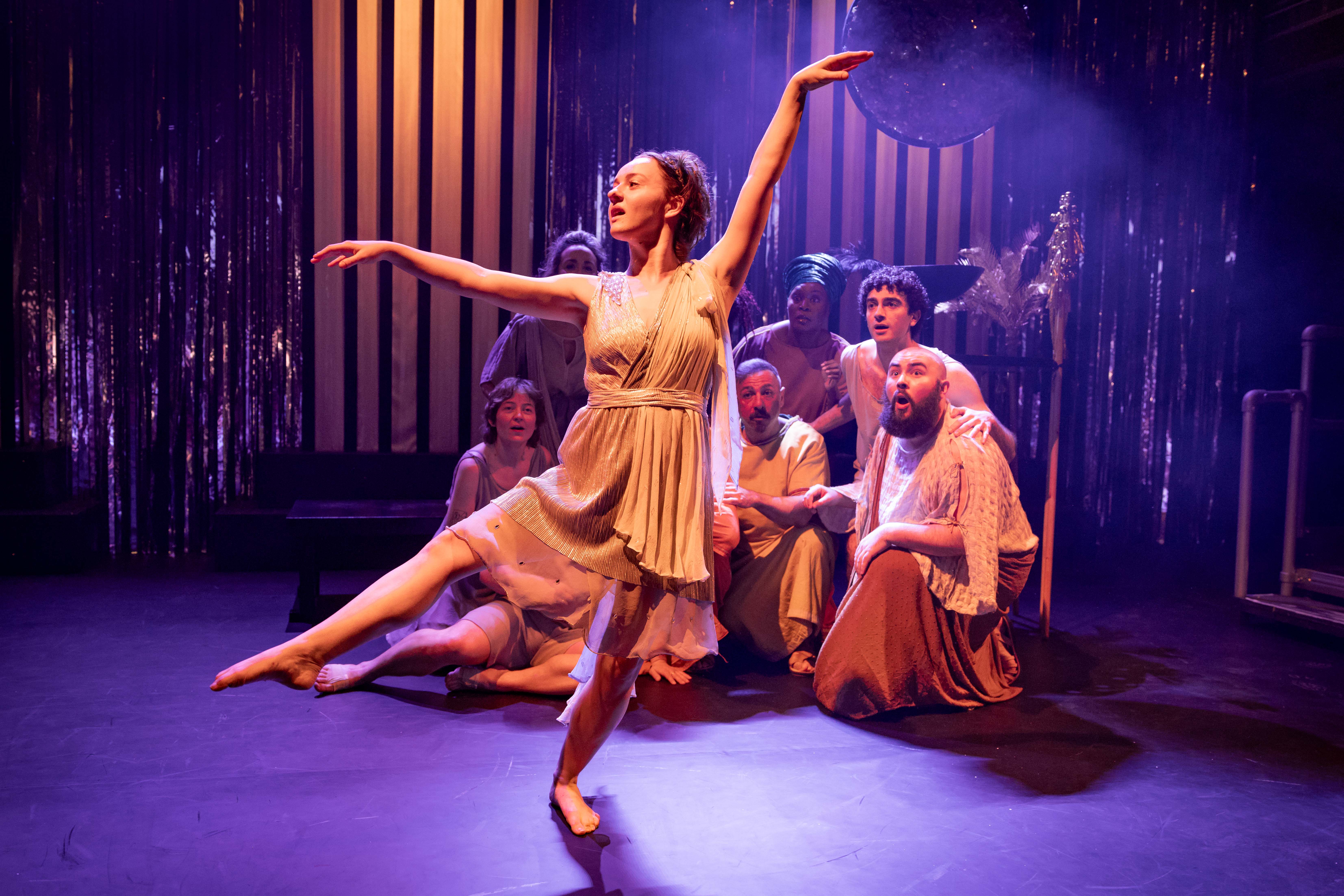
The juxtaposition of modern camp culture with ancient civilization is skilfully executed through vibrant costumes and set design. Emmanuel Akwafo’s portrayal as the narrator, adorned in heels, corsets, and bold makeup, immediately immerses the audience in this atmosphere. Set design elements such as fluted Grecian columns divided by tinsel curtains and glittering stage pieces evoke the essence of both eras, creating a visually stunning backdrop for the narrative.

The heart of the story revolves around a tender love affair between a young Sappho, portrayed by Georgie Fellows, and her muse Adore, played by Eleanor Kane, as Sappho finds herself pressured by her parents into a heterosexual marriage. Sappho’s parents fight to convince Sappho to marry into an upper-class family, in hope of sparking political change, using the respected family name to do so. Here the protagonist is forced into a dilemma, having to consider whether to prioritise her family’s wishes and the greater good of Lesbos, over her own happiness. Here we can appreciate the struggles of women of lower class, at the time, with limited opportunities to make change, and their most significant decisions limiting their freedom further. Despite Sappho’s clear talent and skill, being dubbed the ‘Tenth Muse’, it seems her gender still places her at a disadvantage to men. Lesbianism appears to be the ultimate form of protest to an evidently misogynistic society, with women choosing to deny their opportunity to climb society’s male-dominated hierarchical ladder, for their own pleasure.

The production tastefully captures the essence of the lesbian romance, with sexual tension building through brief encounters, gentle touches and sly glances. The acting style used is predominantly non-naturalistic and almost pantomime like. Maintaining the style of traditional ancient Greek theatre, the production incorporates a chorus that uses song and dance to advance the storyline. These frequent insertions, alongside references to themes such as political ideologies and the struggles of womanhood, catalyse a new perspective on Sappho’s role in history, though it detracts from offering fresh insights into these complex conversations.

‘Sappho’ serves as an engaging tribute to the ancient queer icon, whilst also preserving and celebrating her enduring legacy as a literary genius. It offers valuable insight into the origins of LGBTQ+ identity and highlights the queer community’s resilience spanning centuries, with each generation seeing new radical icons.


Featured image: Eleanor Kane and company, credit Mark Senior

For more information and tickets Sappho – Southwark Playhouse


Review by Teodora Wollny

Teodora is a recent A-level graduate, having studied Art History, Drama, Philosophy and English Literature. Being both a performer and an avid writer,  she enjoys attending a range of entertainment, including theatre performances and art exhibitions. Whilst currently on a gap year, she intends on pursuing Visual Art and Film studies. 

Read Teodora’s latest Review: Roberto Rossellini’s 1945 neorealist masterpiece ‘Rome, Open City’ captures the recurring dilemma in war: is survival achievable through conformity or resistance? – re-releases in cinemas, 17 May 2024 – Abundant Art

Review – Katy Baird’s ‘GET OFF’ will make you squirm, cringe, and laugh out loud like never before – Battersea Arts Centre, now on until 25 May

Doors open for the audience. As we walk in, we are welcomed by an almost naked body lying on stage, no set but a microphone, a laptop, and a white wooden cube. There is a video playing on the background – a woman casually sniffing what appears to be a line of coke – but the lights and attention are on the body, neon straps covering only the smallest amount of skin. With this already striking start, Katy Baird welcomes us into her world.

Katy Baird is an artist and producer whose work takes different forms of live art – those could be theatre, cabaret, film, installation, or participatory performances. She has performed at different venues around the UK and Europe, including clubs or parties. Inspired by the messiness of life and her own surroundings, Baird creates unapologetic performances exploring class, gender, and sexuality. ‘My practice is centred around a desire to create a shared space that can be both welcoming and radical’, Baird says. Using her body, she questions the audience on what is acceptable on stage.

Get Off started as a residency commissioned by the Arts Council England, in which Baird aims to create a live performance that answers questions such as ‘What gives us pleasure?’ and ‘How much is too much?’. Baird worked with director Kim Noble, who helped her push boundaries to reach new levels within her work.

As Get Off starts, you immediately like Baird. Her connection to the audience is key, and leaves us wondering – is she trying to make us spectators uncomfortable, or is she creating a space for intimacy between the stage and the stalls of the Battersea Arts Centre? The show is full of these contradictions. A mix of fun and disgust, Get Off is not for everyone, and not for every moment. You either have the stomach for it, or Katy will shove you right in without permission.

Throughout the hour-long performance, Baird stands on stage talking to the audience, sharing her secrets. A video plays on the background for most of the show, screening her in a way more intimate setting – resting, playing music, taking drugs, even going to the toilet and taking a dump in front of the wide-eyed audience. There are a few moments of interaction between both Bairds that leave us wondering if we are really seeing her – is it her on the screen, intimate and shocking, or is the ‘live Katy’, the one with the uncomfortable questions, the real one?

Baird talks about trauma and the past, mentioning her life coach and the ways she is trying to find connection. She talks about surviving the monotony of everyday life and finding her space in the world. She does that in a way not quite explored before, by choosing a welcoming performance with a relaxed atmosphere in which anything can happen.

As hard as creating something ground-breaking can be nowadays, Katy fills the space with her presence and personality and wildly succeeds in not leaving the audience unmoved. ‘I want the audience to be seen and feel part of something’, she says on an interview by Stuart Wilson for the To Do List website. And that relationship to the audience is what defines Get Off as a success. If ready for all they have coming to them, Get Off will make its audience squirm, cringe, and laugh out loud like they never have before.


Review by Eva Mateos Rodriguez

Eva  is an eclectic artist specialising in acting, writing and song writing. She has been part of several performances, responses and exhibitions, and is now a student of the MA Creative Writing at Birkbeck University.

Read Eva’s latest Review: Sacha Polak’s ‘Silver Haze’ is a dizzying roller-coaster of emotions and experiences – Releasing 29th March in UK and Irish cinemas – Abundant Art


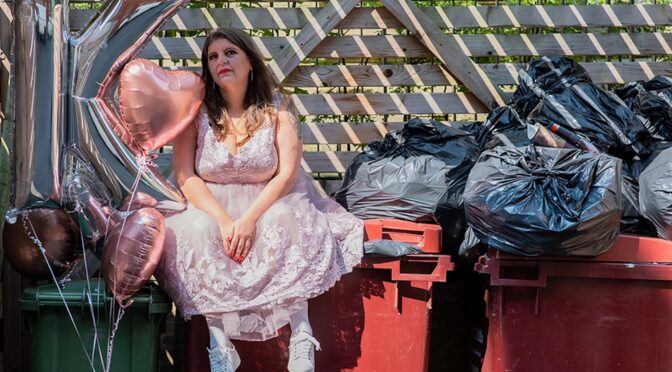
Featured Image – Katy Baird in Get Off, credit JMA Photography

Get Off at Battersea Arts Centre
Date: 8 – 25 May
Booking Link: bac.org.uk/get-off
Time: 7:30pm & 8.30pm/Age guidance: 18+/Running time: 75 mins (no interval)
Access: Audio described performances 22 & 24 May. Description by Dot Alma. All performances of Get Off are Relaxed. At BAC, this means you can move or make noise if you need to. You can go in and out of the performance space.

Co-produced by Katy Baird and Battersea Arts Centre
Co-directed by Katy Baird and Kim Noble
Co-commissioned by Battersea Arts Centre, CAMPO, and Transform, with further support from Artsadmin, Tramway, Cambridge Junction, Horizon and Old Diorama Arts Centre. Using public funding through the National Lottery from Arts Council England.

ABOUT KATY BAIRD

Katy Baird is an artist who frequently finds herself in bizarre situations of her own making. Her practice is centred around a desire to create a shared space that can be both welcoming and radical. She has performed at Live Art festivals and venues across the UK and internationally as well as squat parties, clubs and raves. She has received commissions from Battersea Arts Centre, Wellcome Trust, The Yard, Camden People’s Theatre and Duckie amongst others. Since 2016 she has been artist in residence at queer club night Knickerbocker.

Katy proudly identifies as an ‘old, queer, fat, femme deviant’ and is currently based in Hastings, East Sussex. As a curator she founded and produced Steakhouse Live, a DIY platform in London for radical performance practices and is artistic director of Home Live Art. Katy has worked as an independent producer at Fierce Festival and Manchester International Festival. From 2012-2017 she worked as Coordinator at the Live Art Development Agency, London. www.katybaird.com

Review: Roberto Rossellini’s 1945 neorealist masterpiece ‘Rome, Open City’ captures the recurring dilemma in war: is survival achievable through conformity or resistance? – re-releases in cinemas, 17 May 2024

The BFI showcases a 4K restoration of the trend-setting neorealist masterpiece, capturing the stark realities of war in black and white. 


‘Rome, Open City’ played a pivotal role in establishing Italian neorealist cinema as a genre. Emerging in the 1940s, Neorealism acted as a defiant counter culture to the popular ‘White Telephone’ film genre, promoted by the fascist regime. ‘White Telephone’ cinema arose as a form of propaganda, and was used as a means to pacify the pains of a war-torn nation, rather than address the current issues of the time. Here the sufferings of lower-class groups were overlooked, as Mussolini attempted to showcase the ideal upper-class reality that his dictatorship strived for, rather than the devastation that his leadership caused. 

‘Rome, Open City’ emerged as an answer to the vacant space in Italian cinema. 

Roberto Rossellini is respected as one of the fathers of this cinematic movement. Using hand-held cameras and scenes shot on location, it seems as if the director’s style of immediacy demonstrates the true state of Rome, following the ravages of the Second World War. Cast predominantly from the streets, the film’s ensemble lends an authenticity to the representation of war experiences, given that actors performing genuinely survived the horrors of this conflict.

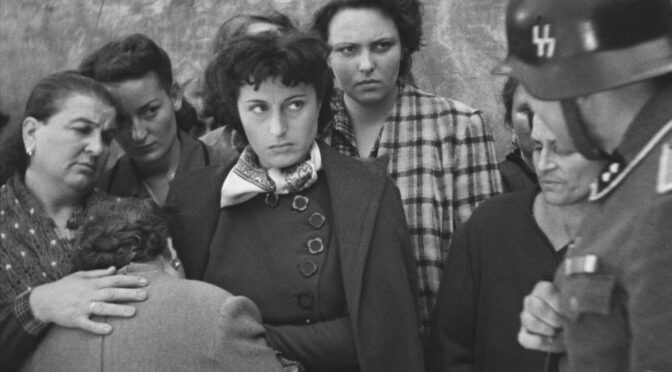
Set in 1944 during the 9 month Nazi occupation of Rome, the plot follows two resistance fighters, as they struggle to escape the Nazi SS troops’ relentless pursuit. Their desperate struggle for freedom is fraught with grief, heartbreak and betrayal, underscoring the bitter sweet truth that any victory under a Nazi regime is only temporary. In the face of oppression, a recurring dilemma arises: is survival achievable through conformity or resistance?

With bursts of light comedy and brief glimpses of hope, it appears that the slight slips of humanity exaggerate and contrast the truly horrifying displays of cruelty and violence, representing real actions performed by Nazis. The commonplace brutality of war is demonstrated throughout, with scenes displaying a pregnant woman being murdered as she calls for her fiancé, a priest forced to observe a man being tortured and a group of school children witnessing their priest being executed. Here it seems that these tragic stories represent the unsatisfying end to the war, with no way to serve justice to those affected.

This timeless classic holds a place in history, standing as a testament to the resilience of the human spirit amidst the darkest chapters of history. Through the lens of neorealism, Roberto Rossellini masterfully portrays the harrowing realities of war and oppression, highlighting the struggles of the marginalised and the enduring quest for freedom.


ROME, OPEN CITY

Roma città aperta

Directed by Roberto Rossellini

Italy / 1945 / 103 mins / 12A / English subtitles / digital restoration

With Anna Magnani, Aldo Fabrizi, Marcello Pagliero

Roberto Rossellini’s 1945 masterpiece won the Grand Prix (forerunner of the Palme d’Or) at the 1946 Cannes Film Festival. Now approaching its 80th anniversary, it returns to the big screen in selected cinemas UK-wide on 17 May 2024. 

Rossellini and collaborators (including a young Federico Fellini who served as a co-writer) created a choral story of a city dominated by fear, violence, moral degradation and the raw courage of its inhabitants.

Shot on the streets and in a makeshift studio only six months after the liberation of Rome, when Germany still occupied Northern Italy, the film features a largely non-professional cast, except for Aldo Fabrizi and Anna Magnani with her memorable performance.

‘The most precious moment of film history’ Martin Scorsese

ROME, OPEN CITY will be on Extended Run at BFI Southbank as part of a major two-month season exploring Italian neorealism. CHASING THE REAL: ITALIAN NEOREALISM, presented in partnership with Cinecittà, runs throughout May and June and features 20 titles.


Review by Teodora Wollny

Teodora is a recent A-level graduate, having studied Art History, Drama, Philosophy and English Literature. Being both a performer and an avid writer,  she enjoys attending a range of entertainment, including theatre performances and art exhibitions. Whilst currently on a gap year, she intends on pursuing Visual Art and Film studies. 

Read Teodora’s latest Review: New York City Ballet Debut at Sadler’s Wells, 7-10 March 2024 – Abundant Art


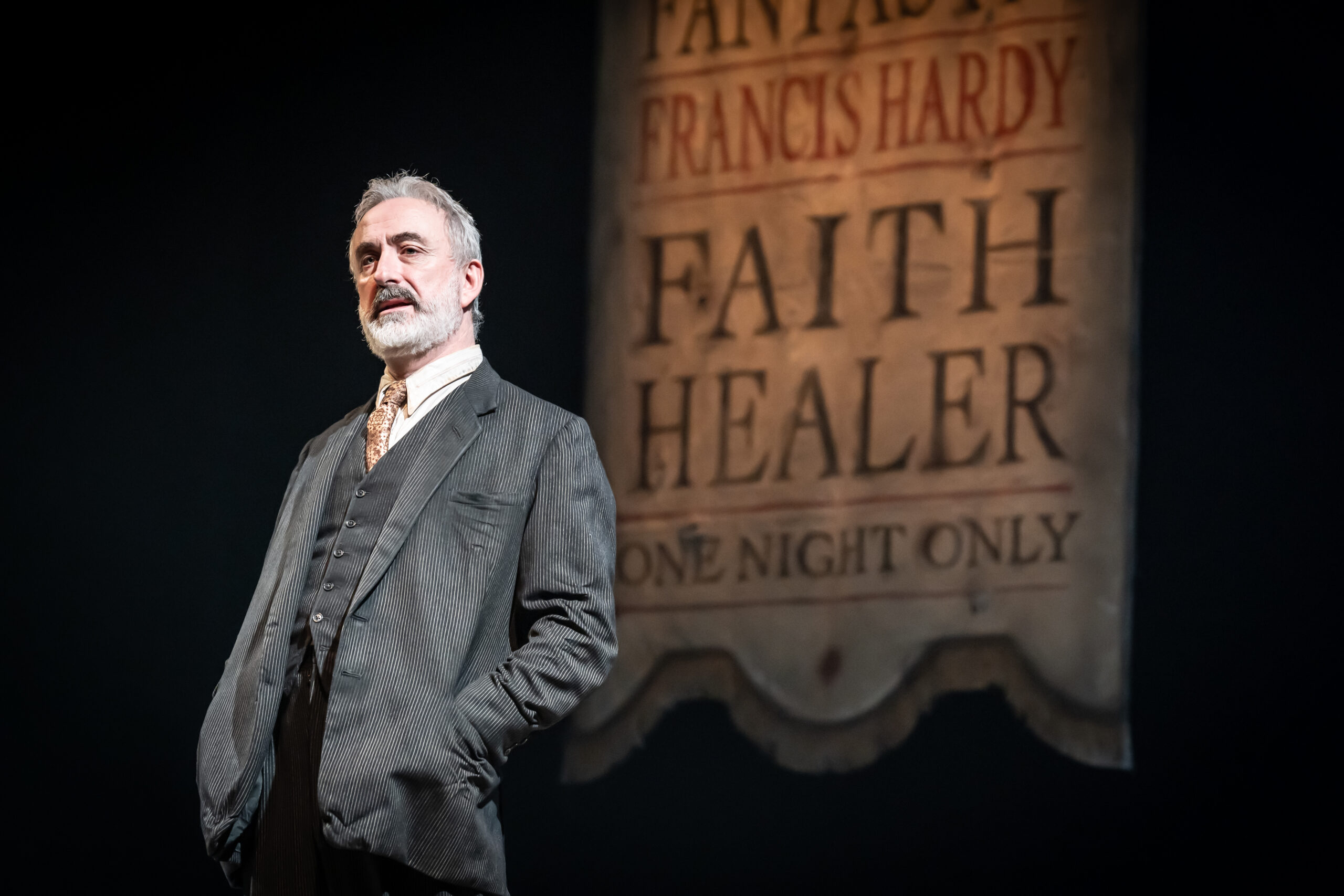
Review: A captivating revival of Brian Friel’s ‘Faith Healer’ by Rachel O’Riordan at Lyric Hammersmith Theatre, 14 March – 13 April 2024

The stage is dimly lit and sparsely decorated – a few long-empty chairs, a tattered advertising banner, dark wooden floorboards that make for echoing footsteps. Here, the audience is transported into the enigmatic world of Brian Friel’s Faith Healer. A mesmerising revival of the 1979 production, Faith Healer delves deep into themes of belief and deception, recollection and impression, love and worship. 

The narrative unfolds through a series of monologues delivered by three characters: Frank Hardy, the faith healer; his wife Grace; and his manager Teddy. Each character offers a new perspective on the same series of events, allowing audiences to piece together a fragmented story and discover truths hidden beneath the surface. As the story unfolds, Friel’s monologues weave together masterfully – sometimes overlapping, often missing each other completely. 

At the heart of the production lies the character Frank Hardy, presented with haunting intensity by Declan Conlon. As the story is revealed, Frank becomes a figure of both fascination and ambiguity, his gifts as a faith healer juxtaposed with shadows of doubt and stories of drunken ill treatment towards his partner. Faith Healer prompts the audience to explore multiple avenues of Frank’s psyche – grappling with questions of faith, redemption, and the nature of miracles. 

In dramatic contrast, Hardy’s wife Grace is portrayed with raw vulnerability by Justine Mitchell. As Grace’s story develops, the audience sees her unwavering, sometimes blind, devotion to Frank. Mitchell presents the character skilfully, discussing trauma such as enduring a stillborn birth at the side of the road, or numerous counts of emotional abuse from Frank with vehement emotion.

In the second act, Hardy’s Manager Teddy serves as comic relief, with equal parts charm and cynicism. Faith Healer reveals Teddy as the voice of reason – his story often falling somewhere between that of Frank and Grace’s opposing versions.

Owing to its masterful performances, Brian Friel’s captivating script and pitch-perfect direction from Rachel O’Riordan,  this production captivates from the opening scene to the final curtain. At its core, Faith Healer is a meditation on human needs, wants and desires – it invites audiences to tread the fragile line that separates reality from illusion.

Featured Image: Declan Conlon in Faith Healer (c) Marc Brenner

Faith Healer is written by Brian Friel, directed by Rachel O’Riordan, set and costume design by Colin Richmond. lighting design by Paul Keogan, composition and sound design by Anna Clock, casting by Sophie Parrott CDG

Faith Healer is a Lyric Hammersmith Theatre production. For more information on their current and upcoming visit Homepage – Lyric Hammersmith

Review by Amy Melling:

Amy is a Curator and Creative Producer whose practice is centred around community-led arts projects. Her current research is focused on curatorial methods for exhibiting artworks outside. Amy has a keen interest in the arts and recently completed an MA in Curating and Collections at Chelsea College of Arts, UAL.

Read Amy’s latest Review: When Forms Come Alive “a rapturous exploration of sculpture” – Hayward Gallery, until 6 May – Abundant Art


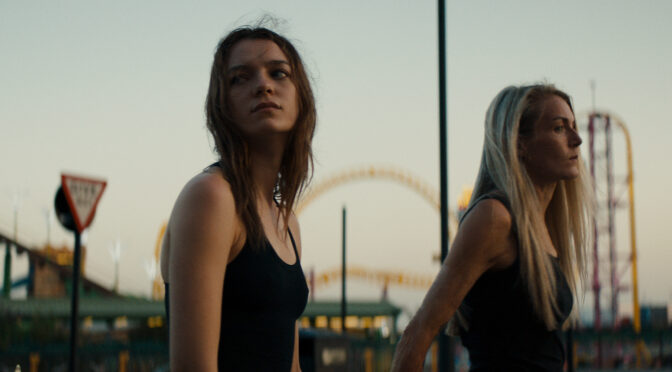
Review: Sacha Polak’s ‘Silver Haze’ is a dizzying roller-coaster of emotions and experiences – Releasing 29th March in UK and Irish cinemas

Silver Haze is a heart-warming drama that follows the steps of Franky (played by Vicky Knight) as she navigates life, sexuality, and loss. The film is directed by Sacha Polak, winner of several film awards, including a BAFTA (Breakthrough Brit). Knight and Polak’s  previous work together, DIRTY GOD gave Vicky Knight a British Independent Film Award in the Best Actress category.

The film brings us closer to Vicky Knight, as it is loosely based on her own life. Knight was a survivor of a fire as a child. That relationship to trauma is explored in the film in a much broader way, how it developed as she grew up, and all the scars – mental and physical – it left.

At the first instance, SILVER HAZE might feel like a story about love and sexuality. Franky works as a healthcare assistant by day and develops a relationship with one of her patients, Florence (Esmé Creed-Miles), a suicide survivor that seeks refuge in what Franky offers her. As the film unravels with their relationship and the trauma and anger they carry from their past are exposed, multiple layers are touched upon.  All of the characters have their own background and personal journey, even the secondary ones, making the audience laugh and cry and love them in their unique ways.

Polak is a master who leaves nothing to the wilderness, nothing flat. Silver Haze is not only a film about love and hope, it is also about ups and downs, about connections – and connections through other connections – about loss, and pain, and about growth. It is a tale about not giving up. About creating your own community. With a well-rounded conclusion, Sacha Polak and the brilliant cast leave us feeling like we just went on a rollercoaster, dizzy, not sure how to stabilize ourselves.

Another charm of the movie is the crew, a personal touch Polak talks about when interviewed – “I opted for a minimal crew and just started exploring. During the shoot, everyone would wear their own clothes and do their own makeup”.  This mix between reality and fiction is captivating – a personal film that is not in a documentary style and therefore gives the director and crew the freedom to explore so much more. Knight’s own sister played as her sister in the film (Charlotte Knight), and everyone in the cast, ‘Even if they lacked experience, they gave it their all’. Vicky Knight is a natural, an artist, and she is surrounded by compelling performances throughout the film. A clear example that taking risks might end up being a great idea.

Sacha Polak creates a tender yet intense story about the complications and simplicity of life. These contradictions make the film relatable, accomplished and perfected.

Written and directed by Sacha Polak (Dirty God). Produced by Marleen Slot & Mike Elliott for Viking Film and EMU Films

Cast: Vicky Knight, Esmé Creed-Miles, Charlotte Knight, Archie Brigden, Angela Bruce

Interview with Sacha Polak by Marta Balaga

BFI – Screening information

A BFI Distribution release. Dinard Film Festival – Best Film Award

Review by Eva Mateos Rodriguez

Eva  is an eclectic artist specialising in acting, writing and songwriting. She has been part of several performances, responses and exhibitions, and is now a student of the MA Creative Writing at Birkbeck University.

Read Eva’s latest Review: Gamble – Touring until 28 March – Abundant Art