Hello

CPAA Theatres presents: Legend of the Sun Sadler’s Wells, 30 & 31 January 2015

Choreography: Shuangbai Feng

Direction: Wei Ding                

Composer: Gangbao Liu

Lyrics:Shuaiyuan Mei           

Scenery and Lighting Design: Yi Ju              

Costume:Qing Mai

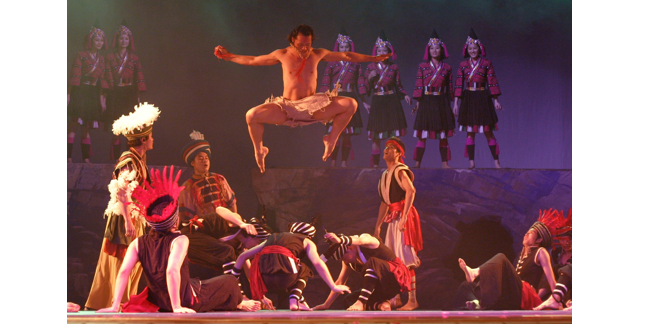
To celebrate Chinese New Year, Sadlers Wells hosted Legend of the Sun a traditional Chinese folktale told through a large-scale dance/drama production, with over 50 performers.

The tale originates from the Zhuang nationality, in south-west China and it tells the story of the ancestors of Zhuang who lived in a place without the sun. Members of the community volunteer to go and search for it, but it is a pregnant woman, ‘Ma’ who sets about on this adventure. During this dangerous journey she gives birth to ‘Le’ her son. Ma unfortunately dies, as an old woman, before completing the mission, so it is down to her son to complete the task. The story contains love, drama and emotion, as any good folktale should. The production is a familiar style; meaning members of the audience less au fait with Chinese dance easily understood it. (As it turned out, on the night we were the minority.) There were flavours of Ballet, in the mime-esque narration of the story and characterisation, and musical theatre in it’s over dramatic, emotive, pull-on-heart-strings scenes.

Although the scale of the production is huge in terms of the number of performers, it is very cleverly scaled back in terms of set design and props. Throughout the performance, in place of elaborate pieces of staging, appear dancers’ bodies. They create mountain ranges, rivers and rocks. They not only help create the complete picture for the audience members, but the main characters walk, stumble and climb upon them as easily as if they are wooden pieces of set. This clever use of sharing and using body weight is also seen in some beautiful duet work. The main characters in the piece are very strong dancers and performers, each one earning their place as soloists.

I found the show to be charming and, in places, physically impressive. As I, personally, am not a lover of all things musical theatre, I did find some scenes to be rather over dramatic. I am a believer that dance itself can express every emotion without the need for intense facial expressions and overt miming, however, it was an enchanting introduction into the world of Chinese dance for me. I look forward to what the next one may bring!

                                                                                                            Reviewd by Sara Daniels

                                           (Sara is a freelance dance teacher and lecturer in dance education)

Aakash Odedra-Inked and Murmur Linbury Studio Theatre, 23-24 January 2015

The concepts that Aakash Odedra tackle in Inked and Murmur are thought provoking areas of study. The first work in his double bill Inked (choreographed by Damien Jalet), explores body art, tattoos and scarification. It is clear how looking at marks of identity and encounters of the body would be interesting from a dancer’s perspective; someone who has a deep understanding and an intimate relationship with their own body. Unfortunately, during this twenty five minute piece there were few moments involved in this explorative process; The audience is left feeling abandoned on the outside of this dance piece desperately looking in.  

The piece starts with Odedra’s first appearance through an Odedra-shaped hole cut into the back screen. His background in Kathak dance is evident from the beginning as he rhythmically stamp into view. The lighting design, by Fabiana Piccioli, is both effective and impressive throughout the piece; adding both highlights and structure to the choreography that otherwise fall short of entice.  

The solo grows in terms of pace and dynamics-the more areas of Odedra’s body that are revealed with body art drawn upon them, the more agitated and extensive the actions become. The movement material itself however, is repetitive. We see arm ripples over and over, developing only to travel across the stage. This is also the case with circles being drawn on the floor at the end of the choreography, the only change being allowed by their shifting positions. Odedra finishes the piece centre stage having finally ceased drawing. This denouement prove pleasing for the audience as the imagery of circle drawing is by this point, exhausted.  

Murmur (choreographed by Odedra and Lewis Major), is a piece looking at the condition of dyslexia from which Odedra himself suffers. Again in this piece, the lighting design, by Andrew Ellis, is hugely impressive and is central to Murmur being such a successful performance. In this instance, however, the choreography is also of interest and appeal.  

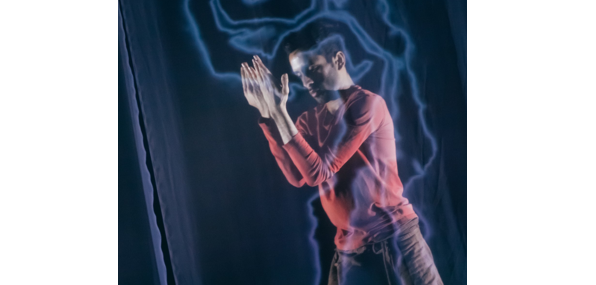
The set design is relatively simple yet creative, with a circle of electric fans and hanging white material from the ceiling. A lit up version of Odedra is projected onto the white material performing exactly the same movements as Odedra himself behind. Another effect of note is when – what look like letters – tumble out of the book in Odedra’s hand and fly like a flock of birds around the stage, making them impossible to read.  

The sense of anguish and frustration that one can feel with dyslexia is effectively conveyed through the piece, particularly when Odedra speaks to the audience, telling his personal story, asking the audience “How long does it take to correct a mistake?” A poignant and personal fact is revealed through dance and stagecraft, when we learn that Odedra discovered at the age of twenty one that he had been spelling his name incorrectly; missing the extra “A”. Suffering is made obvious when pieces of paper drop from the ceiling and Odedra is desperately trying to collect these up, but the task is made futile by the circle of fans around him that swirl the papers into an disorderly frenzy. The dramatic climax is mesmerizing as the swirling paper, ‘flock of birds’, and extra petal-like shapes streaming from the book fall and tumble, swooping and spinning together into a hypnotic whirlwind.

Murmur sweeps the audience in its emotional content communicated through it’s gripping theatricality and stimulating movement material. A commendable piece that leaves you waiting to see more of Odedra’s work. Particularly pieces which would allow a greater scope for movement and technique, the skilled performer that he is with his strong background in South Asian classical and contemporary dance forms.

                                                                                                                                        Reviewd by Sara Daniels

                                                                        (Sara is a freelance dance teacher and lecturer in dance education)

The Royal Danish Ballet, Soloists and Principals-Bournonville Celebration Peacock Theatre, 9 January 2015

It has been ten years since The Royal Danish Ballet’s last visit to Sadler’s Wells. They are certainly a very popular company to catch as evidenced by the the bouts of contented cheers from the audience, throughout their peformance. This time its a delightful mixed bill featuring twelve principal dancers and soloists from the Royal Danish Ballet performing excerpts from August Bournonville’s repertoire. Whilst disappointing that Alban Londorf (the Dane’s answer to Carlos Acosta) is replaced, the essence of Bournonville is none-the-less alive and dancing.

The programme open with the very energetic pas de sept from Folktale. The joyful energy throughout this dance resonates with the audience. It is here that Bournonville’s impressive male choreography is first seen: how they leap and jump across the stage, whilst the upper body remain ‘held’ and tight is extraordinary!

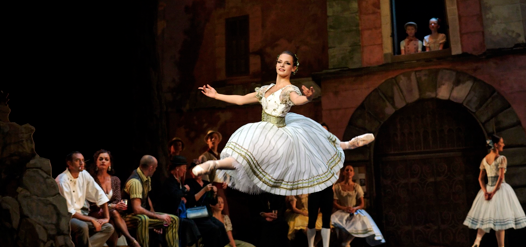
The pas de deux from The Flower Festival in Genzano is a calmer affair: sweet and playful. The two dancers demonstrate natural grace that contrast their quick footwork with ease.

The playful theme continue with the next work Jockey Dance. This highly comic dance is a crowd pleaser; the colourful characterisation from both dancers is kept even whilst taking their bows. It is impossible to watch without a huge grin on your face, possibly underscoring that Bournonville’s Jockey Dance is devised to depict something which is close to quintessential ‘Britishness’ (our love of horse riding) and thats what keeps you smiling.

La Sylphide provide a complete contrast to this happy work. This piece is notable as it does not conform to Bournonville’s usual formula of a happy ending. We are treated to Act Two, the dramatic finale that sees both Sylph and James die in this tragic love story.

The second half of the mixed bill contain the beautiful pas de trois from The Conservatory. This is, as a member of the audience seated next to me declare, ‘simply gorgeous’. The warm smiles from the dancers present the kindness that Bournonville wanted his dancers to exhibit; their eyesight is often lower than other Ballet styles as he did not want his dancers to appear proud. This pas de trois is the epitome of harmony and grace.

The finale of Napoli with its pas de six and tarantella is the perfect choice of a finishing number. The happy, celebratory dance; full of light and quick steps provide an opportunity for all dancers to showcase their skillset in a combination of small solos and duets, as well as high impact unison sections.

The Peacock Theatre with its smaller setting enables its audience to have an intimate experience with the performers. This compensates for the absence of live orchestra for the dancers to respond to.

The Royal Danish Ballet are certainly worth the wait!

                                                                                                                                            Reviewd by Sara Daniels

                                                                          (Sara is a freelance dance teacher and lecturer in dance education)

Arthur Pita’s The Little Match Girl Lilian Baylis Studio, 13 Dec 2014 – 4 Jan 2015

Arthur Pita’s stage adaptation of Hans Christian Andersen’s classic “ The Little Match Girl” is a touching journey of a poor and desolate little girl who starts cold and neglected but ends happy and sparkling.

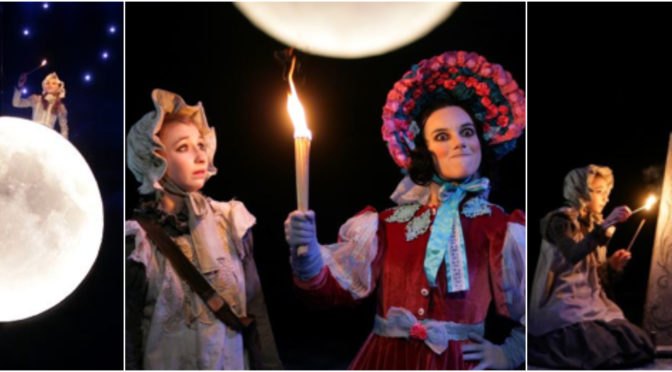
The young dancer who plays the central character is a little gem of a performer. With effortless ease she is able to strike the right balance between innocence, vulnerability and above all humanity of a little girl against adversity. A match stick seller, she gets no sympathy-either from the street dwellers like herself or the more well heeled people enjoying the festivities behind well lit windows. People show no mercy instead she is pushed and shoved and bounced around by some. Some would cruelly destroy her sticks and her soft round face would turn red in concern. Others simply shut their doors on her. Hungry and cold the little girl watch their dark shadows cast on the shut windows, merry making in their warm lit up quarters. The fuming chimneys in contrast to the cold  snowing streets set an ironic juxtaposition -The little girl who is cold in her rags, is warmer than those indoors.  They are simply cold and unfeeling towards a little girl’s hopes and desires. This whole section is brilliantly depicted through eye catching choreography, stage set up, lights and costume.

The lit up town in the background, with a huge glistening moon in the middle of the dark winter sky, a street light standing in the corner and an occasional powdery snowfall give it that dreamy quality of a cold winter evening. The set perfectly complements the mood and the live music draws you in to feel the pangs for the little girl. Frank Moon’s music is in complete harmony to a children’s show. It has a soothing tinkle yet carries an undercurrent of melancholy to sync in with the theme.

The song sequences bring in the lighter comic moments. Pita skillfully weaves in bouts of laughter, to lend it a lighter atmosphere, which could otherwise be a little harsh for children to watch.

A complete reversal of mood sets in at this high point of suffering, when the little girl’s dead grandmother’s vision comes alive. She almost steps out of her grave stone where the little girl would light a match to keep herself warm and talk to her grandmother’s vision.  They wrap around each other warm and the girl is eventually relieved from her impoverished state. She is taken on that one very special magical journey to the moon. A glistening ladder leads the way.

The show ends with a warm and bright finale- sufferings driven away, twinkling stars are lit  up by the little girl’s magical match stick. A shimmering and dazzling night sky closes the show and happy faces leave the house, all geared up for a jingling Christmas ahead.

                                                                                                                                                   Protima Chatterjee

Sadler’s Wells =dance, Statement Pieces Lilian Baylis Studio, 11 December

This mixed bill is a part of Sadler’s Wells =dance; a year-long programme showcasing collaborative work of disabled and non-disabled artists. This concept alone is worth supporting, quite apart from the diverse and quality dance you will discover. Two artists being championed in “Statement Pieces’ are Marc Brew and Laura Dajao.  

Nocturne by Marc Brew and his company, is an exploration of people and relationships, a concept that anyone, able-bodied or otherwise, can relate to. An inclusive dance piece, an intimate and intricate duet performed by two couples using two double beds as props. While one couple tumble and fly on top, across and over the beds and each other displaying energy and athleticism, the other beautifully contrast with the gesticulating, gentle, touching sequence performed by Brew and his partner Rebecca Evans. It almost feels as if the audience are trespassing on a private moment. It is not surprising that this piece, first created in 2008, is still being re-worked and performed; it is a thrilling piece of physicality. 

Laura Dajao is no doubt a talent. Her piece Missing showcases skills of singing, piano playing and dancing. Through this personal rendition, Dajao tells her story; created after an operation that resulted in her loosing a limb. She starts with the song “Finding my Strength” along with co singer Jazz Bailey. This develops into movement, a vocabulary created by fusing hip hop and contemporary dance, also incorporating sign language to give it that special touch. Dajao has touched on interesting collaborative ideas within this piece, further exploration and development of which could lead to an entire production with strong impact.

The concluding piece For Now I Am brings Brew back on stage: solo. An intriguing start with strong visual impact from the set design; what looks like a giant shower curtain covers the stage revealing Brew lying beneath. The water theme continues through the soundscape of waves, rain and dripping water.  This, along with the fetal positions shaped by Brew using the huge piece of material, emphasise the theme of rebirth and healing, communicating Brew’s personal journey. Being entirely floor based, the action content is restricted, yet powerful. The small repetitive actions, depicting breaking, reforming and replacing are at times almost painful to watch, a difficulty not helped by the high pitched string instrument that ring in your ears -The performance in its entirety depicts the frustrations experienced through the process of rediscovery, as Brew accepts his ‘new’ body post accident. The final position; Brew elevated from the stage floor by his feet, an image that imprints on the audience and encapsulates the strength and the struggle of Brew’s return to movement.

                                                                                                               Reviewd by Sara Daniels

                                              (Sara is a freelance dance teacher and lecturer in dance education)

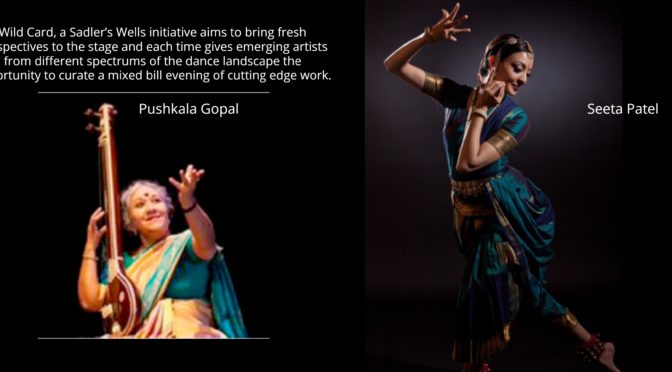
Seeta Patel’s Something Then Something Now Wild Card, Lilian Baylis Studio, Sadler’s Wells (25-26 Sept 2014)

Seeta Patel’s ‘Something Then Something Now’ is a narrative of love and emotion, presented in the classical Bharatnatyam style.

Based on the age old lore of Krishna and his beloved the first half is a dazzling solo piece. Patel’s physical language lucidly personifies the inner feelings of desire, love, longing and devotion of the nayika (the heroine). In her sensuous postures in the course of the dance piece Patel resembles the sculptures in the Chola temples. She times the piece wonderfully between dance movements and abhinaya (facial expressions), the latter being more prominent of the two. Patel’s expressive eyes precisely reveal the rasa (emotional theme) that she is performing. It varies from fluttering eyelashes  displaying the nayika’s coyness, to curved eyebrows showing her restlessness and from a subdued smile to a flirtatious one intended for her lover. Abhinaya also extends to her sitting down as if lost in thought. She imagines him while looking at a peacock feather, or hears his flute in her mind and looks around hopeful to catch a glimpse of Krishna. A myriad of emotions convey her love and devotion. It is an authentic piece of Bharatnatyam danced with exquisite clarity and divine spirituality.

The second half of the evening orbits around the similar theme of love, and its associating emotions presented by accomplished Carnatic vocalist, Pushkala Gopal and an accompanying orchestra. Gopal plays her ‘tanpura’ (string instrument) and sings at the same time as expressing the words through abhinaya. Her deep voice is her asset which paired with her effortless and expressive story telling is captivating. Five  exquisite extracts taken from old South Indian literature written mostly by male poets about women, unfold this half of the show. The evening draws to a close with the soul stirring Indian chant to the divine force. ‘Om Sarva Mangala Mangalye’

It’s a beautifully crafted presentation, at the heart of which is a thoughtful interpretation of an ancient Indian tradition.

                                                                                                                            Protima Chatterjee

Emma Gladstone in conversation (Artistic Director and Chief Executive, Dance Umbrella) Festival 14-31 October 2014

What made you choose Dance Umbrella after Sadler’s Wells?

After working in venues for many years I was excited about the thought of programming work outside of a venue. It means I can look at the work first, and then find the best place for it, which is a nice way to work. It also felt a good time to run my own show, so to speak.

What is your fondest memory from your tenure at Sadler’s Wells?

The people. Both on and off stage. Its just a great place to work, with a lot of energy, and ideas, with everyone working at full tilt. The Artistic Director Alistair Spalding has an open door policy – literally – which creates a confidence in the staff and with all the artists he works with.

You have danced for 20 years before producing, did you at any point think of continuing as a choreographer?

Being a dancer is very different from choreographing, even when you are working closely with a choreographer to generate material, so I can say quite clearly I have never seen myself as a choreographer.  I just don’t have that kind of brain. The choreographers I know wake up with dances in their heads that they want to make. I wake up having dreamt of running about with no clothes on unable to find the audience, the stage, the technical team…    Creative, I hope so, yes, like anyone who tries to do their job well, but that’s a slightly different thing.

Tell us about your association with Mathew Bourne and Adventures In Motion Pictures.

We met at college and set up Adventures in Motion Pictures with David Massingham (currently Director of DanceXchange in Birmingham) after we left. I ran it with him for three years, when we were a repertory company. When I look back I realise I was programming and producing then just as I am now, while he was choreographing his way to fame and glory.  We keep in touch. I think what he has achieved is utterly extraordinary.

Dance Umbrella 2014 is your first festival after taking up your position as Artistic Director and Chief Executive. What is the one unique Emma Gladstone touch to the festival this year?

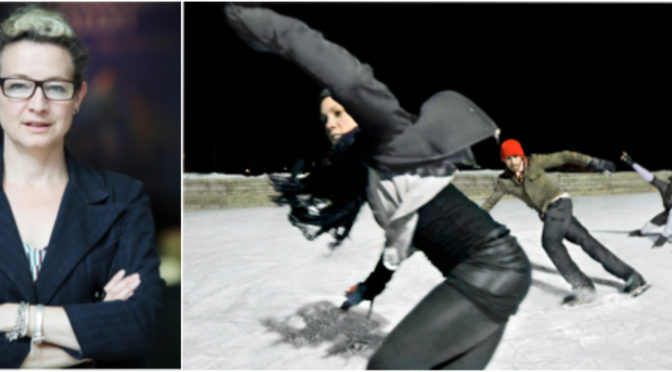
Mmn.  That’s hard.  Feel  there is a lot that I could mention because programming is such a personal thing to do, and anyone new in a job will bring something different. But if you pushed me I would name an alternative way of looking at the body in motion, as flamenco, hip hop, and ice skating are all in the festival for the first time. These shows are running alongside choreography you might more normally define as contemporary, and I am excited to see what audiences make of them. They are all exploring new ways of creating meaning through movement.

When choosing the line- up for the festival what did you look out for?

So often I am guided simply by the people involved. There is always something about them or their work that speaks to me, that helps us look at the world from another angle, and intensifies life. Having said that there are a key set of criteria that guide me artistically, and then there are pratical things such as getting out and about around the city, having a good range of styles, and making sure there is work for a range of people. I love programming work for children. They are such great audiences.

Would you consider in future to partner with a non-arts organisation, say a corporate house and open up to non- professional dancers who have the creative talent and are willing?

Pretty much all we do is about partnerships in some way, so yes is the answer to the first question. This year we are going to 14 venues in 11 boroughs, and we could not do that without strong partnerships with people.  And yes again to working with non-professionals.  Without a doubt. Dance Umbrella has done this quite a bit in the past, with choreographers including Rosemary Lee and Lea Anderson among others, and we have plans to do the same in future.

Do you see Dance Umbrella, the October festival spreading across the globe, hosted by different countries under the same banner?

Always up for a bit of global domination.  Dance Umbrella Moving London / Moving Rio / Moving Delhi / Moving Tokyo…. let go…

How would you like to see contemporary 21st century dance evolve?

Cross right over onto theatre stages. Think there are many folk who would go to see a theatre show but never think of going to see a dance show. I want to see if we can shift that thinking through the strength of the work we present.

What is Dance Umbrella’s next big project?

A big music and dance night we are cooking up.  Watch this space.

                                                                                                        Protima Chatterjee

Seeta Patel in conversation Something Then, Something Now (UK Premiere) Wild Card, Lilian Baylis Studio, 25 & 26 September

Wild Card, a Sadler’s Wells initiative which opens up the theatre’s Lilian Baylis Studio to the next generation of choreographers and dance makers, returns for its fourth season this autumn, presenting UK born and raised dance artist Seeta Patel.

Patel has been championing the Indian classical dance Bharatanatyam for many years, at the same time as forging a distinctive career in contemporary dance under the guidance of Mavin Khoo. She has performed with companies such as DV8 Physical Theatre and presented work at Southbank Centre.


How did you take up dancing?

I started dance at the age of 10 in Bristol at a local Saturday school. It started as a hobby, then I got a lot more serious after a couple of years and started doing private classes.

What is ‘Something then Something now’, about?

Something Then, Something Now is an evening of classical Bharatanatyam with Carnatic music that I have curated as part of the Wild Card platform at Sadler’s Wells. I chose to present a new solo work which I hope to tour as part of a larger evening next year, followed by a rare chance to see the seasoned artist, Pushkala Gopal, perform the expressional aspect of Bharatanaytam (abhinaya).  Live music by a very talented orchestra will underpin the evening and it will be concluded by a post show talk with my teacher and mentor, Mavin Khoo. Mavin is one of the most accomplished artists in the field of Bharatanatyam with a deep understanding of its roots, and the context in which the art form functions in modern times. I have called it Something Then, Something Now because I would like to highlight both the deep rooted legacy from which the art form began, to its ever evolving presentation and relevance in current times. The evening is focused on the beauty of classical dance and music.

As a practitioner of Bharatnatyam- the oldest classical Indian dance form, how do you relate to contemporary dance forms?

Whether classical or contemporary, I value and appreciate good quality work, both in thought and execution.  I value the rigour of classical training and appreciate a similar rigour and attention to detail in contemporary dance, and all other art forms. For me Bharatanaytam is an incredibly moving experience that makes time stand still for a brief moment. Any other very good art-work regardless of genre or form, is a similar experience. I don’t like to be limited to the dance form I have trained in, but very much enjoy being inspired by quality in whatever form that takes, including contemporary dance. I have been a part of the world of contemporary dance for some time and have worked with some brilliant choreographers. Each process has been different and I have learnt a lot. All aspects of my learning in some way compliment and enhance my classical work in deep ways (even if that is not always an aesthetic outcome). Bharatanatyam as we see today has also undergone a great renaissance and it is very different to early versions. I find it a bit misleading to define it as the oldest Indian dance form. I think it is better defined as a classical dance form and relate to it through a less exotic idea.

Your film ‘The Art Of Defining me’  has been screened at the BFI, Southbank last year as part of the 16th London Asian Film Festival. What drove you to make the film?

After my time working with DV8 physical theatre I wanted to explore my newly learnt skills in a new project of my own making. I also wanted to try a new medium and experiment with the impact of film on the choreographic process. Film is an interesting medium and creating within it was a real eye opener in terms of process. The idea came about from several experiences about how identity has become a commodity in our field, and I was interested in working with this subject in a humourous way. Film being a transportable medium, it has allowed me to reach out to a wider audience.

You were rewarded with the Lisa Ullman Scholarship to study in India in 2005 and again in 2013 at the Film Academy in New York.  How did you change and grow as an artist between these two milestones?

I have grown in so many ways. But fundamentally I think I have become a much more thoughtful artist and much more interested in quality and integrity than pandering to the ever-changing trends in the field. The first time I went to India I had not been a professional dancer for very long. I was nervous and excited and open to whatever was there for me. It was a very grounding time. Since then I worked with a lot more people and created several of my own projects. By 2013, I was a much more experienced artist but also hungry to be able to train again. My approach to New York was a lot different to India even though I was still very open to learning whatever I could.  I went into the film training with much more of an understanding of who I was as an artist, my interests, my strengths and weaknesses. Both experiences lead to renewed and fresh energy in my work on my return to the UK.

You have been selected as one of the very talented 20 dance artistes for the Dane UK mentoring scheme 2014-2015. Congratulations Seeta! How would you like to see your career develop at the end of the term?

Thank you! I think the development will be much more on a personal level in terms of my confidence to be able to communicate the things I feel strongly and passionately about within my field.

Career developments tend to happen very organically for me when the time is right and I like to have faith that there will be a forward motion on that front. I have no specific agenda about where I hope to reach after the mentoring, but more of a hope that I can become clearer and more understood in my vision.

Apart from dance and film making, you are attracted to what other art forms?

I very much enjoy theatre and reading.

Which is your next favourite dance form after Bharatnatyam?

Argentine tango (which I have been doing for over 7 years now as a hobby). It feels like the most natural of dance forms to me.  Like breathing.

Who has been your greatest inspiration as a dancer and as a film maker?

My greatest inspiration as a dancer has definitely been my teacher Mavin Khoo, and I feel very grateful that our paths crossed and that I have been able to learn from him for so many years.  I continue to be thrilled by his artistry. In terms of film I think I need to see much more but I enjoy the work of many people and love seeing unknown talent flourish.

Whats your next big aspiration?

I’m not sure yet but watch this space…things just seem to come about when I least expect them.

                                                                                                                                Protima Chatterjee

Claudio Segovia’s Brasil Brasileiro Sadler’s Wells, 8-27 July 2014

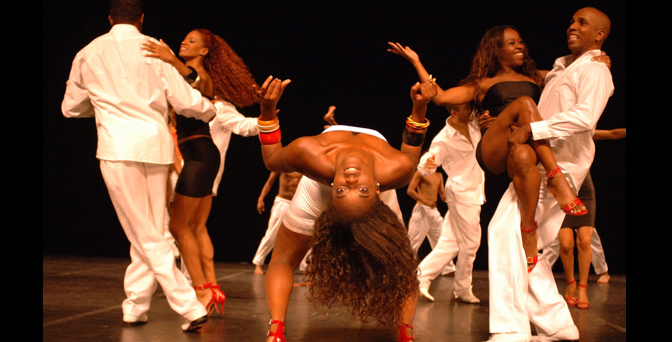
After the disappointment on the football ground Brasil Brasileiro reminds you of the soul of Brazil- the soul, which was sorely missing with the “Selecao” at the 2014 World Cup. It offers a dazzling journey into the heart of Samba, not just as hip swaying dance and music, but also into a way of feeling, thinking and living, as the Brazilians describe it. Brazil’s rich cultural tradition and centuries of history is told through  an electrifying show of dance and music that blends rustic traditions with fervent passion.

The show starts with dancers hunched down on the floor, in a circle, as is popularly danced in the ‘Batuque’ with the two principal male and female vocalists picking up their notes. This sombre rendition leads the way to an inward journey deeper into the heart of Brazilian culture- a melting pot of African, European and aboriginal Indian influences. The dancers create a natural rhythm by beating on the floor. The choreography is suggestive of a tribal clan rejoicing on a festive occasion. The dancing, singing, clapping and the making of vocal sounds have a raw intensity of energy that is devoid of sophistication but is powerful and soul stirring. It flows into a dance of love and celebration projecting their ineffable feeling of affection through movement and music. The opening piece embraces the unique and varied heritage and culture, rhythm and passion, rites and rituals of the nation and its people.

After such an engaging start the energy doesn’t slack at any point. It is on an upward graph, with a constant ebb and flow in the pattern of the show. The high energy group dances are interspersed with softer couple dance, just a soothing vocal or a flashier dance number with a few couples. The female dancers swirl into the arms of their partners before being thrown up in air and caught a couple of metres above the ground.

The three specialised ‘Capoeira’ dancers display the fittest physique and blasting energy. Their jaw dropping feats of swirls, tumbles, spins and cartwheels leave the audience mesmerised. The ‘Step dance’ number is marked by the grace and precision of the dancers which is a hallmark of Brasil Brasileiro. A special mention must be made for the vocalists, the soloists as well as the chorus. Their soulful voice evoke passion and romance.

What’s unique about this show is its seamless flow between song and dance sequences. The dancers are all round performers- they not only make music with vocal sounds, claps and thumps in between dances but also perform the ‘Batucada’ in the closing piece and play complex rhythms on percussive instruments. The show draws to a close with this rousing performance which casts a trance on the audience. Brasil Brasileiro is a class apart. It’s totally enthralling and reminds us of the zest and beauty of the Brazilian spirit!

                                                                                                                  Protima Chatterjee

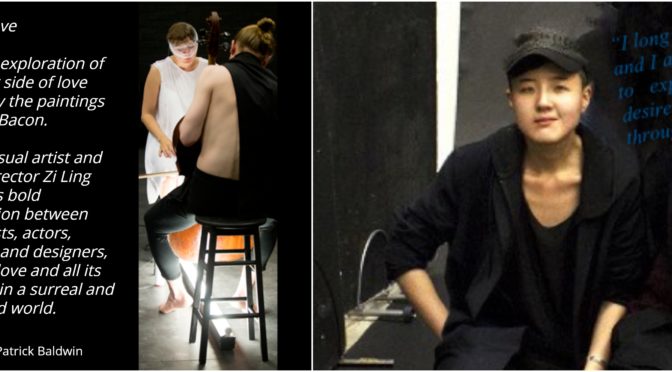
Normal Love Presented by Eldarin Yeong Studio and Normal Love Company, Lilian Baylis Studio, Sadler’s Wells,15th-17th July In conversation with Director Zi Ling

What drove you to make “Normal Love”?

I long for love, and I always try to express my desire for love through art. But what is love? Love is the very basic need for all human kind. Yet, strangely we see this as a unique gift.

Theatre as a medium is new for me. I have used this newly-learned language, as well as my life experience to express my understanding of Love.

What inspires you about Francis Bacon’s paintings?

It’s the violence that evokes an uncomfortable feeling caused by his brushwork: the dark marks and distorted shapes of human bodies that constantly appear on his canvas. His paintings project the dark human inner side.

Life in reality is violent. Francis Bacon’s works are based on reality but demonstrate something beyond reality. My process of creating this work is to analyse the details in Bacon’s works, and expand them via theatrical form. The strong contrast of colours in his paintings, and specific composition of the figures and objects exhibit the extreme loneliness of the artist. In my work, I try to re-interpret the emotional tone in Bacon’s work, giving it a different shape and colour.

Tell us a bit more about your creative process of making “Normal Love”

The process of creating is far more important than the result. I see the actors as individuals, and I don’t want to put any label on anyone. Normal Love, upholds human relationships without referring to any specific gender, society, nationality, etc. During the rehearsals the cast went through a process of finding themselves.

Team work, with lots of surprises, challenges and passion have been the building blocks. I love collision of thoughts in the rehearsal room. The scenography in Normal Love is very abstract, inspired by the compositions in Bacon’s paintings rather than the psychological or emotional elements.

In the production you have used Lecoq trained artists. Lecoq as a technique encourages artists individuality. How involved were they in the making of your show?

We have 2 Lecoq trained actors in the cast, and 1 professional contemporary dancer. I found physical training is essential for performers as it brings a strong awareness of the body, allowing them to explore and go beyond their limits.

Before the rehearsal, I had a series of workshops with my cast. I asked them to explore the space and body using very ordinary material, like food, colour, texture, etc. Their sensitivity to these stimuli led to create work and was a great help for me as a new director.

Team Normal Love has award winning names like Wang Jing (set design) and fashion designer Ton Zhao (costumes). Is this a new collaboration or have you worked together in the past.

This is the first time. Wang Jing is well-established in China. She has been working on a lot of opera and musical productions and with big names like David Freeman and Suzuki. I was nervous at the beginning. But later on I found her absolutely lovely to work with. I am using a fashion designer this time, because I want the costumes to be much more experimental and have strong visual effect. Both designers have taught me a lot of things throughout the process. And I really appreciate their input and patience.

The name Zi Ling is associated with visual art, theatre director and painting. Which do you think you are first or which one of these do you enjoy being most, visual artist, theatre director or painter.

I am a very visual person, and I love to try out different formats to present my vision. However, different fields imply different skills and disciplines. So I am still learning my way in the world of Theatre. In future, I would like to create more cross-disciplinary works to combine theatre and visual arts together.

                                                                                                Protima Chatterjee