Hello

The Credit Suisse Raphael Exhibition – National Gallery Review

On April 6 1520 Raffaello Santi (1483-1520) died in Rome; one of the most famous Renaissance artists who indelibly marked the development of the artistic language of his time and shaped the course of Art History for centuries to come. To commemorate the 500th anniversary of Raphael’s death in 2020 and delayed because of Covid restrictions, The National Gallery presents one of the first-ever exhibitions outside of Italy to celebrate the career of the ‘pittore divino’ from Urbino.

In his brief career, spanning only two decades, Raphael became the interpreter of the Renaissance ideal of a culture’s vision of itself, capturing the human and the divine, love, friendship, power, and erudition, and set forth the quintessential images of beauty and harmony in Western culture and civilisation. The exhibition reveals every aspect of his work as a painter and draughtsman. It highlights his widely unacknowledged polymath activity in architecture, poetry, and archaeology, as surveyor of Ancient Rome, as well as his designs for sculptures, tapestry, prints and the applied arts. A legit genius whose work was prolific even during his lifespan, spreading far beyond central Italy, as his talent blossomed out of an intimate and profound love for art. Broadly chronological the exhibition moves from the following premise: to present Raphael’s thriving and multi-faceted artistic enterprise as the result of a complex process of formation whereby the construction of a community and the achievement of civilization is a collective endeavour.

The journey to understand the vastness of the legacy left by Raphael’s prolific work begins with a section devoted to the artist’s early works made in the region of Marche, and the nearby Umbrian cities of Città di Castello and Perugia, in central Italy.  Still a boy, a self-portrait of the artist at the age of 16, already shows Raphael’s considerable skills as a draughtsman; whilst the drawings for an altarpiece of Saint Nicholas of Tolentino exemplify his continuous practice of studying from live models. His precocious ability to combine detailed observation and creativity ensured he soon rose above the level of a ‘local’ artist.

From 1504/5 to 1508 Raphael oriented increasingly toward Florence, the liveliest centre of the elaboration of the new artistic and financial culture of Europe, around which the figures of Leonardo and Michelangelo revolved. His works for private clients include portraiture, altarpieces and numerous depictions of the Virgin and Child.  They demonstrate his ability to absorb the artistic experiences of his time, showing great interest for the animation of the characters painted by Leonardo da Vinci, the dynamic expressiveness of Michelangelo’s figures in motion, and the emotional intimacy captured in the works by the 15th-century sculptor Donatello.

The exhibition far from wanting to reiterate the consolidated agon in the study of art history which sees the dramatic confrontation between past, present and future artists aimed at decreeing the Greatest among the greats. In the dialogue between Raphael’s masterpieces and that of his contemporaries and predecessors there is the echo of a relationship that took place under the banner of originality.  The awareness that the artist’s promotion to the condition of Genius is realised through the development of a conception of art, in which the inventive moment prevails over the operational and practical one.

Arrived in Rome in 1508, Raphael completed his most masterful work, and led the ambitious project of decorating Pope Julius II’s private apartments (Stanze) in the Vatican, now known as ‘le Stanze di Raffaello’. His work over four rooms included monumental, multi‐figure compositions depicting biblical subjects, scenes from the history of the Church, allegories of concepts such as Poetry and the great gathering of philosophers known as the School of Athens (1509–10). The fresco has been recreated in this show as a wall-filling facsimile. Raphael’s monumental work for Pope Julius II exemplify his deep admiration for Man, and the prominence he placed on human connection. Raphael- serene, sociable, enthusiastic about life offers us a pictorial world where harmony, order, and beauty reign.  But this world is not the work of God, but that of men. The humanity depicted by Raphael, suspended between dynamism and softness of the figures, is resolved in the complexity of interaction between his figures. Raphael’s visual approach to human experience is compelling in his extraordinary portrait of an elderly Pope Julius II which transformed the way the powerful were depicted in Western art, celebrating the transience of human life.

Raphael was described as the ‘universal artist’ by the artist and biographer Giorgio Vasari (1511– 1574) in recognition of his dexterity in so many different arts. His interest in other media out-bloomed in Rome. Thanks to the patronage of the Sienese banker, Agostino Chigi, reputedly the richest man in Italy and the principal financial backer to Pope Julius II. The relationship with Chigi is presented in the exhibition as one of the most profitable in Raphael’s career, for he quickly became Raphael’s most important lay client.

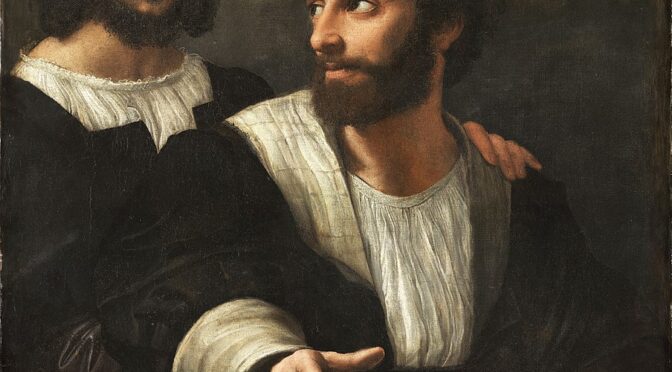
The final room exemplifies Raphael’s total devotion to art, through which he could also convey his feelings, desires, hopes, and affection, supremely realised in his ‘Self Portrait With Giulio Romano’ (1519-20). Raphael painted this portrait of himself and his principal assistant as a gesture of their close friendship as evident from the way Raphael’s right forearm seems to merge with Giulio’s right hand, indicating trust and closeness between the two. This is one of the most frank and intimate works and is emblematic of the human connections Raphael not only forged personally, but which his art more broadly sought to galvanize.

More than 500 years after the death of the man who with his art challenged God. ‘Raphael’ at the National Gallery reminds us that the legacy of ‘the divine painter’ is immortal. This great show is a once in a life-time opportunity to once again, fall in love with the creative power of man.

09 Apr 2022 – 31 Jul 2022

The National Gallery Location Room 1-8

Standard admission £24

Monday – Sunday

For more information and to book online visit https://www.nationalgallery.org.uk/exhibitions/the-credit-suisse-exhibition-raphael

Raphael Self-Portrait with Giulio Romano 1519-1520 Oil on canvas 99 × 83 cm Musée du Louvre, Département des peintures, Paris Photo © RMN-Grand Palais (musée du Louvre) / Gérard Blot

Reviewed by Rachele Nizi- After completing her MA in Reception of the Classical World at UCL, Rachele joined Abundant Art as a creative writer. Her British and Italian origins have inspired her to want to study Art History and European Literatures, with an interest in the afterlife of antiquity in the Western tradition.
La Voix Humaine to Premiere on BBC 2 on 15th April – Review

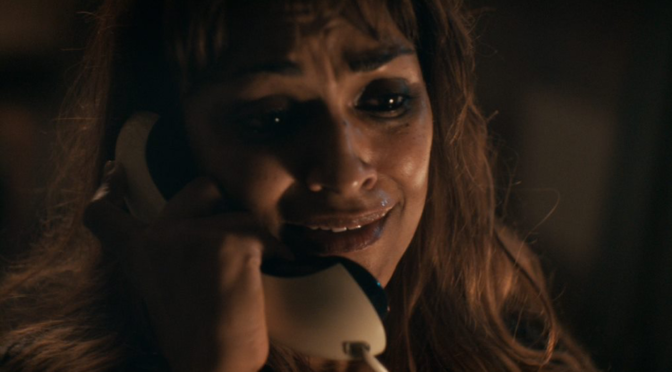
Actor and singer Danielle de Neise stars as ‘Elle’ in BBC’s rendition of Jean Cocteau’s one-woman play La Voix Humaine. La Voix Humaine is a play that encapsulates the feelings of isolation, desperation and agony love and heartbreak can bring. With only one character, Elle has become confined to her claustrophobic apartment for the entirety of the film. We are made to scrutinise her as she paces and probes throughout her apartment on the phone to her lover, who remains faceless and voiceless but is still presented as the domineering figure within this relationship. We witness talks of nostalgic memories of their past and escalating immense desperation and anguish to keep her lover from ending their relationship – which is to no avail.

Originally written in 1928, Jean Cocteau sought to explore how emerging technology like the telephone impacted relationships. This seems to have more relevance in the modern-day as technology allows us to communicate far and wide instantaneously, allowing us to deliver visceral and heart-wrenching messages whilst avoiding the vulnerability of face-to-face interaction.

Danielle De Neise’s well-known dramatic singing voice, along with her remarkable acting skills (in what is her first film role), perfectly illustrate the psychological trajectory and emotional turmoil that Elle is going through during this fateful phone call. Elle is going on a journey through all stages of grief during this telephone call, hopelessly clawing and grasping at the thin fibres of her relationship that remain. The film is set to an orchestral score recorded at The Royal Opera House which is conducted by Antonio Pappano. All of De Neise’s singing was recorded live on location, a difficult task that makes the outcome of her performance all the more remarkable. The final line “I love you” is sung in a crushing, melodramatic crescendo. Before the call ends, the synthesis of emotion in this final line feels painfully real and a great showcase of De Neise’s talent.

The film adaptation of La Voix Humaine encompasses the audience. De Neise’s performance allows us to feel the intimate and personal emotions that love and its unpredictable fleeting nature can bring. The film is directed by James Kent, with cinematography by Laurie Rose. It is set to premiere on BBC 2  on the 15th of April. The exclusive screening of the new film version of La Voix Humaine was hosted by The Mayfair Theatre on the 31st March –mayfairtheatre.ca   

Reviewed by Lian Lakhope. Lian is a MA Global Media and Communications student at SOAS and a volunteer writer for Abundant Art. Lian has written for a number of different publications, mostly about music, culture and film and she is enthusiastic about expressing her passion for creating art and media.

Radio Ballads – Serpentine North Gallery Review

Radio Ballads centers the ones most often ignored on mainstream platforms – those who receive care and those who give it. The works are difficult and raw, often touching on domestic violence, systemic racism, unemployment, disability and social care. Ultimately, Radio Ballads explores the relationship between art and care can art provide space for reflection, understanding, sharing experiences… maybe even, healing? 

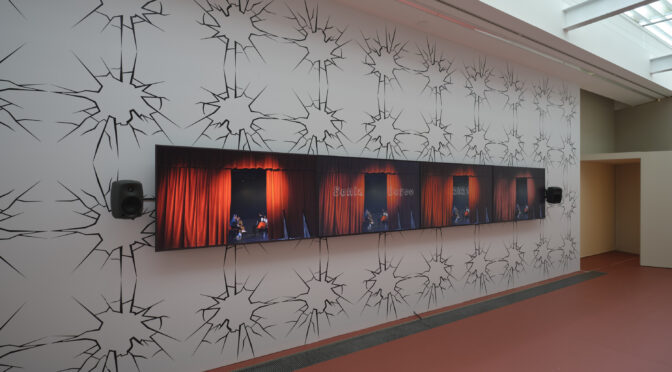
Radio Ballads, presented by Serpentine and the London Borough of Barking and Dagenham, is the culmination of a three year project embedding artists within social care services within the borough. It focuses on the works of four artists; 2019 Turner Prize winner Helen Cammock, Rory Pilgrim, Ilona Sagar and Sonia Boyce, who will also be representing the UK at this year’s Venice Biennale. Facilitated through the council’s New Town Culture programme, the artists worked with social workers, carers, organisers and government services to produce four new video works and bodies of research. 

In Radio Ballads four moving image works are confined in their own unique rooms, the sounds drift out and talk over one another like in the living room of a large family gathering. This communal space, where the videos meet, is also where the contextual materials sit, showcasing the collaborative nature of the project. Inside, all four spaces feel very different although it takes a moment to settle into each of them. The videos are lengthy, sometimes over an hour. This isn’t an exhibition to pop into, but more one to invest time into. 

It is truly refreshing to see socially-engaged work platformed at such a large gallery enabling exploration of the role of artists and cultural institutions in civic and political life. However, although one part of the project is displayed at Barking Town Hall and Learning Centre, it’s worth questioning why the project has been removed from the community it focuses on, to be shown some 5 miles west in Hyde Park. Often, the difficulty with community-led projects is navigating the fine line between the community ‘collaborating’ in the making of the project and becoming the ‘subject’ of the work. The longevity of this project and the feelings evoked when watching the works, suggests it’s gone some way in achieving the former not an easy feat.

Radio Ballads was curated and produced by Amal Khalaf, Elizabeth Graham and Layla Gatens. The exhibition is co-curated with Natalia Grabowska. Entry is free and you can find out more information here: https://www.serpentinegalleries.org/. Radio Ballads will be showing at Serpentine North until 29 May and Barking Town Hall and Learning Centre until 17 April.

Radio Ballads, Installation view, 31 March – 29 May 2022, Serpentine North Sonia Boyce, Yes, I Hear You, 2022 Photo: George Darrell.

Reviewed by Amy Melling – Amy is a Curator and Creative Producer whose practice is centred around community-led arts projects. Her current research is focused on curatorial methods for exhibiting artworks outside. Amy has a keen interest in the arts and recently completed an MA in Curating and Collections at Chelsea College of Arts, UAL.


Fashioning Masculinities: The Art of Menswear – V&A Museum

“It’s often only the clothes that keep the male or female likeness”- Fashioning Masculinities: The Art of Menswear| V&A

Fashioning Masculinities: The Art of Menswear on display at the V&A explores the artistry, audacity, and ambiguity of male fashion.  Unravelling the history of masculine attire, the exhibition reveals how designers, tailors, artists and their clients and models have helped dress and fashion manliness. Contemporary outfits by legendary designers and cultural icons are displayed alongside treasures from the V&A’s collections and landmark loans. These include classical sculptures, Renaissance paintings, photographs, and film performances. The exhibition features around 100 looks alongside 100 artworks, displayed thematically across three galleries, Undressed, Overdressed, and Redressed. It traces the shifting ways of portraying masculine style: shaping and enhancing bodies, flaunting status and wealth, fabricating and dissecting tailoring norms and finally revealing the man behind the robe.

Historically, clothing almost had the universal function of creating and reaffirming gender and class differences. The exhibition suggests that men’s clothing and fashion present a historical oscillation between two recurring models marked and evident in contemporary Western societies: the playboy with the example of G.B. “Bea” Brummel associated with flamboyance, and the puritan masculinity emblem of moderation which consolidated the end of the 18th century. What emerges from the 19th century onwards is the progressive genderizing of men’s fashion and the slow but irreversible process of dissolution of class differences.

Clothes and rules of decorum have been imposed on man, tailor-made to measure and challenge his nature often with reference to classical antiquity. Mark Twain suggests that clothes make the man. Naked people have little or no influence on society’. Yet the first gallery challenges this assumption, presenting the male body and underwear alongside plaster casts of the Apollo Belvedere and the Farnese, painted and admired by 18th century European elite on their Grand Tour in Italy. Since then, references to classical ideals of masculinity have permeated contemporary menswear, perpetuating a tradition of depicting toned and sculptural male bodies whose silhouettes are made increasingly visible under a pleated shirt, creating an in-between state of undress- neither completely nude nor clothed.

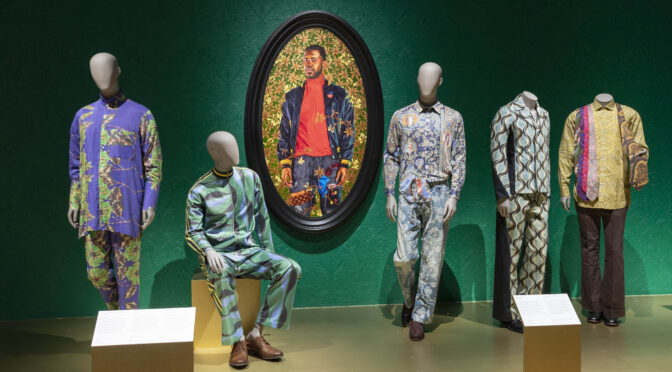
The motto ‘dress like you’ve made something of yourself, even if you haven’t’ reiterates the image of winning masculinity linked to social status and rank as well as to the performance of public functions. Between the 16thand 18thcentury, sumptuary laws and constraints of complex interpretation codified the elite masculine wardrobe of the European courts, often strongly characterized by flamboyant dressing, ostentatious embellishment, expensive fabrics and intricate patterns coming from all parts of the world. As we walk through the second gallery, we are constantly reminded that the opulence of outfits displayed was not deceiving of the status, wealth, and individuality of the men who wore them, men for whom functionality mattered less than the show. Oversized silhouettes, lavish materials like silk and velvet in daring colours, ribbons and lace, botanical motifs, and make up are only a few of the elements that defined masculine fashions of the time. Paradoxically we will find all these elements in a woman’s wardrobe today. The incongruity is not yet between femininity and masculinity, rather it is about flaunting or concealing social rank and boasting an economic availability that only a few could afford.

The last gallery explores how historic ideas begin to shift starting from the 19th century, with extensive photography showing changing styles and attitudes. The new male fashionableness, born from the political turmoil of the French Revolution which despised the frenzy and folly of the Ancien Régime, promoted a more austere and rational approach to masculinity, reshaping menswear into the more practical and simple form of the suit. ‘Dressing well is a form of good manners’ became the anthem of the 19th-century man of fashion the Dandy, epitomised by the figure of Oscar Wilde. Industrial milling and mass-production of warm and practical muted wools coming from the English countryside’s tailoring industry, made clothing accessible to all spreading across the working classes of Europe. The greatest evolution of men’s clothing took place in the twentieth century, due to the affirmation of an informal and casual style for men, also informed by military attire.

The slow yet irreversible process of dissolution of class differences is accompanied by an implacable instinct to safeguard what previously belonged to men and the male sphere. A new ideal of man is outlined in opposition to that of woman. No longer the keeper of status and wealth, the modern man finds new life and virility in his gender and sex, in being born a male. All elements indicating fluidity, where the masculine merged with the feminine became a threat. Until recently, a man wearing even just a suit made from soft or draped fabrics would become the object of ridicule.

Deconstructing the idea of masculinity as it has historically been established opens a new perspective on the variety of possible masculinities that have unravelled over the centuries, from the Renaissance to global contemporaneity. The exhibition is certainly motivated by the intention to celebrate the multiplicities of male sartorial self-expression, dressing beyond the binary. However, as Armani reminds us “fashion is not unisex”. The great revolution in today’s fashion is not to be found in the dissolution of the alterity between masculinity and femininity, which would risk ridiculing and debasing both men and women, but in so far as we can choose to dress masculine or feminine. Nevertheless, we should never forget that we are choosing.

Fashioning Masculinities: The Art of Menswear V&A On now until Sunday, 6 November 2022 The Sainsbury Gallery

Buy your tickets here (£20.00)- https://www.vam.ac.uk/exhibitions/fashioning-masculinities-the-art-of-menswear

This exhibition contains some depictions of nudity. Advance booking is recommended.

Image features outfits by Orange Couture, Ahluwalia Studio, Martine Rose and Rahemur Rahman for Aranya Crafts Ltd. The portrait is of Alexander Cassatt by Kehinde Wiley 2017.

Reviewed by Rachele Nizi- After completing her MA in Reception of the Classical World at UCL, Rachele joined Abundant Art as a creative writer. Her British and Italian origins have inspired her to want to study Art History and European Literatures, with an interest in the afterlife of antiquity in the Western tradition.


Ballet Black Double Bill – Barbican Theatre Review

This year marks the 20th anniversary of one of the ballet industry’s most innovative and enthralling companies ‘Ballet Black’. The celebration of two decades of work is being presented in the form of a double bill of performances hosted at the Barbican, showcasing the possibilities of ballet beyond tradition and stereotypes. Ballet Black was founded by Cassa Pancho, with the vision of changing the face of ballet by bringing more Black and Asian faces to the forefront of ballet, a genre typically dominated by white faces. The company has managed to do this within its 20-year run as well as provide the world with captivating and cutting-edge performances.

The first half of the double bill was “Say it Loud” choreographed by Cassa Pancho herself. It was an amalgamation of seven different performances that connect with each other, speaking to the audience as one. The performance is accompanied by voiceovers of thoughts and opinions that have been shared about the company over the years, from positive quotes about captivating performances to negative quotes such as bigoted comments and aggressions, that darker-skinned individuals in ballet often hear. The score consists of music assembled by Cassa Pancho, it is a combination of jazz, classical and rap. The merging of classical ballet, perfect pointe and elegant movements, with the rawness of contemporary styles of dance, is something that sets aside the dancers of Ballet Black from fellow dancers and made the performance so invigorating and engrossing. Some of the highlights from the  “Say it Loud” piece were a solo performance danced over a gloomy track called “Welcome to London”.  The sharp movements of the performer emanated his hurt and angst at the negative comments from the voiceover track played before he began dancing. Another was a heartfelt and romantic duet piece to Etta James’ ‘At Last’ that earned a standing ovation. ‘Say it Loud’ gave the audience the best of all worlds.

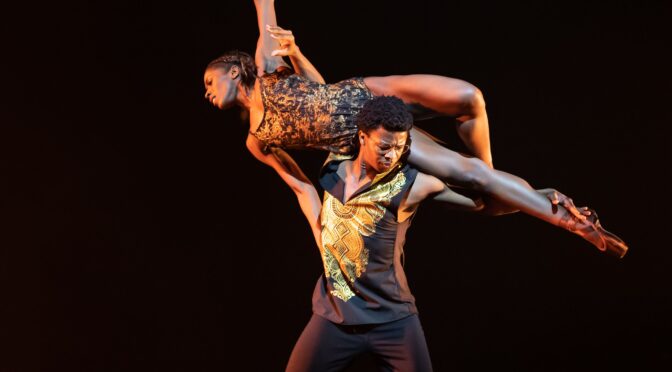
The second half was “Black Sun.” choreographed by Gregory Maqoma. The piece had a score consisting of hazy sounds and African chants  produced by Micheal Asante of Boy Blue, (also known as Mikey J) and described by Micheal himself as  “as a work that draws energy from the sun and the moon giving rise to descendants of ancestors.” Very different from the first half of the double bill it has a denser and more complex narrative and gives leeway for more interpretation about the meanings of the piece. Furthermore, the movements, combined with the eclectic score and how the gold on the costumes catches the light and makes the stage glisten and glow, make the performance hypnotic and otherworldly. The highlight of the piece, and the most entrancing and best moment of the night is the prolonged section in which the dancers vocalise along with the track as well as beat drums and synchronously tap their feet, creating a compelling and immersive atmosphere.

The performances were followed by a short Q & A session featuring Cassa Pancho, Michael Asante and dancer of Ballet Black, Cira Robinson, in which they talked about the past, present and future of the company, the production of the 20th-anniversary performance and answered questions from the audience. The panel received several questions surrounding the challenges and difficulties faced by ballet dancers of colour. Cira Robinson perfectly summed up her thoughts on these challenges stating that rather than focusing on the colour of their skin, the focus should be on the talent and prowess these dancers possess. This is when there will be true inclusivity within the ballet industry.

Ballet Black is set to perform a tour of their 20th anniversary double bill at venues across the UK, tickets can be found at their website: https://balletblack.co.uk/performances/.

Cira Robinson and Mthuthuzeli November were photographed by Bill Cooper.

Reviewed by Lian Lakhope. Lian is a MA Global Media and Communications student at SOAS and a volunteer writer for Abundant Art. Lian has written for a number of different publications, mostly about music, culture and film and she is enthusiastic about expressing her passion for creating art and media.

‘Movie Legends’ by the London Philharmonic Orchestra

A world-first concerto, dramatic film scores and an on-stage appearance from Danny Elfman – Movie Legends performed by the London Philharmonic Orchestra was a true delight.

The first half of Movie Legends saw the London Philharmonic Orchestra performing the score of The Lord of the Rings: The Fellowship of the Ring, in its entirety. Conducted by Ludwig Wicki and featuring accompaniment from soprano Grace Davidson and the London Philharmonic Choir, the performance was enchanting. Through tranquil tin whistles and a thundering brass section, the audience was transported on a journey to middle earth. 

One of today’s premier composers, Howard Shore produced the musical interpretation for J RR Tolkien’s The Lord of the Rings trilogy and The Hobbit. Tolkien was a keen environmentalist, taking much inspiration for his work from nature – something Shore also relates to, “the connection to nature is very important to me, and I think that was also the connection to Tolkien’s work. I know how important that was to Tolkien and his writing: everything that was green and good”. The industrialisation and deforestation which Tolkien protested is hightlighted throughout Shore’s score with the innovative use of materials to create mechanical sounds – most notably, striking piano strings with heavy metal chains.

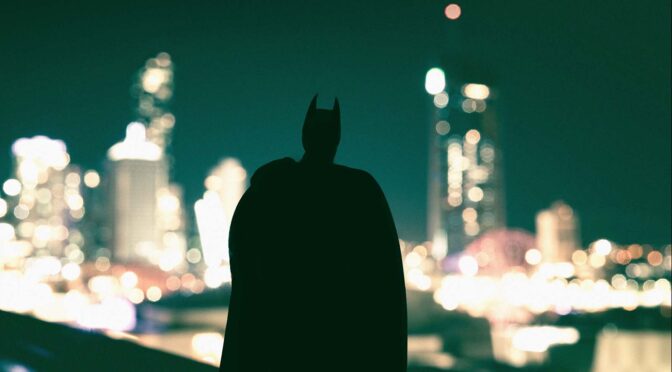
Following a short interval, we were reimmersed in musical storytelling with three shorter performances of Danny Elfman’s work – a new concerto, the Batman Suite and the Alice in Wonderland Suite.

One particularly special moment was witnessing the world premiere of Danny Elfman’s Percussion Concerto. The audience were captivated by Colin Currie’s every move as he performed the piece. Darting across the stage between instruments, Currie is a true showman. Of the new work, Elfman said ‘my greatest pleasure is when I can surprise the audience with my music’ and that he did. Although the piece was filled with Elfman’s signature glockenspiels, xylophones and jouncy rhythms, there were also a lot of new, experimental sounds. During one movement, Currie even bows the side of a xylophone, creating a deep underlying humming.

The London Philharmonic Orchestra were perfectly rehearsed, with every strike of a drum and turn of a page they moved together like a shoal of fish. Watching them perform these popular movie scores was an incredibly accessible and entertaining way to experience classical music – a perfect introduction. 

Photography by Michael Marais.

Movie Legends was part of the Spring/Summer classical music programme that runs through until June 2022 at the Southbank Centre. There are several performances to choose from and Southbank Centre even offers a multi-buy discount, tickets are available to purchase here.

Reviewed by Amy Melling – Amy is a Curator and Creative Producer whose practice is centred around community-led arts projects. Her current research is focused on curatorial methods for exhibiting artworks outside. Amy has a keen interest in the arts and recently completed an MA in Curating and Collections at Chelsea College of Arts, UAL.


Artists 4 Artists presents O’Driscoll Collective & Yami Löfvenberg – The Place Theatre Review

In collaboration with The Place and DanceXchange, the ‘Artists 4 Artists’ double bill featuring O’Driscoll Collective and Yami Löfvenberg was featured for one night only. O’Driscoll Collective was founded by Jamaal O’Driscoll who has been active in the dance community since 2010. He specializes in developing strong techniques within the hip-hop style of breaking. Yami Löfvenberg is a multidisciplinary artist and dance theatre director who often tackles difficult and hard-hitting subjects through the style of hip hop. Her work uses emotional autobiographical storytelling through a darkly comedic lens to educate the viewers on the realities of being a transracial adoptee.

‘Crabs in a Barrel’ was the first feature of the evening. Before even entering the theatre the audience was surprised by a spoken word piece by Sipho Eric Ndlovu performed at the reception point. It promptly ended as he walked through the room, opened the doors to the theater as if inviting us in and shut the door behind him. It left the audience excited for more. As I entered the theatre the stage was dark except for a singular dangling light bulb. In the low light, a man was skipping rope continuously even after the crowd settled. It filled the room with awkward suspense and curiosity. I knew everyone was wondering what was going on and what would happen next. As the show began we were introduced to the five performers through beautiful organic dance sequences. They effortlessly threw themselves across the stage through simple yet dramatic lighting and fog. The lighting design by Ali Hunter particularly stood out throughout the entire production. It was elegant and dramatic. Through its simplicity, it created a visually stimulating accent for the performers without taking attention away from them. It made an undecorated stage multi-dimensional and captivating. It was the perfect accompaniment to the soundtrack and dancers while creating a moody ambiance.

The integration of the hip-hop style of breaking kept the show extremely exciting. The contrast between organic interpretive dance and bursts of energy through breaking was balanced and captivated the audience. The bespoke sound score which was made through interviews with black creatives and booming hip hop beats helped tell the story of toxic masculinity, stereotypes and disruption. These themes were explored symbolically throughout the production through the vulnerability displayed by the all-male cast. Many scenes depicted the dancers falling on each other, dragging one another down to then be picked up by someone else almost in an endless loop. Repetition of these movements was used heavily, which could mirror the title ‘Crabs in a Barre’. When crabs are trapped in a bucket any crab can easily escape, but the others will always try to pull it down, ensuring the group’s collective demise. This expression refers to the human behavior of reducing the ego of someone who achieves success beyond others in order to sabotage them.

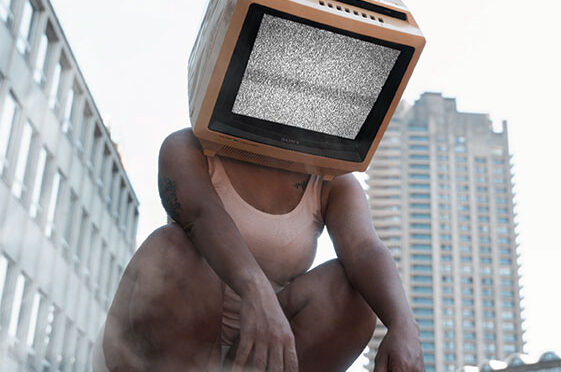
Yami Löfvenberg’s one-woman production ‘Happyendingfication’ was the second show in the double bill. The autobiographical piece explored the personal story of being a transracial adoptee and growing up experiencing racism and navigating the emotions connected to this. We follow Löfvenberg through youth, trying to understand her identity and relationships. The show began with the increasing sound of TV static. At its precipice she burst into an explosion of dance, fully immersing the audience into the chaos of her mind. Throughout the performance, Löfvenberg spoke directly to the audience creating an overwhelming sensation of intimacy. She explored various styles of dance, music and costume representing her mixed background. With powerful monologues expressing her experiences with racism and deep emotional distress, her uncensored voice uncovered the marginalized conversations surrounding the lifelong impacts of being a transracial adoptee. Throughout the emotional performance, there were many points of comic relief which successfully added light moments to such an impassioned performance. Löfvenberg’s solo performance was extremely raw and intimate, yet hilarious and full of explosive and colorful dance scenes that filled the stage to the brim.

The Place and DanceXchange’s Artists 4 Artists double bill featuring O’Driscoll Collective’s ‘Crabs in a Barrel’ and Yami Löfvenberg’s ‘Happyendingfication’ was a beautiful combination of performances. With contrasting moods and aesthetics the productions complemented each other and brought important conversations surrounding toxic masculinity, identity, racism and navigating emotions to light.

Explore The Place’s other ongoing performances here: theplace.org.uk/performances

Yami Lofvenberg’s show photo / Jay Master Productions

Reviewed by Mia Goodman – Mia is currently finishing up her Art Direction degree at the University of the Arts London. Coming from an Italian-American background and living in both countries allowed her to explore her interests in traveling, cooking and the arts. Her passion for sustainability has led her to explore the intersectionality between the environment and creative industries.

The Other Art Fair makes you see the world a little differently!

What better way to spend a Sunday afternoon than strolling around ‘The Other Art Fair’ at the former industrial site, The Truman Brewery, on Brick Lane in London? You’ll see great art, chat to the artists themselves, and explore your own preferences and tastes. Since launching in 2011, The Other Art Fair is the only global art event dedicated to representing independent artists. Their online partner and presenter is online art gallery and artist network Saatchi Art who champions and exhibits original artworks by the world’s top emerging artists.

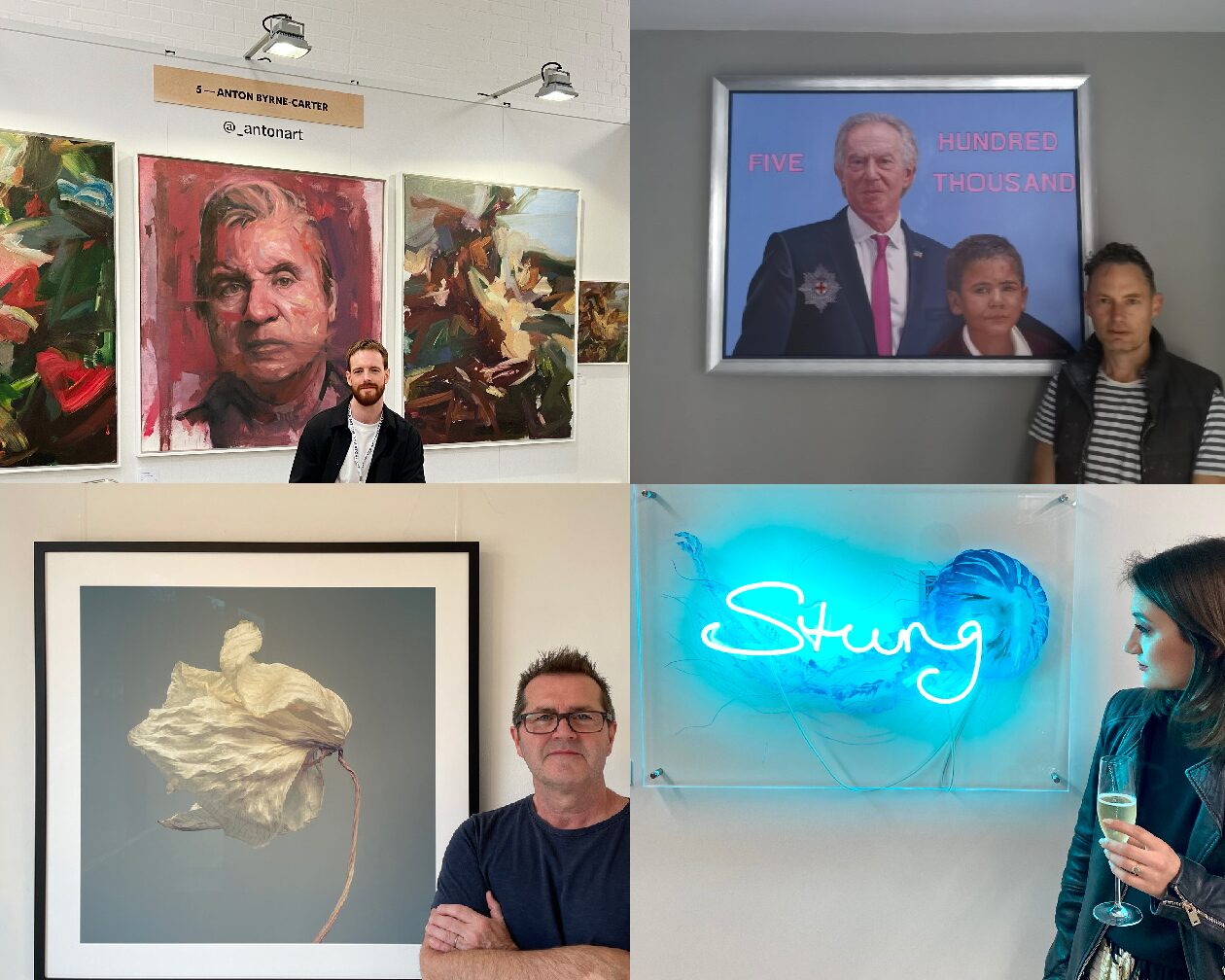
Looking at the displays, it’s hard not to be amazed by the vivid imaginations of the artists. The art dominates the huge gallery space and there is a huge variety in texture, material and tone. Taking in the eclectic arrangements of unique and original artworks, some pieces really caught my eye. One of them was UK born artist Anton Byrne-Carter’s oil on canvas ‘Francis Bacon’ painting. After spending many years as a professional photographer Anton chose to go back to his first love, painting. He couldn’t have captured Francis Bacon’s likeness any better and it’s astonishing how he’s achieved this with his unique painting technique. Having recently seen Bacon’s Man and Beast exhibition at the RA, I was reminded of it and I was drawn towards Anton’s portrait. I think of Francis Bacon as the Alexander McQueen of the art world. Both produced shocking and dramatic work and there is a biographical element to their work. Our writer Celine writes in her review of the ‘Man and Beast’ exhibition in detail about this unique artist (www.abundantart.net/review/francis-bacon-man-and-beast-ra-review/)

Another piece that was impossible to miss was the award-winning Artist James Earley’s thought provoking piece ‘Sir Tony’. Earley paints a powerful political satire combining portraiture juxtaposed with revealing and uncomfortable statistics, such as the number of children killed by Blair’s war on Iraq. The effect is shocking yet thought-provoking and engenders admiration for the skill required for this kind of composition. The subjects are often topical and highlight injustices and hypocrisy in today’s society. The facial expressions and relative dimensions of the subjects suggest the gross inequality of lives around the world. In the picture of Sir Tony, featured above, references are made to the number of lives lost and those who suffered. Earley uses his art to fight against the injustices in the world and draws attention to the hyprocrisy of the modern world.

Another stand out exhibit was contemporary fine art photographer Steve Gallagher’s floral portfolio, a true work of art that effortlessly catches the eye. Translucent No. 6. explores the beauty and intricacy of a dying orchid and evokes a strong emotional response. His new limited edition collection of fine art photography celebrates the beauty and mesmerising majesty of the natural world around us. His intricately detailed floral portraits are beautiful.

Multidisciplinary artist and designer Emily Penfold’s aqua neon light art piece ‘Stung’ spoke to me on a very personal level. Although I’ve been stung badly by a jellyfish in the past, I’m not afraid of swimming in the Seas that inhabit them.They look so delicate and beautiful, it’s hard to fear them. Emily explores the delicacy of the sea creatures with their lightness and their dark side. She reminds us that these creatures, especially jellyfish, may look fragile but may also have a deadly sting just like in nature. I love this piece!

The exhibits at The Other Art Fair make you see the world a little differently and who wouldn’t dream of building a collection of paintings, drawings, sculptures and photographs? This is the place to inspire you to start thinking about what you like and start collecting.

Links to artists featured in review –

Anton Byrne-Carter – saatchiart.com/antonbc

James Earley – saatchiart.com/all

Steve Gallagher – saatchiart.com/all

Emily Penfold – saatchiart.com/all  emilypenfold.com/light-art

Collage photo picture created with Canva.com / all photos provided by the Artists.

Written by Julia Nelson who does operations and marketing for Abundant Art.

Paradise Version – Hang Up Gallery Review

Hang-Up Gallery is hosting Tim Fishlock’s third solo exhibition of bold and bright typographic paintings until April 22nd. As a London-based Goldsmith’s graduate, Fishlock’s work embodies the niche community of vinyl collectors and connoisseurs and he often explores themes of our turbulent relationships with social media and modern technology. Fishlock believes everything that encompasses the complex human experience can be explained by music. Paradise Version dives into a love for record listening and musical archives through his simple and distinct typographic works.

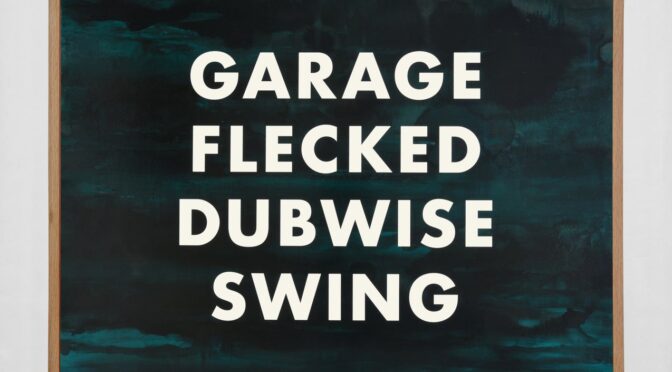
Fishlock is fascinated by language and its translation into artistic pieces. The cut-up technique originally popularized by the Dada movement edits, mixes and chops up words to create a new vocabulary, stretching the capabilities of verbal and written communication to produce a new way for the artist to convey descriptions. Imagine describing your favorite song without using the title. It may seem difficult, but when you start adding made-up adjectives to the mix a whole new world of descriptions comes alive. This is exactly what Fishlock has managed to do by creating a lexicon to evoke and mimic the sound. The pieces which are made in a mixed media of ink, acrylic gouache, screenprint and lacquer on paper are saying as much as possible with as few words as possible. The paintings are simple with a multi-colored, tie-dye-esque background and large, white, sans serif typography. The descriptors are in a list format going down the canvas drawing your attention directly to them. The vocabulary is the center of attention. Stripping down the music to its core descriptive identity allows you to experience a piece of music or a genre in a new way. The interactive exhibit has a QR code next to every piece. Scanning the code brings you to a website with a personal anecdote by Fishlock explaining the experiences and memories behind the music choices. It also includes examples of the genre or piece he is describing in the work. This provides levels of multi-sensory insight into the eclectic subculture of record enthusiasts and the artist’s personal connection to it.

The world of music geeks can be exclusionary, filled with gatekeeping and superiority complexes. This exhibition creates accessibility and encouragement to seek out new musical experiences while also catering to those who are involved in the scene. Through the personalized lens of Fishlock’s youth, the viewer can take a trip through London’s various musical subcultures and reminisce on personal favorites or fall down a rabbit hole of entirely new genres, artists and pieces. Bringing together the familiar and unknown creates an experience that transcends age, background and our normalized notions of language. Paradise Version embodies the great unifier: music.

Paradise Version is running at Hang-Up Gallery from the 25th March 2022 – 29th April 2022

Opening hours are (10am – 6pm, Mon – Fri) by appointment only here:  hanguppictures.com

‘Tim Fishlock, Break Downs, 2021’ / Simon Kallas Photography

Reviewed by Mia Goodman – Mia is currently finishing up her Art Direction degree at the University of the Arts London. Coming from an Italian-American background and living in both countries allowed her to explore her interests in traveling, cooking and the arts. Her passion for sustainability has led her to explore the intersectionality between the environment and creative industries.

The Marriage of Alice B. Toklas – Jermyn Street Theatre Review

The Marriage of Alice B. Toklas by Gertrude Stein is a fantastic stage play. Despite the simplicity of the stage, the cast brings energy and soul to this performance. The story begins by telling the audience that everyone is invited to the wedding of the century. Picasso arrives with one of his wives, and two of his mistresses. Hemingway is here too, with his wife and his favourite matador. These protagonists have a conversation about art, sex, fame and love. The Director is trying to reach an understanding of what makes a genius through these conversations.

Kelly Burke, the Chair of UK Equity’s Women’s Committee, plays Picasso; the amazing actress Natasha Byrne plays Gertrude Stein; Mark Huckett plays Hemingway; Alyssa Simon who has won NYIT (New York Innovative Theatre Awards) plays Alice B. Toklas. These four brave actors play over thirty characters in this breathtaking marriage farce. 

Sometimes the actors fight vigorously, sometimes they are engaged in heated discussions on the topic of “Genius”.  What is a genius? How can you be a genius? These questions confuse the audience throughout the play and no one defines them. Without dramatically flowing into a story, these scenes take the audience into a philosophical state of mind. If there is one point that can be called “Genius”, it is the wedding of the lesbian couple, Alice B. Toklas and Gertrude Stein. They are crazy geniuses true to love.

Before the wedding, one of the four actors is responsible for explaining the plot, and the remaining three begin to set the stage naturally. This transition is perfect. Likewise, the real staff serving in the theatre interact with the actors. The staff are unexpectedly invited to the stage by the actors to play the role of the guest watching the wedding. It seems like the staff becomes the “lucky winner”, obtaining the right to go on the stage and participate in this plot. This element of the plot is interesting and made the audience laugh due to the funny and dramatic performance.

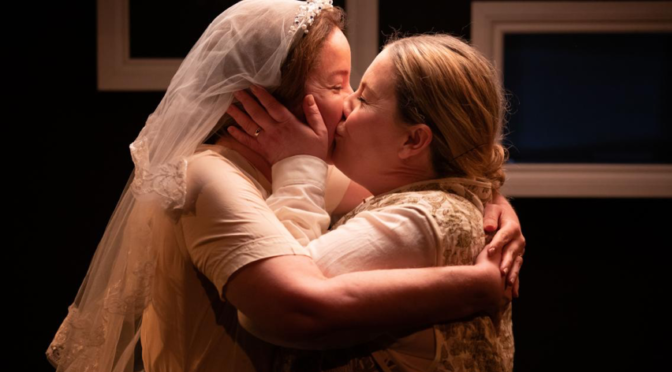
At the start of the wedding, the two women made a promise to each other for a lifetime and they kissed on stage. When the lovers promised to commit to each other, one is excited and the other is calm, and this contrast is touching. We feel two different emotions from the lesbian couple.

At the end of the story, the lesbian lovers parted for a while because they are not officially wedded. When they meet each other again their love is reflected through their affectionate embrace.

The Director and writer is Edward Einhorn, who has been NY Theater.com’s Person of the Year and has received Critics’ Choice awards from Village Voice, Time Out, and The New York Times.

As Edward Einhorn said, “Because joy is subversive, especially for those who live in a society that can destroy you: for being gay, for being Jewish, for being any oppressed people or minority, or simply for being human.” The Director seems to tell a story about resistance using the form of comedy.

The play runs at Jermyn Street Theatre until 16 April 2022 and tickets are available here: www.jermynstreettheatre.co.uk

Natasha Byrne and Kelly Burke in The Marriage of Alice B. Toklas by Gertrude Stein at Jermyn Street Theatre – Photo by Ali Wright.

Reviewed by Jiajing Yang. Yang is a MA Documentary-Fiction student at UCL and a volunteer writer for Abundant Art. Yang has written several different articles on the WeChat platform and Zhihu website, mostly about film and literature, and she has published a romantic novel based on ancient China.