
Hello

Drive My Car – ICA Review

And in the great beyond we’ll tell him that we cried, that we suffered, that life was hard.”  This sentence is from the play Uncle Vanya by Anton ChekhovProtagonist Yûsuke is in charge of directing a theatre production of Uncle Vanya and this is a great embodiment of everything that Drive My Car is. The film is a tale of acknowledgment and acceptance of the abruptness of life, of the sadness, suffering and melancholy that living can bring. An adaptation of author Haruki Murakami’s book of the same name, Drive My Car, directed by Ryusuke Hamaguchi, it is a 3-hour long journey through the life of theatre director Yûsuke (played by Hidetoshi Nishijima). The film explores the grievances of his relationship with his finding peace and forgiveness within himself through conversations with others. Particularly with Misaki, a young woman assigned by the theatre agency as Yusuke’s personal driver, in charge of driving him around in his beloved scarlet red Saab 900.

The prologue of the film is dark and erotic, unlike the rest of it which mostly has a more tranquil feel. The film begins with Oto, a screenwriter who is also Yusuke’s wife. We see Yusuke having intercourse as Oto recites a story about a young girl who sneaks into the house of her unrequited crush. The intimacy and these stories serve as a re-connection for the pair after losing a child that caused pain and tension within their marriage. However, one evening on an unexpected return due to a cancelled work flight, Yusuke catches Oto cheating on him with popular notorious actor Koji. He watches blankly for a minute, before leaving quietly, unnoticed Yusuke later casts Koji as the lead in his production of Uncle Vanya.

His days are mostly the same, a long drive to work in which he plays a recording of Uncle Vanya voiced by Oto, reciting lines back, working on his play at the theatre, driving home and reciting the play with the recording once again, returning home to Oto, usually engaging in intercourse whilst she continues her story. Yusuke seems not to be miserable. Rather, just compliant with his life, numb to anything outside what he knows. He does enjoy driving, it’s soothing and serene for him, he uses it to unwind. In an attempt to avoid a conversation with Oto, as she insists, they need to talk after work, Yusuke takes a long drive before returning home. When he returns Oto is laid loosely on the floor, with no pulse. The doctor concluded that she suffered a cerebral haemorrhage and was dead on the scene. These events in the prologue are a catalyst to the themes explored through the film.

Drive My Car is slow-paced and introspective. There are several shots of the red Sabb 900 driving through the streets of Hiroshima, packed and empty, through the blue skies of the day and the serenity and darkness of the night, that present the meditative nature of the film. The dialogue that occurs between Yusuke and Oto, Misaki, Koji as well as other individuals within the vicinity of his car help to explore and overcome the pain Yusuke has held onto. Yusuke does not doubt that his wife loves him, despite her infidelity. He voices this to both Misaki as well as Koji. He also voices that this is why he chose to remain oblivious to it around her. The acknowledgment of her infidelity would result in a change of dynamics within their relationship. His refusal to face the situation prevented abnormality and inconsistency within their relationship. However, he blames this fear and complacency as reasons for Oto’s death –confessing he thinks perhaps if he didn’t take a longer drive to avoid their conversation, he could have made it back before her pulse stopped.  Misaki does not doubt that her mother loved her, despite the way she treated her.

The bonds and relationships we form with people in our lives are often based on our understanding and what we think we know about these people. But we can never really know everything about someone and why they do the things they do, no matter how much we love them or how much time we spend with them. Drive my car encourages us to embrace the fleeting and changing nature of our relationships as well as to not blame ourselves for the things we cannot change.

Book tickets to watch Drive My Car at the Institute of Contemporary Arts here: https://www.ica.art/films/drive-my-car

Reviewed by Lian Lakhope. Lian is a MA Global Media and Communications student at SOAS and a volunteer writer for Abundant Art. Lian has written for a number of different publications, mostly about music, culture and film and she is enthusiastic about expressing her passion for creating art and media.


Costa Rica blooms at Kew’s Orchid Festival 2022

Rafael Oritz Fabreg, Ambassador of Costa Rica says: “We look forward to welcoming visitors to the Orchid Festival – to both celebrate our Costa Rican heritage and our policies that encourage sustainable land use practices. Today, Costa Rica is one of the only countries in the world to reverse its deforestation, stop biodiversity loss and increase forest cover to over half of its total territory, whilst increasing economic growth. Ultimately, we want to build a better future for the planet – an ethos we are proud to share with the Royal Botanic Gardens, Kew”.

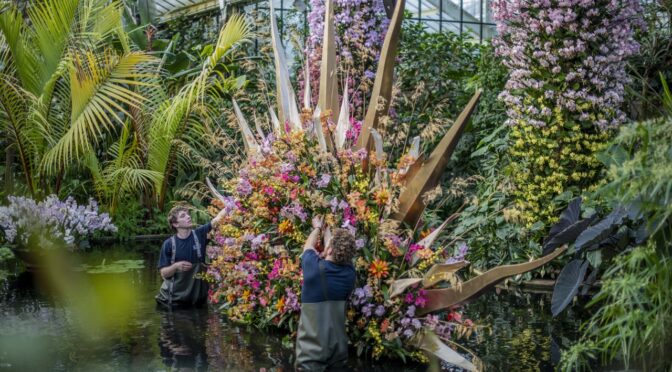
World-famous scientific organisation and top London visitor attraction Kew Gardens’ annual orchid festival has returned for its 26th year loud and proud. Celebrating all the different forms of life in Costa Rica, get ready for some colourful displays! There are over 5000 dazzling Costa Rican orchids on display in the Princess of Wales Conservatory. In amongst the amazing orchids, every so often you might notice a monkey, sea turtles and hummingbirds, and some nocturnal forest animals which are all handcrafted from plants.

What must have taken Kew’s horticulturalists weeks to create really brightened up our mood. We felt like we had set foot into a tropical paradise. All the vibrantly coloured orchids, tropical plants, floral smells and sounds of water falling lit up our senses. We were bedazzled by the therapeutic beauty of nature. There were arches, columns and various other displays festooned with orchids and bromeliads, indistinguishable from the atmosphere and experience of being at a festival. That is perhaps why it is called the Orchid Festival.

The central display in the glasshouse pond was the highlight of the festival and was filled with dazzling Costa Rican orchids and bromeliads. Arranged with metal spikes, representing sunrays, the display was almost spiritual and wonderous. Walking through the conservatory, surrounded by the beauty and diversity of the orchids and other flora, enjoying the subtle scents, it was not impossible to imagine ourselves being in the Costa Rican rainforest.

RBG Kew is a global leader in plant science and this year’s festival showcases its work helping to identify, protect and promote the inspiring biodiversity of Costa Rica. With around a quarter of its land, part of a protected forest or reserve, Costa Rica is setting an example for the rest of the world by encouraging sustainable land use practices. Kew’s focus on Costa Rica for Orchids 2022 highlights the country’s unique position as a biodiversity hotspot, as recently recognised as such and awarded the inaugural Protect and Restore Nature Earth-shot Prize.

If you have not been to Kew Gardens before we recommend you take a break from the virtual world and get some nature therapy!

Book your tickets here: https://www.kew.org/kew-gardens/whats-on/kew-orchid-festival

See Julia’s other review of the Nature Reserve Exhibition at Kew Gardens below:

Natural Reserve Exhibition at Kew Gardens Review

Written by Julia Nelson who does marketing and operations for Abundant Art.


The Glow – The Royal Court Theatre Review

Sci-fi has taken over the stage at the Royal Court Theatre with a new play written by Alistair McDowall and directed by Vicky Featherstone, “The Glow”. Enigmatic powers and mystery flirt with psychology in this thrilling story, which acts as an open letter to humanity.

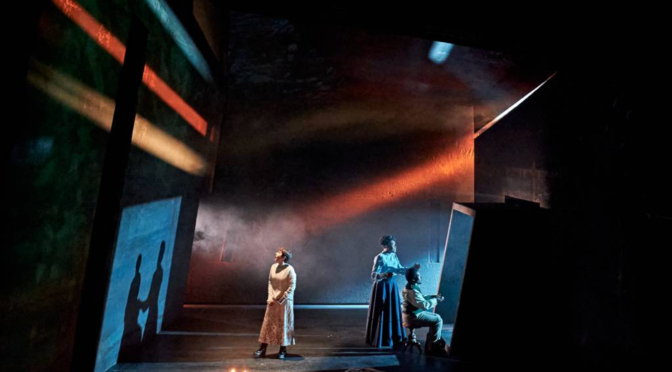
The story starts in 1863, in the darkness of an asylum. Suddenly, a light appears, held by Mrs. Lyall (Rakie Ayola), and reveals another person in the room: a young woman, apparently nameless and speechless (Ria Zmitrowicz), crouched on the floor. The spectator takes a while to understand the context of the situation, which will be a recurring aspect of storytelling throughout the play. We come to understand that Mrs. Lyall is a medium who uses people from mental institutions to communicate with spirits with the unwilling help of her son, Mason (Fisayo Akinade), and she has chosen the girl as her new vessel of communication with the underworld. The darkness of the mansion, the mystery surrounding the identity of the girl and the cartoonish villainy of Mrs. Lyall contribute to an atmosphere of uneasiness and fright typical of a horror film. The oppression and mystery are so great that the walls of the set literally close on the protagonist as she realises her situation.

The second act is distinctly different from the first, and as the mystery of the girl and her powers are slowly unveiled, we are suddenly transported outside of the oppressive closed doors of Mrs. Lyall’s mansion to travel through a myriad of different locations. We go from a story of captivity to a tale of travels, where Brooke (as her name is revealed to be) will meet curious new companions such as a bloodthirsty knight (Tadhg Murphy), an eccentric historian and an old nurse. Even those who are skeptical of the fantasy genre will enjoy the ride: the superpowers and supernatural are hardly the centre of the story, as the play focuses more on psychological themes of loneliness, pain and love for humanity. Alistair McDowall admits that he wanted to build a “fairytale where you feel the impact of the things that are happening “. We indeed witness all the suffering of Brooke, who is chained to what seems to be a curse more than a gift. What is the answer to her seemingly incurable suffering? The love of the few friends that she manages to make along the road, and her seemingly unconditional curiosity and affection for humanity despite everything is her only respite.

The otherworldliness and mystery of the story are enforced by the set design (Merle Hensel) and the lightwork (Jessica Hung Han Yun) – their creative use is the most striking aspect of the play. The stage is transformed into an uneven iron box that gives a feeling of a temporality that is essential to the plot. However, most of the elements of the plot such as the powers, the locations and the state of the character are communicated through a brilliant use of light design, as one could expect from a play called “The Glow”.

Expect to be thrilled, amused, terrified and overall touched by this fantastic yet extremely human story. Get your tickets at https://royalcourttheatre.com/whats-on/theglow/.

Reviewed by Céline Galletti- Celine is a volunteer writer for Abundant Art. Originally from France and Italy, she follows her passion for writing and art by studying Comparative Literature at UCL, London. As an international student living in London, she is determined to fully experience and understand the city’s vibrant arts scene, and be a part of its creative storm.

The Blue Boy – National Gallery Review

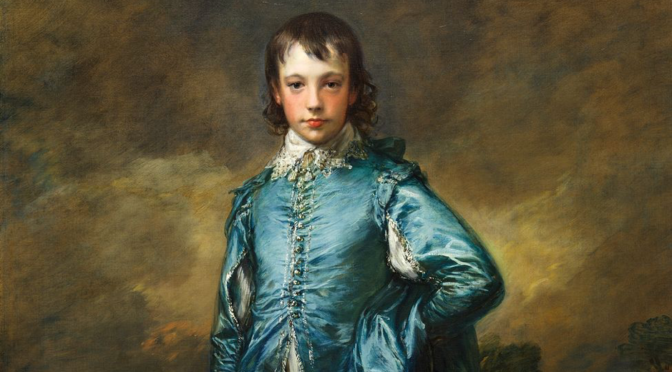
There has been a palpable air of excitement at the National Gallery these last few days. The cause: the long-hoped return of the most iconic and elegant English boy in the history of art, who after a hundred years in America has temporarily returned to his native land. “The Blue Boy” is the most celebrated painting of 18th-century painter Thomas Gainsborough and is today considered an integral part of pop culture. His soft eyes, decisive stance and blazing costume incarnate a candid ideal of boyhood that perfectly conveys the spirit of its Century.

However, despite being a representative of the Rococo artistic period to which it belonged, “The Blue Boy” is not a boy of his time. His costume, position and hairstyle are a direct reference to the 17th Century portraits of the painter Arthur Van Dyck. The Flemish artist was a great source of inspiration for Gainsborough, who often drew inspiration from European masters such as Titian, Claudel and Rubens. In fact, the exhibit accompanies “The Blue Boy” with two portraits from Van Dyck, “Lord John Stuart and his brother” and “George Villiers and Lord Francis Villiers”. Everything from the stance of the subjects, the fabrics and the brushstroke shows the influence that Gainsborough drew from the master’s work.

One should not however linger too much on comparing the two artists, as despite being a work of imitation “The Blue Boy” holds a distinct and incomparable character. The painting has countless remarkable elements in which you could get lost for hours, from the soft expression and gesture of the boy to the incredible work of layering brushstrokes that gives an illusion of glazing satin fabric. The contrast with the dark and tormented landscape behind the subject brings out the elegance and brightness of the boy and showcases Gainsborough’s well-known passion for landscape painting.

The most enigmatic and famous aspect of the painting is undoubtedly its historical background: painted in 1770 by Gainsborough, there is currently no clue regarding the identity of the boy despite multiple speculations. It was acquired in 1921 by the Californian Henry Huntington and exposed at the National Gallery for three weeks before its departure. This loss of a national treasure in a time when the United States was taking over the title of first world power had been received with great sorrow by the public. 90,000 people attended the display, and the gallery director Charles Holmes scratched an “Au Revoir” on the back of the painting as if he knew that it would find its way home a century later.

Today, the young boy has become transcended in time and is a well-established part of pop culture: his gender-defying grace and flamboyance have made him a queer icon, and it has been referenced in countless Hollywoodian movies such as Tim Burton’s “Batman” and Tarantino’s “Django Unchained”. The painting is part of the larger collection of the National Gallery, whose gorgeous displays can be admired for free. Get your ticket at https://www.nationalgallery.org.uk/visiting/plan-your-visit/gallery-entry.

Reviewed by Céline Galletti- Celine is a volunteer writer for Abundant Art. Originally from France and Italy, she follows her passion for writing and art by studying Comparative Literature at UCL, London. As an international student living in London, she is determined to fully experience and understand the city’s vibrant arts scene, and be a part of its creative storm.

Pina Bausch’s ‘Kontakthof’ at Sadler’s Wells- A timeless reflection on gender relations-Review

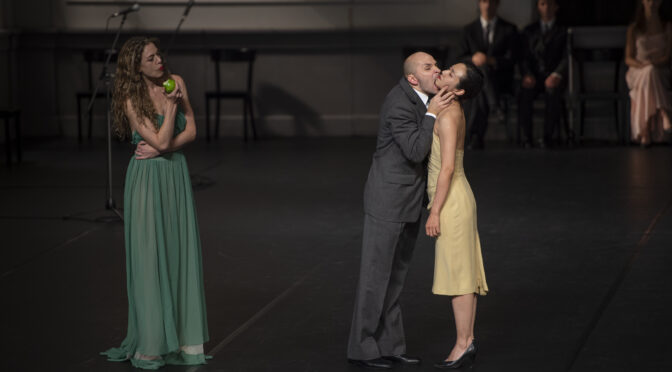
Created in 1978 by internationally renowned choreographer Pina Bausch, Kontakthof is one of her multiple Tanztheater Wuppertal creations-a form of expressionist dance which can also be named dance theatre. The title is derived from Kontakt ‘contact’ and Hof ‘court, ‘courtyard of contact’, which is also a technical term for an area in some brothels where people first meet. Kontakthof opens in a formal dance hall setting of the 1920s with tango playing in the background and around twenty two dancers in suits and evening dresses. You are thinking that you are about to witness a ballroom dance. Instead what unfolds is a game of seduction. Pina Bausch addresses some burning societal issues: how our bodies are controlled by social norms, how suffering is part of the seduction game, how women’s bodies are objectified. The opening scene sets the ambience for the rest of the performance. The performers come forward to expose themselves to the audience, front, back, in profile, check their teeth, show their arms and their chest. The characters on stage did everything they could to please someone at the party. While this is a relatable experience for many in the audience, the  choreography goes beyond that to explore the brutal nature of the power game in gender relations.

Once again, the internationally acclaimed company Tanztheater Wuppertal perform with verve alternating with sequences of effusion, humour and tenderness. Through an awe-inspiring performance, the dancers navigate between different characters: the femme fatale, the naive woman and the woman blowing up due to societal pressure. Kontakthof performed 40 years ago for the first time in London has not lost its relevance in the current times. Bausch’s piece is constructed of short units of dialogue and action, presenting a surreal intermingling of acts. In a succession of scenes, women progressively lose themselves under the oppressive male influence. Pina Bausch blurs the line between sensuality and violence, confronting the audience with the uncomfortable topic of the objectification of women, while also generating laughs due to the absurdity of some seductive acts.

The objectification of women was inspired by Bausch’s own experience in her audition as a dancer in New York: “It’s the idea of being judged on how you look – from the front, from the side, from the back. You didn’t get a chance to do anything”. Pina Bausch chose to explore through her experiences, alternating between social pressure on bodies and moments in which the performers break away from these structures, moving their bodies as they please.

Kontakthof is a powerful piece- the human sentiments expressed in this work are timeless. It is a reflection of the complex relationship between man and woman and how social pressures affect our minds and bodies.

Image Source: Sadler’s Wells Press

Kontakthof runs until February 6th 2022 at Sadler’s Wells. https://www.sadlerswells.com/whats-on/tanztheater-wuppertal-pina-bausch-kontakthof/ 

Reviewed by Alix Berthelot–Moritz- Alix is a volunteer writer for Abundant Art. Originally from Normandy, France, she follows her passion for journalism and art by studying at the European Political and Social Sciences of UCL, London. As an international student living in London, she is determined to fully experience and discover the entirety of the city’s vibrant arts scene and share the beauty of it through her writing.

Conundrum – Young Vic Review

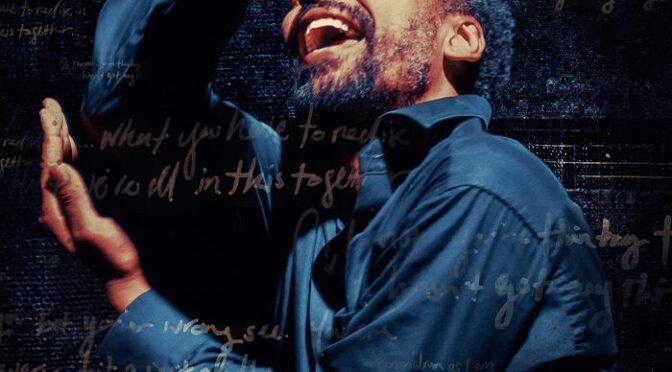
Fidel stands in the middle of his memories, attacked by the voices putting him down, he struggles to find his way towards self-acceptance. Conundrum is a one-man show written and directed by Paul Anthony Morris. This psychological drama stars Anthony Ofoegbu as Fidel, a man who, while tidying his house, encounters his old diary. Opening his Pandora’s box brought him back to his childhood and to the trauma he suffered. We follow him as he undergoes a psychological fight against his old demons, trying to figure out why it did not work out as he had hoped. Fidel was a genius child who received contradictory information. His mother told him that he was a child prodigy while his teacher and friends treated him differently: ‘be 10 times better than the other child’; ‘no more lofty ideas’. In the middle of the stage was drawn out a blackboard with sentences scribbled on it with chalk. Within the confines of it, we discover a lost child who does not understand what society is expecting from him. We see Fidel struggling with his emotions and searching for self-identity through the act. We follow him on his journey in which he tries to piece together where it all went wrong.

This performance looks deeply into the consequences of systemic racism on children and how hard it can be for a child to face those incomprehensive barriers. The child’s emotions are fully taken into account, showing his endeavour to fight back the things that prejudiced adults said to him. Fidel shares with his audience those memories from the past that have now come back to haunt him. The main focus of this drama is based on the psychological struggle of Fidel and steers away from developing into a layered narrative. Anthony Ofoegbu excels in emoting his psychological struggle and keeps his audience captivated even without multiple layers developing in the narrative. Fidel questioning his past and trying to find answers through his personal journey is the central theme and the entire act spirals around it without much forward movement. Fidel’s emotional journey dominates the context. It would be interesting to go further with him to understand how in the end he moves on from the spot he was in.

Conundrum is a psychological drama about one man’s struggle to overcome society’s stereotypes and oppression. It will run until February 4th 2022 at the Young Vic, in Waterloo, London.

Click below to get last-minute tickets:  https://www.youngvic.org/whats-on/conundrum-2022.

Reviewed by Alix Berthelot–Moritz. Alix is a volunteer writer for Abundant Art. Originally from Normandy, France, she follows her passion for journalism and art by studying at the European Political and Social Sciences of UCL, London. As an international student living in London, she is determined to fully experience and discover the entirety of the city’s vibrant arts scene and share the beauty of it through her writing.


Sissoko & Ségal – Roundhouse Review

The Roundhouse’s ‘In the Round’ festival concluded on the 24th of January with the entrancing expertise of Malian Kora player, Ballaké Sissoko and French cellist Vincent Ségal. With an exceptional opening performance from South African cello player Abel Selaocoe, the soothing atmosphere was set for the performance ahead. Ségal and Sissoko’s set began with the soft strings of the kora, (also known as the West African harp), before the introduction of Ségal’s cello. The instruments then both came in together complementing each other. This opening song was ‘Chamber Music’, the title track from Ségal and Sissoko’s first collaboration album released in 2009.

The hybridity of West African and European culture is one of the elements that make the collaborations between Ségal and Sissoko all the more engrossing. The fusion of the kora and the cello, though unlikely, flows effortlessly due to the musical prowess and the chemistry of both artists. They were able to weave in and out of solos letting each other shine and allowing the audience to experience the rippling gentle strings of the Kora and the serpentine rhythms of the cello, before coming together elegantly and harmoniously.

Ségal and Sissoko attained complete absorption of the audience throughout their ninety-minute performance. With not much audience conversation in-between pieces, the set felt like a dedication to inviting the audience to immerse themselves completely in the music. For the encore of the performance, opening act Abel Selaocoe was invited back on stage providing delicate vocals and the soft strings of his cello, as the three joined forces. Graceful, sophisticated and soulful, the night of music with Ségal and Sissoko was something everybody should experience.

Check out their music here: https://www.roundhouse.org.uk/whats-on/2022/in-the-round-festival-2022/ballakesissoko-vincentsegal/

Reviewed by Lian Lakhope. Lian is a MA Global Media and Communications student at SOAS and a volunteer writer for Abundant Art. Lian has written for a number of different publications, mostly about music, culture and film and she is enthusiastic about expressing her passion for creating art and media.
Life Between Islands – Tate Britain Review

Life Between Islands: Caribbean-British Art 1950s is exhibiting works of over 40 artists, documenting the lives and works of people from the Caribbean and those inspired by the Caribbean, in post-war Britain. Curated by David A. Bailey, Artistic Director of the International Curators Forum and member of the Black British Arts Movement, Life Between Islands is an emotive and extensive survey of Caribbean heritage and its place within British culture and society.

When I visited on Saturday morning, Life Between Islands was sold out. The first room was busy, but no one was talking. The bass from a video room further away reverberated into the space setting our collective metronome. In the centre of the room, welcoming you as you enter, sits Ronald Moody’s ‘Johanaan’ (1936). Moody’s sleek sculptural figure, carved from a block of elm, takes inspiration from the art and spirituality of Egypt, India and China. It engulfed me as I stood in front of it; huge, still, calm.

The exhibition itself is gloriously interdisciplinary; paint, textiles, documentary photography, poetry, design, music. They sit together building a picture of seventy years of cross-cultural exchanges within Caribbean art. I watched as people paused at different works. In the third room, I paused at a glass cabinet in the centre of the space. I was struck by Barbara Walker’s ‘I can paint a picture with a pin’ (2006), a series of intimate ink drawings of the artist’s son made directly on the police forms handed to him every time he’s been stopped and searched. The four-paper works speak of racial profiling, surveillance and our ever-intensifying police state. Subtle and delicate, they were quiet in their power.

As I moved through the spaces, I noticed the exhibition is organised both chronologically and thematically. Each space contains a large wall text connecting the works around a subject; Arrivals, Pressure, Ghosts of History. On a more intimate level, the smaller exhibition texts that sit alongside each work tell the artist’s stories. The text next to Charlie Phillip’s photo series reads ‘… it’s not black history, this is British history; whether you like it or not’. The quote made me think about how much work still must be done in diversifying Britain’s mainstream collections and exhibitions. On the back page of the exhibition guide, Tate tentatively takes accountability for their colonial heritage. They say many of the works exhibited here are now included in their collection. Life Between Islands is important, urgent and long overdue for Tate.

The final rooms of the exhibition feature work produced in the last few years exploring Caribbean-British identity, community and history through a contemporary lens. In a small room to the right, a video was playing. The space was dark and I struggled to find the chair. I held back allowing my eyes to adjust to the screen showing The Otolith Group’s mesmeric film-essay INFINITY minus Infinity (2019). As I listened to the voice-over, my mind got stuck on certain linguistic phrases such as ‘Hostile environment’ and ‘I can’t breathe’.  The work speaks of multitudes; slavery, governmental discrimination and neglect, the ongoing climate catastrophe. It explores the distress of the past, present and future, all ultimately linked by British Imperialism.

I left the exhibition reflecting on its varied content. Many of the works reference experiences of hostility and discrimination, but it is also an exhibition full of celebration. The works speak of solidarity, community, resilience and creativity.

Life Between Islands: Caribbean-British Art 1950s is showing at Tate Britain, London, until 3 April. For booking info click below:

https://www.tate.org.uk/whats-on/tate-britain/exhibition/life-between-islands  

Image: Barbara Walker, I can paint a picture with a pin (2006)

Reviewed by Amy Melling – Amy is a Curator and Creative Producer whose practice is centred around community-led arts projects. Her current research is focused on curatorial methods for exhibiting artworks outside. Amy has a keen interest in the arts and recently completed an MA in Curating and Collections at Chelsea College of Arts, UAL.

Ativador Office 2013

Out-spoken – Southbank Centre Review

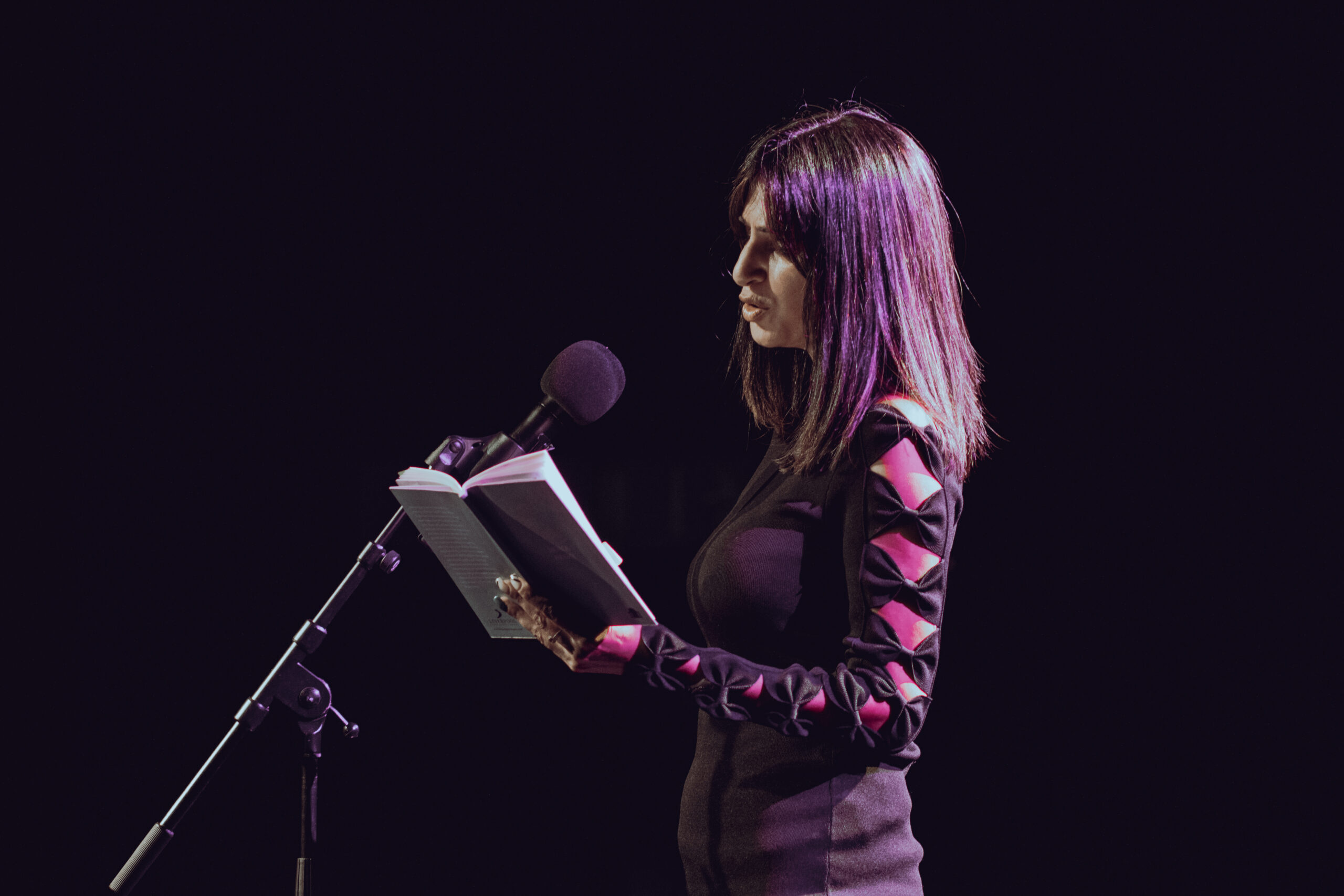
Partnering with the Southbank Centre, Out-spoken is a poetry organisation that celebrates the diversity of voice in writing and performance. A night dedicated to amplifying the voices among us that aren’t always heard, I listened intently to the messages which were being shared in this collective space.

The night consisted of both poetry and music, with sets from Jason Allen-Paisant, Andrew McMillan and Mona Arshi (see image); and music from Raquel Martins and Benny Atlas. As they spoke from the depths of their hearts and minds, each artist created an atmosphere filled with emotion. Poetry revolves around the personal; there was a shared sense of authenticity throughout the evening. Entranced by the words which flowed through the evening, I thoroughly enjoyed this event!

Andrew McMillan performed a selection of poems relating to mental health and its struggles. The poems which were so deeply personal reverberated across the room, allowing the audience to emotionally connect with the poet. As calls for more conversations around mental health, particularly men’s mental health, are rising, McMillan’s performance was powerful in its prose.

Mona Arshi, the winner of the Forward Prize for Best First Collection in 2015, performed a selection of her new poems. Reflecting on her experiences during lockdown – which was all extremely relatable – she shared that writing poems had “saved her” during this time of uncertainty. She also performed a ghazal, which she explained carried her emotions more wholly.

The musical performances from Raquel Martins and Benny Atlas were phenomenal.  Captivating the audience with their powerful vocals and soul-touching lyrics, it was amazing to hear the voices of two talented, upcoming artists. Benny Atlas, who emerged onto the scene in 2020 delivered a brilliant performance. His smooth vocals and heartfelt lyrics vibrated across the room and ended the night on a sweet, melodic note.

Outspoken will be back at the Southbank Centre on 24 February 2022, book your tickets now at: https://www.southbankcentre.co.uk/whats-on/literature-poetry/out-spoken-february?eventId=893732

Website: http://www.outspokenldn.com

Reviewed by Ridha Sheikh – Ridha is a volunteer writer for Abundant Art. She is a recent History and Politics graduate from Queen Mary – University of London. Ridha is excited to explore and share her strong passion for London’s art scene.

KMS Pico

The Cartoon Museum – Review

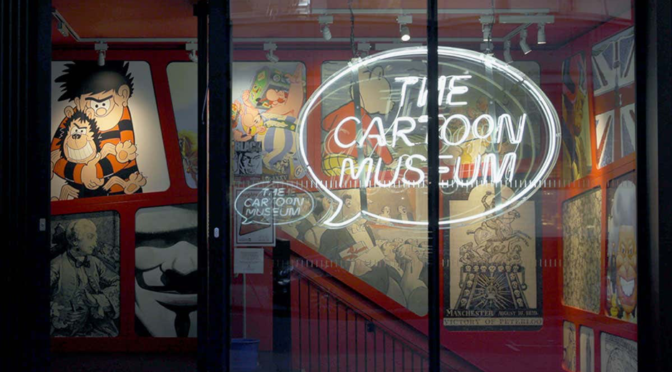
Not far from Oxford street, in a parallel street to the countless shops and restaurants of Bloomsbury, is a curious place that would catch the eye of even the busiest shopper that passes by. A big neon speech bubble, “The Cartoon Museum”, invites you to proceed through a colourful entrance covered in comic strips. As one goes down the stairs that lead to the beginning of the exposition, it is hard not to get overflown by some sort of childish excitement.

The museum stores a collection of over 6,000 original artworks in addition to a library of over 8,000 comics and books. The exposition displays over 250 of these original prints in a chronological experience that retraces the birth and evolution of the satirical cartoon. Despite their historical and geographical variety, all the sketches are connected by the same red thread: a zesty and ironical view on life that is not afraid to shout out the truth and say the unsayable. Whether their goal is to shock, sensitise, denounce or flat out mock, they always hit the mark and will get more than a few chuckles out of you.

Even though the cartoons are often quite political, we are left to draw our own conclusions as the exposition doesn’t take any stance or overexplain any aspect of the sketches. The simple descriptions next to every drawing let the pictures express themselves without over-politicising them or over-explaining the historical background: the most important aspect is the humour, and everything else comes in second place.

The historical layout of the exhibition gives an interesting insight into the evolution of technique and comedy through the ages, as one witnesses the transcendence of some timeless gags that still make us laugh today. One goes from the French critics of nobility during the French Revolution, when artists were given unprecedented freedom of expression, to anti-Nazi propaganda and caricatures of Donald Trump.

Furthermore, the museum encourages a creative interaction with the cartoons, as it offers multiple workshops for the public to enjoy. We are given pen and paper and can choose multiple activities such as making a caricature, learning to draw Beyoncé or inventing our own lab monster. In addition to the workshops, the museum is hosting a public experiment that aims to explore the psychology behind cartoon humour. Spectators can choose to take part in it until June 5th, and will be given multiple pairs of cartoons of whom they have to choose the funniest.

Overall, the Cartoon Museum is a little hidden gem in Soho that celebrates the art of irony and humour with levity and taste. Get your tickets or check out their sketching classes at https://www.cartoonmuseum.org 

Reviewed by Céline Galletti- Celine is a volunteer writer for Abundant Art. Originally from France and Italy, she follows her passion for writing and art by studying Comparative Literature at UCL, London. As an international student living in London, she is determined to fully experience and understand the city’s vibrant arts scene, and be a part of its creative storm.